Full story
Hormuz Control Clash
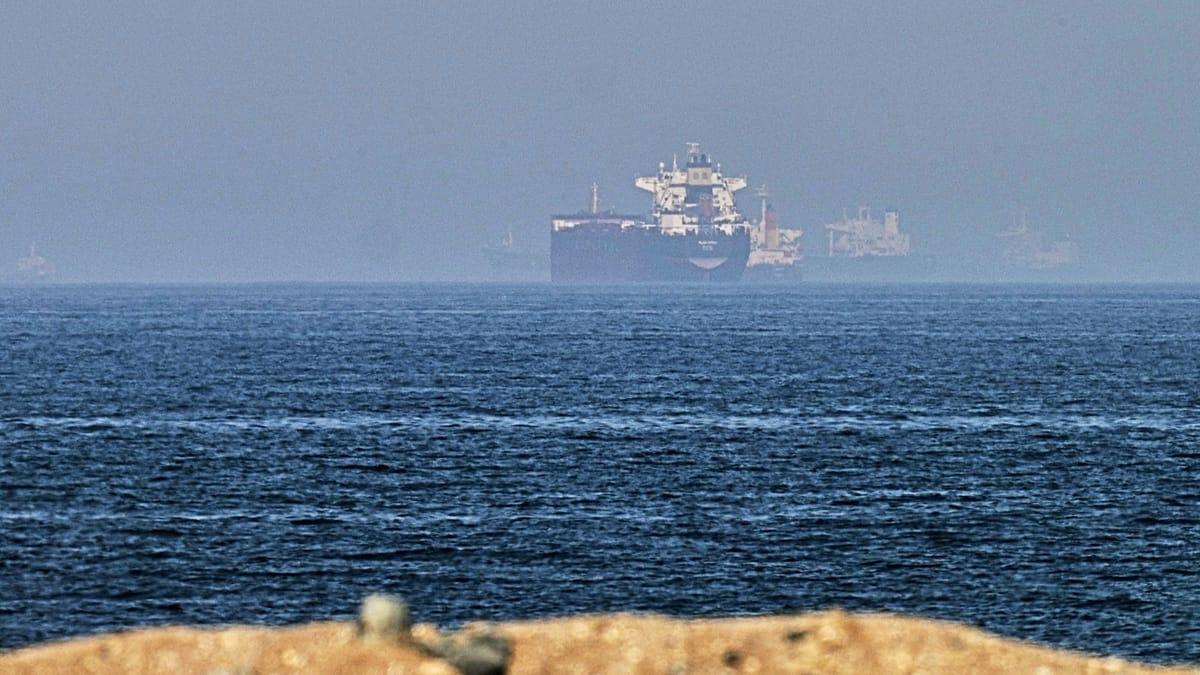
An Iranian senior official said the Strait of Hormuz remains under the control of the Islamic Republic after U.S. President Donald Trump claimed “total control” over the strategic sea lane.
“the Strait of Hormuz is under the administration and control of the Islamic Republic”
Hossein Taeb, head of the Basij paramilitary forces allied with the Islamic Revolutionary Guard Corps, told state television that “the Strait of Hormuz is under the administration and control of the Islamic Republic, and our country continues on its path with full security,” while Trump told reporters, “Right now we have total control of the Strait of Hormuz. They (the Iranians) do not control it.”

The Persian Gulf Strait Authority (PGSA), a body created by Tehran to manage traffic through Hormuz, dismissed the U.S. assertions as “repeated” and said, “The Strait of Hormuz remains blocked and will not reopen until Iran’s conditions are accepted,” in a brief note on social media.
The back-and-forth comes as Iran conditions any free passage on a credible ceasefire that includes Lebanon and the Gaza Strip, and Iran imposed an effective blockade on the strait after the war that began on February 28 with U.S. and Israeli bombardments against the Islamic Republic.
The dispute is also framed by Iran’s position that the United States must end port blockades and free frozen assets in foreign banks before it will consider reopening the waterway.
Iran’s Reopening Demands
Iran’s top security official said the Strait of Hormuz will remain closed until the U.S. changes what he described as its hostile policies and meets Iranian demands, listing six conditions for reopening the waterway.
Mohammad Bagher Zolghadr, secretary of Iran’s Supreme National Security Council, said Washington must “correct its behavior” before the strategic waterway can reopen, and he added, “The Supreme National Security Council will not retreat from these demands, whether in war or in negotiations.”

Separately, Iranian army spokesman Brig. Gen. Mohammad Akraminia said the “Iranian order” governing the Strait of Hormuz was “irreversible,” adding that the U.S. had “no choice but to accept the existing reality” or face “far greater costs than before.”
The remarks come as negotiations over navigation through the Strait of Hormuz remain at an impasse after Iran and the U.S. signed a memorandum of understanding on June 18 through Pakistani and Qatari mediation, ending active hostilities and launching negotiations toward a broader agreement.
The memorandum envisaged a gradual restoration of commercial navigation through the Strait of Hormuz, but implementation later stalled as both sides exchanged accusations of violating its terms.
U.S. Threats and Stakes
U.S. President Donald Trump said he plans to declare the Hormuz Strait as American territory after Iran is defeated, telling a crowd at an event in Nassau County, New York that “We are imposing the blockade; no ships will pass unless we want them to.”
“We are imposing the blockade; no ships will pass unless we want them to”
Trump also said, “Very soon I will declare the Strait of Hormuz as U.S. territory,” while CNN reported that the average price for regular gasoline rose to $4.07 per gallon on Friday, up from $3.85 a month ago and $3.16 a year ago.
Iran insists it will not reopen the strait unless the United States meets its terms, and the dispute is described as ongoing while the two warring powers dispute who controls the vital waterway.
The stakes are tied to energy flows, with Hespress stating that “About 20 percent of global oil and natural gas shipments pass through the Strait of Hormuz,” and with CNN noting that world oil stocks are rapidly diminishing as shipping through the Hormuz Strait remains effectively halted.
Hespress also quotes Iranian Deputy Foreign Minister Abbas Araghchi saying Tehran “will not bow to threats or show of power” from Washington and that the Strait of Hormuz “will open or close only by Iran’s authority.”