Iran-Israel28 December, 20252 min read
Iranian President Masoud Pezeshkian Declares Full-Scale War on US, Israel and Europe
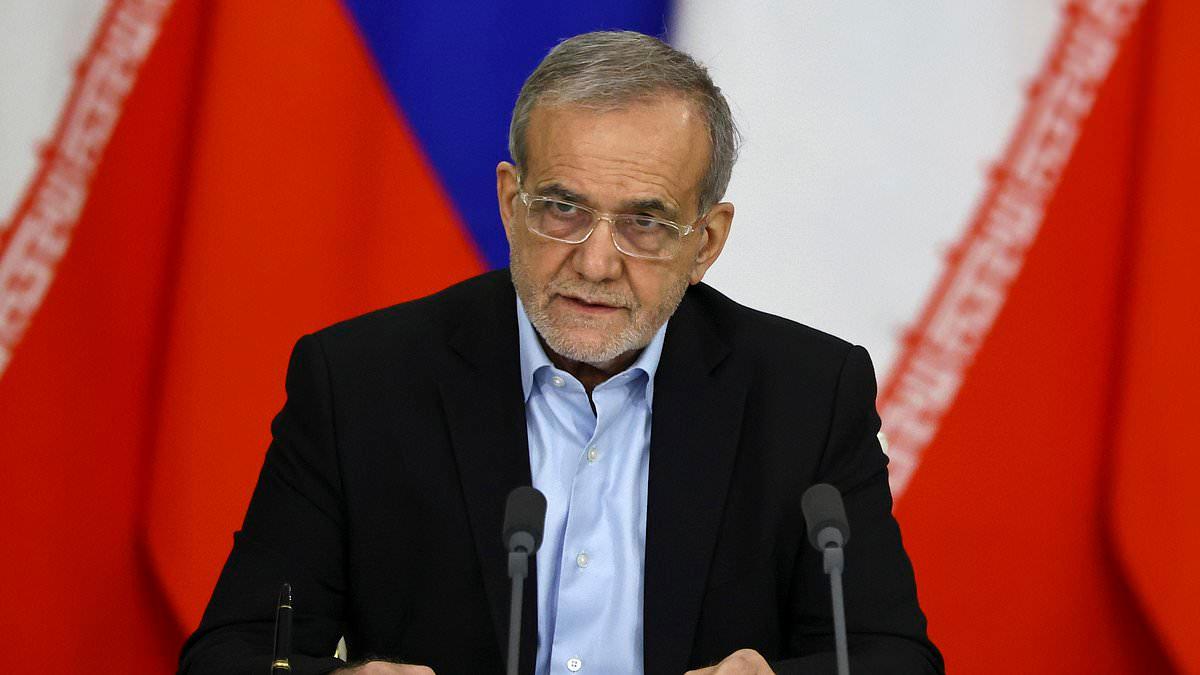
Iran's president says Iran is in a full-scale war with the U.S., Israel, and Europe. Remarks published on Iran’s Supreme Leader website days before Netanyahu–Trump meeting.

15 outlets told this the same way.
Outlets did split on U.S. Intercepts Iran Message Activating Sleeper Cells After U.S.-Israel Strike Kills Khamenei →
Iran declares broad confrontation
Iranian President Masoud Pezeshkian publicly declared that Iran is in a state of large-scale confrontation with the United States, Israel and European countries, using phrases variously reported as full-scale, full-fledged or total war by international outlets. Multiple reports say the comments were published on the Supreme Leader's website and framed as a response to sustained Western pressure aimed at curbing Iran's development. The remarks were widely reported ahead of a planned U.S.-Israel leaders' meeting and were presented as a warning that Tehran views the current campaign against it as comprehensive and coordinated by Western powers and Israel.
“Iranian President Masoud Pezeshkian said Iran is effectively in a ‘full-scale’ state of war with the US, Israel and Europe, accusing them of trying to prevent Iran from standing firm.”
Pezzeshkian on multidimensional pressures
Pezzeshkian described the confrontation as multidimensional and said it is worse and more complex than the 1980–88 Iran–Iraq war because it mixes economic, cultural, political and security pressures rather than only conventional battlefield exchanges.
Several outlets reported his comparison to the Iran–Iraq war and his depiction of encirclement by Western measures, noting that Western countries have used sanctions and diplomatic pressure as part of a 'maximum pressure' approach.
Iran's military readiness
On military readiness, Pezeshkian said Iran’s armed forces are stronger now than during earlier attacks. He vowed Tehran would deliver a 'more decisive response' to any new strikes.
“He asserted that Iran is now stronger in equipment and personnel than during previous attacks and would deliver a decisive response if struck.”
Outlets report that equipment and personnel have been rebuilt or strengthened. Some link these remarks to a June escalation of strikes, noting Israel struck Iranian sites and the United States bombed Iranian nuclear facilities earlier in the year.
Media coverage and context
Observers and reporting differ on context and emphasis. Many outlets highlight the timing — just before a scheduled Trump–Netanyahu meeting — and Western moves such as renewed UN sanctions and a US "maximum pressure" policy. Other reports add domestic political notes or wider geopolitical context.
Some accounts include potentially inflammatory or tangential claims. For example, the Daily Mail includes an extended aside about an alleged Caribbean "shadow fleet" tied to Iran-linked shipments. Al Jazeera flags domestic concerns such as media law changes and critics of Pezeshkian at home.
Coverage differences and caveats
Across the coverage there are clear differences in emphasis, some missing details and occasional reliance on secondary reporting. A few outlets reported via other media or Russian sources. Some tabloid pieces introduced extra allegations, for example about tanker networks.
“I don’t see the article text — only ‘(Inputs from AP).’ Could you either paste the article here or share a link to it?”
Two named outlets in the bundle, madhyamamonline and The Vibes, provided only meta-notes or asked for the text to be pasted, so their direct coverage lines are absent in the material provided. For instance, some reported that Iran’s nuclear infrastructure was heavily damaged in June. Sources differ on wording and certainty, so these points should be read as reported claims rather than independently verified facts.
