Iran-Israel27 December, 20252 min read
Iranian President Pezeshkian Declares 'Total War' on US, Israel and Europe
This article is an automated aggregation of coverage from news outlets. Our editorials offer in-depth analysis curated by the NewsCord team.
President Pezeshkian declared Iran at war with the United States, Israel and European countries. Accused US, Israel and Europe of coordinating military, economic and political pressure to weaken Iran.

20 outlets told this the same way.
Outlets did split on U.S. Intercepts Iran Message Activating Sleeper Cells After U.S.-Israel Strike Kills Khamenei →
Iran's confrontation with West
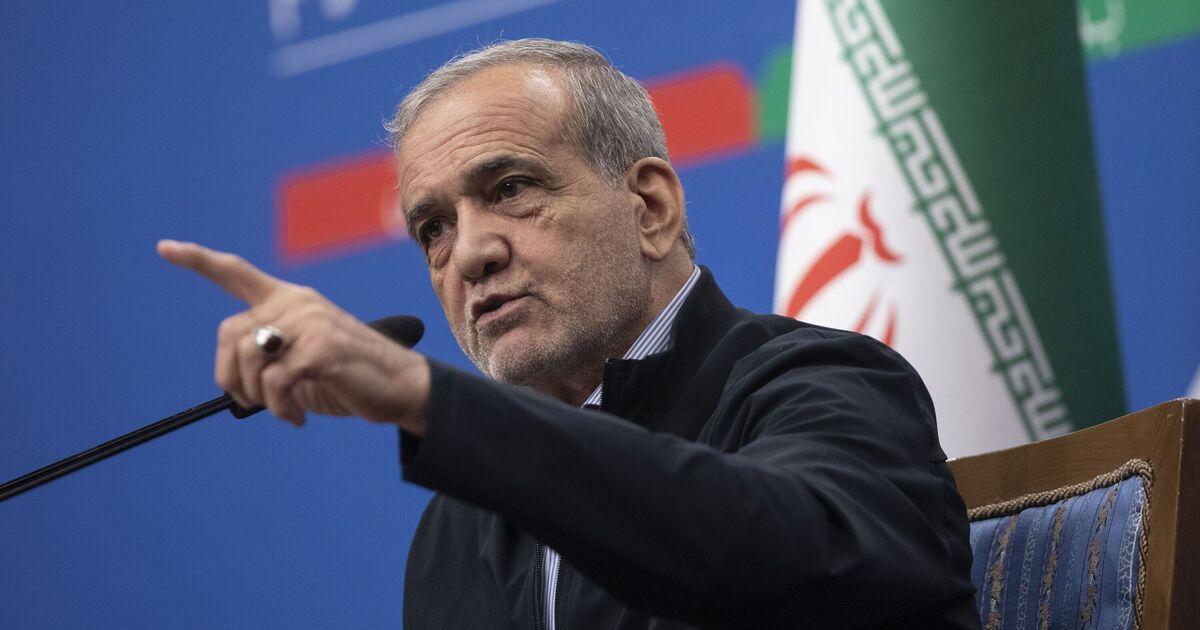
Iranian President Masoud Pezeshkian publicly declared that Iran is in a state of "total war" with the United States, Israel and European countries.
“Pezeshkian told Iranian state media that Iran is in a ‘total war’ with the United States, Israel and Europe, accusing Western powers of trying to bring Iran ‘to its knees.’”
He said the current confrontation is more complex and worse than the 1980–1988 Iran–Iraq war.

Pezeshkian described pressure on Iran as multidimensional, including political, economic, cultural and security-related elements.
Multiple outlets reported the remarks were published by Iranian state media or on Supreme Leader Khamenei’s official site.
The comments came ahead of a planned meeting between Israeli Prime Minister Benjamin Netanyahu and U.S. President Donald Trump.
Pezeshkian warned that any renewed attack would be met with a stronger or "decisive" response.
He also asserted that Iran’s military has emerged stronger despite recent strikes.
Iran's response and military posture
Pezeshkian framed the current confrontation as a siege fought across political, economic, cultural and security fronts rather than a conventional battlefield conflict. He argued that Iran’s military has grown stronger following a June clash with Israel and U.S. strikes on nuclear sites.
Outlets cite Tehran’s statements that about 1,000–1,100 people were killed in those strikes. They report that Iran is rebuilding air defenses and missile programs while downplaying the strikes’ long-term strategic effect.
Iran sanctions and allegations
Multiple reports place Pezeshkian's statement in the wider context of renewed Western sanctions and U.S. "maximum pressure" policy. Journalists note that France, Britain and Germany helped reimpose U.N. sanctions on Iran over its nuclear program, that oil revenues have fallen, and that Tehran says it is redirecting some funds to social support.
“He blamed France, Britain and Germany for helping reimpose U.N. sanctions on Iran in September over its nuclear program.”
At the same time, some Western outlets report U.S. and Israeli claims that Iran seeks nuclear weapons, a charge Tehran denies. Other pieces raise allegations of Iran-linked maritime activity and shadow tanker fleets used to sustain oil trade with partners.
Reactions to Pezeshkian's rhetoric
Analysts and several media outlets link Pezeshkian's rhetoric to immediate regional and diplomatic consequences. Reports highlight an upcoming Netanyahu–Trump meeting where Israel may press for further strikes.
Coverage also notes rising Iranian influence within Hamas's leadership and warns the rhetoric could harden positions across the region. Some pieces emphasize the possibility of renewed military action, while others see the statements as domestic political signaling intended to bolster national unity after the June clashes.
Media coverage differences
Coverage differs in tone and emphasis. West Asian outlets (e.g., Al Jazeera, Türkiye Today) foreground the siege narrative, sanctions and the diplomatic context and often highlight Tehran’s resilience and regional partnerships. Western mainstream sources (e.g., Fox News, GB News, The Australian) underscore U.S. and Israeli concerns about Iran’s nuclear ambitions and the potential for military responses.
“Pezeshkian said Iran now feels ‘surrounded from all sides,’ with trade blocked and rising domestic expectations.”
Tabloid outlets (Daily Mail, Daily Express, news.meaww) add dramatic details such as a ‘shadow fleet’ or specific casualty tallies and sometimes link the story to human‑interest and sensational angles. These differences shape how readers interpret the declaration - as deterrent rhetoric, an escalation risk, or part of a broader geopolitical struggle.
