
Iranian Regime Bombards Israeli Civilians With Cluster Munitions, UN Silent
Key Takeaways
- Iranian ballistic missiles with cluster warheads targeted Israeli population centers.
- Cluster munitions disperse dozens of submunitions across wide areas, causing indiscriminate harm.
- The use is internationally banned, with the 2008 CCM cited as prohibition.
Iran's Cluster Attacks
The Iranian regime has significantly escalated its use of ballistic missiles equipped with cluster munition warheads targeting Israeli civilian population centers in recent days.
“In recent days, the Iranian regime has markedly stepped up the use of ballistic missiles with cluster munition warheads against Israeli population centers”
Cluster munitions, which are widely banned internationally due to their inherently indiscriminate nature, have been deployed by Iran in attacks that scatter explosives across wide areas upon mid-air detonation.
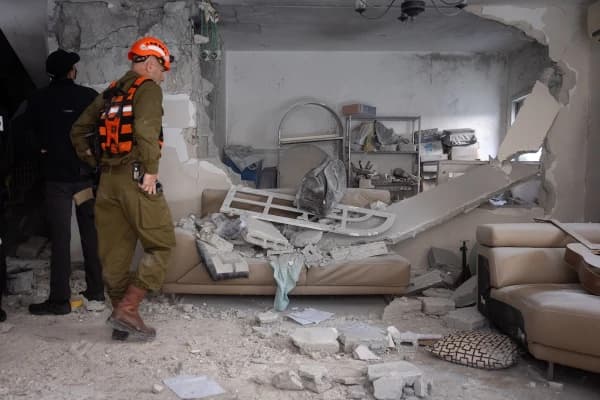
The Israeli Foreign Ministry has publicly condemned these actions, stating that 'the Iranian regime targets civilians on purpose' and that 'Iran is using cluster warhead missiles that explode mid-air and scatter explosives across a wide area' to maximize civilian casualties.
Despite these grave violations of international humanitarian law, there has been a notable absence of condemnation from UN organizations and international NGOs that typically respond swiftly to alleged Israeli actions.
HRW Double Standard
Human Rights Watch (HRW) has faced significant criticism for its apparent double standard regarding cluster munitions, as the organization has remained conspicuously silent while Iran uses these banned weapons against Israeli civilians.
The Jerusalem-based NGO Monitor highlighted this hypocrisy, noting that HRW has historically been a vocal opponent of cluster munitions, having 'spent years campaigning against cluster munitions: publishing reports, lobbying gov't, & supporting an int'l treaty.'
NGO Monitor President Gerald Steinberg condemned HRW's silence as exposing their 'immoral objectives behind the principled facade,' stating that their deafening silence on Iran's use of cluster munitions 'highlights their hypocrisy.'
This selective application of international humanitarian law standards has raised questions about the objectivity of major human rights organizations in the current conflict.
Conflict Escalation
The broader regional conflict has intensified with recent military actions, including American aviators conducting over 6,000 combat flights to maintain air superiority over Iranian skies.
“In recent days, the Iranian regime has markedly stepped up the use of ballistic missiles with cluster munition warheads against Israeli population centers”
US Central Command has confirmed the use of multiple 5,000-pound deep penetrator munitions against hardened Iranian missile sites along the coastline near the Strait of Hormuz.
These strikes targeted Iranian anti-ship cruise missiles that were described as constituting 'a direct threat to international shipping.'
The conflict's economic impact has become increasingly severe, with oil prices rising approximately 3 percent following renewed Iranian strikes on oil facilities in the United Arab Emirates, and overall increases of around 45 percent since the war began on February 28.
This surge in energy prices has raised global inflation concerns and threatens to push tens of millions of people into acute hunger conditions, according to warnings from the World Food Programme.
Global Impact
International aviation has been severely disrupted by the ongoing conflict in the Middle East, as flights across the region have been canceled, rescheduled, or rerouted due to missile and drone threats that have kept much of the airspace closed.
Global airlines have issued warnings about soaring jet fuel prices, noting that they could face hundreds of millions of dollars in additional costs, leading to higher fares and potential route cuts.
This transportation crisis compounds the economic challenges facing businesses and travelers worldwide.
Meanwhile, Iran has continued its military activities, including a recent incident where a projectile hit an area near the Bushehr nuclear power plant, though Iran informed the International Atomic Energy Agency (IAEA) that no damage or injuries resulted.
IAEA chief Rafael Grossi has reiterated calls for 'maximum restraint' to avoid the risk of nuclear accidents in the region.
More on Iran

Israel strikes Iran's Pars gas field as Tehran vows revenge
14 sources compared
Trump threatens to blow up South Pars gas field if Iran attacks Qatar again
10 sources compared
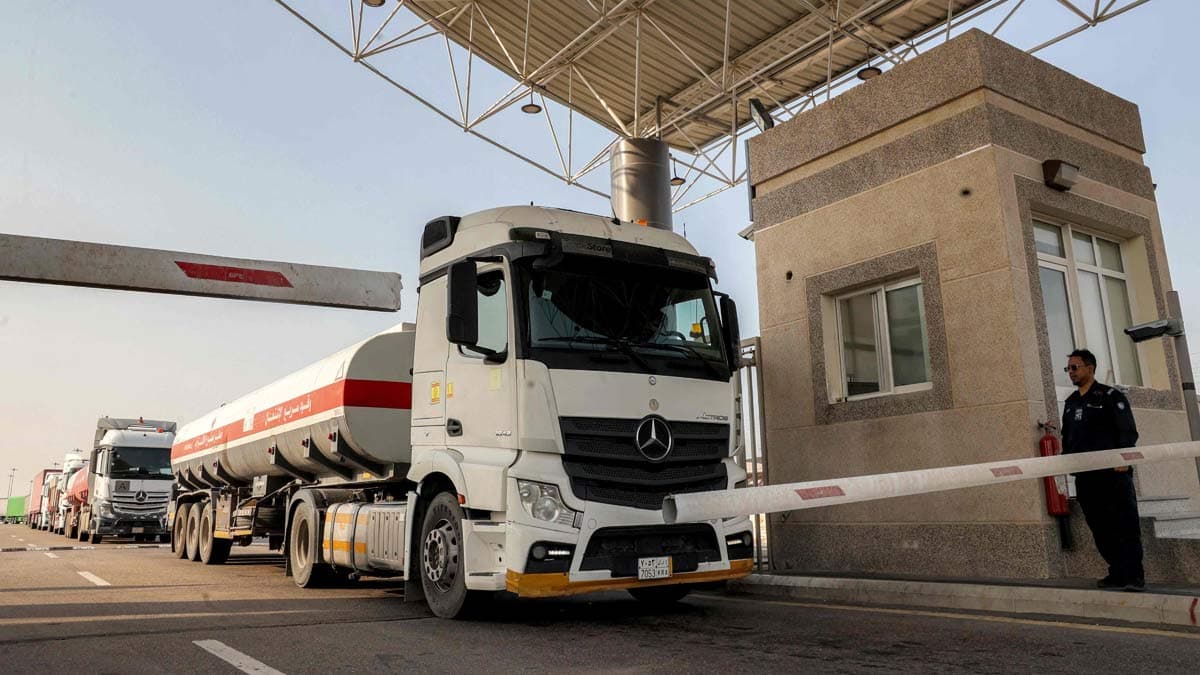
UAE Halts Habshan Gas Facility Operations After Debris From Intercepted Missiles
10 sources compared

Iran Threatens Gulf Energy Facilities After Israel Strikes South Pars Gas Field
11 sources compared