Iran-Israel09 January, 20263 min read
Iranian Regime Imposes Nationwide Digital Blackout as Protests Intensify
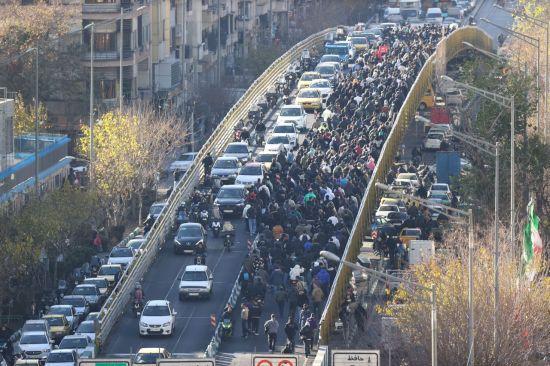
State enforced nationwide internet and mobile-data blackout to disrupt protest coordination Protests spread to over 300 locations across 28 of 31 provinces
23 outlets told this the same way.
Outlets did split on U.S. Intercepts Iran Message Activating Sleeper Cells After U.S.-Israel Strike Kills Khamenei →
Iran digital blackout and protests
A near-national digital blackout has accompanied a fresh wave of protests across Iran as demonstrations spread from Tehran to dozens of cities. NetBlocks and multiple outlets reported nationwide internet and phone restrictions that severely curtailed communications. Tribune India said NetBlocks reported a nationwide internet blackout as authorities tightened digital restrictions.
“NetBlocks reported a nationwide internet blackout as authorities tightened digital restrictions, severely curbing communications and information flow.”
Kursiv Media said NetBlocks reported a near-total internet blackout and labeled it part of a widening digital censorship campaign. BBC noted that an internet blackout is in place as widespread protests in Iran continue.

CBS quoted activists who said NetBlocks reported a nationwide internet and phone blackout. South Korea's 아시아경제 observed that authorities cut internet and international phone links as demonstrations spread.
Conflicting casualty and arrest counts
Casualty and detention figures vary sharply among monitors, rights groups and news outlets, and verification is hampered by a communications blackout. Tribune India summarized rights‑group claims of at least 36 killed and over 2,000 arrested. KSAT cited HRANA reporting 36 dead — 30 protesters, four children and two security personnel — and over 2,100 arrests.
The Associated Press gave a lower consolidated count, saying activists report demonstrations in more than 220 locations across 26 provinces, with at least 20 people killed and over 990 arrested. The BBC compiled multiple monitors’ tallies, reporting that HRANA put deaths at 48 and Iran Human Rights at least 51, while the BBC had confirmed the identities of 22 deceased. Several sources explicitly note that many figures have not been independently verified.

Iran authorities' response
Iranian authorities have responded with a mix of hardened rhetoric and, in some accounts, limited conciliatory moves from reformist figures, producing divergent narratives across outlets. Tribune India relayed stern warnings from officials, reporting that the chief justice threatened consequences for protesters and that Supreme Leader Ali Khamenei vowed not to 'yield to the enemy'. The BBC reported Khamenei gave a defiant televised address and that the Supreme National Security Council warned of no leniency.
“Iranian officials issued stern warnings — the chief justice threatened consequences for protesters, military leaders warned of a decisive response, and Supreme Leader Ali Khamenei vowed not to 'yield to the enemy.'”
By contrast, Al Jazeera described President Masoud Pezeshkian as acknowledging the right to peaceful protest and announcing economic measures such as plans to stabilise the currency. Several sources report security force deployments and claims of arrests and injuries among police and the Basij, and some international outlets and monitors allege live fire was used against demonstrators.
Drivers of unrest
Observers and many outlets identify acute economic hardship as a central driver of the unrest, though some opposition and exile sources stress explicit anti‑regime objectives and escalating tactics. Al Jazeera wrote that protests are driven primarily by severe economic hardship — collapsing rial, unpaid bills and eroded dignity. AP traced a long sequence of economic protests broadening into political demands.
lokmattimes similarly said the unrest is driven by acute economic hardship combined with long‑standing anger over government repression. mojahedin.org described protesters escalating tactics, including roadblocks, torching regime buildings, and chanting 'Down with Khamenei'. Several outlets noted symbolic acts such as the toppling of a Qasem Soleimani statue, reported by 아시아경제.
International reactions and reports
International responses have been mixed, including strong rhetorical support and warnings from the United States and some Western leaders, condemnation and calls to protect protesters from other Western capitals, and Iranian officials denouncing external interference. These reactions come amid continuing information blackouts that complicate independent verification. CBS documented President Trump saying the U.S. 'will come to their rescue' and that the country was 'locked and loaded and ready to go.'
“President Trump has publicly warned he would intervene on behalf of Iranian protesters, saying on Jan. 2 on Truth Social that the U.S. 'will come to their rescue,' telling Fox News the country was 'locked and loaded and ready to go...'”
CBS also reported activists said Starlink communications were jammed. The BBC described a joint statement by France, the UK and Germany condemning reported violence and calling for protection of peaceful assembly. Some local outlets cited Reuters as noting thousands detained.
شفق نيوز and the BBC noted the UN said it was 'very disturbed' by the loss of life. Iran’s UN ambassador, according to the BBC, accused the United States of interfering in Iran’s internal affairs.