Iran-Israel09 January, 20262 min read
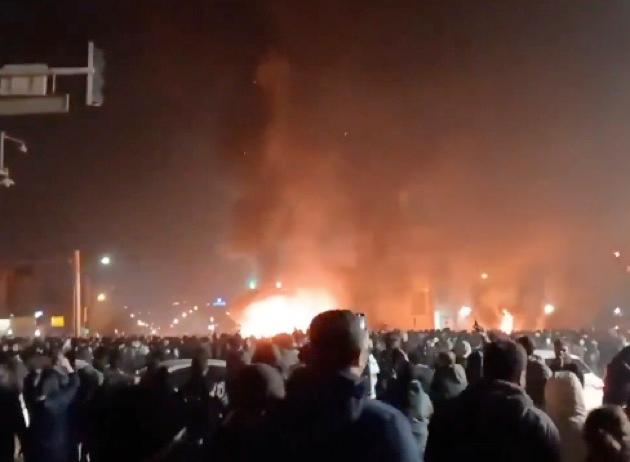
Iranian Security Forces Kill At Least 42 Protesters
Authorities imposed a nationwide internet and international telephone blackout Security forces killed dozens of protesters, with reports citing at least 42 deaths
12 outlets told this the same way.
Outlets did split on U.S. Intercepts Iran Message Activating Sleeper Cells After U.S.-Israel Strike Kills Khamenei →
Iran protests and casualties
Dozens of people have been killed amid nationwide protests in Iran that erupted in late December and escalated into widespread unrest across many cities, with at least 42 fatalities reported by some outlets and other sources giving higher or lower counts. World Israel News reports at least 42 people have been killed, and Mirage News says dozens of protesters and at least four security personnel have died.
“At least 42 people have been killed and more than 2,270 detained in recent unrest in Iran, the U.S.-based Human Rights Activists News Agency reported.”
Newsweek summarizes multiple tallies, citing figures from HRANA and Iran Human Rights and highlighting variation between sources. Radio Free Europe/Radio Liberty also reports dozens of protesters have been killed and notes challenges in independent verification and discrepancies in the counts.

Iran communications restrictions
Iranian authorities imposed broad communications restrictions that severely hindered independent reporting and verification, with outlets describing near-nationwide blackouts or severe disruptions. Mirage News reported an internet blackout that persisted into Friday, disrupted phone networks and canceled flights, while Newsweek said a nationwide internet and communications blackout made independent reporting difficult and undermined documentation of abuses. NetBlocks was cited by the Northeast Herald for reporting a nationwide internet blackout, and TRT World described varied restrictions including slowed speeds, localized blackouts and near-nationwide disruptions.
Reactions to Iranian unrest
Iranian officials and state media have portrayed the unrest as foreign-backed and promised firm responses. Mirage News reports state media blamed 'terrorist agents' linked to the United States and Israel and noted that Supreme Leader Khamenei's address ended with chants of 'Death to America!' Al Jazeera reports Khamenei accused demonstrators of acting as 'mercenaries for foreigners' and vowed a crackdown.
“State media blamed ‘terrorist agents’ linked to the United States and Israel for sparking the violence and reported unspecified casualties. President Masoud Pezeshkian urged restraint and called on officials to address ‘genuine’ grievances, while other Iranian leaders warned of no leniency.”
Newsweek cites IRGC intelligence blaming 'mercenaries' and pledging retaliation. At the same time, Mirage News and Al Jazeera say President Masoud Pezeshkian urged restraint and called on officials to address 'genuine' grievances.
Economic-driven nationwide unrest
The unrest began amid sharp economic pain and a plunging rial. It has spread beyond bazaars to universities and provinces, with large-scale arrests reported. TRT World and World Israel News link the initial protests to the currency's fall and broader economic woes.
Northeast Herald and HRANA report protests in dozens of cities and extensive detentions. TRT World cites HRANA's figure of 42 killed and roughly 2,277 arrested, while World Israel News reports more than 2,270 detained. The Irish Examiner and Honolulu Star-Advertiser emphasize economic triggers, noting inflation and currency collapse as drivers of escalating anti-regime chants.
Regional violence and responses
Reports highlight regional violence patterns and international concern, with human rights groups calling for investigations and some sources pointing to heavier losses in poorer, ethnically mixed western provinces. Radio Free Europe/Radio Liberty notes that more than half of the verified deaths occurred in the western provinces of Lorestan, Ilam and Kermanshah. Al Jazeera and the Honolulu Star-Advertiser cite HRANA and other groups' higher death tallies and warn of possible harsh punishments.
“More than half the verified deaths occurred in the western provinces of Lorestan, Ilam and Kermanshah—poorer, ethnically mixed regions hit hard by Iran’s economic crisis.”
Newsweek reports that the U.N. human rights office urged independent investigations and said the communications blackout undermines documentation. These accounts vary in focus: RFE/RL and Al Jazeera emphasize geographic and ethnic dimensions, Newsweek centers verification and international response, and local outlets stress domestic political ramifications.