Iran-Israel09 January, 20262 min read
Iranian Security Forces Kill At Least 72 Protesters in Intensified Crackdown
This article is an automated aggregation of coverage from news outlets. Our editorials offer in-depth analysis curated by the NewsCord team.
Security forces killed at least 62 protesters during the nationwide demonstrations Authorities imposed internet blackouts and cut phone lines, limiting outside monitoring of protests

6 outlets told this the same way.
Outlets did split on U.S. Intercepts Iran Message Activating Sleeper Cells After U.S.-Israel Strike Kills Khamenei →
Iran protest crackdown
At least 72 protesters have been reported killed amid an intensified crackdown in Iran, according to the U.S.-based Human Rights Activists News Agency cited by the Boston Globe.
“HRW said security forces shot and killed 28 protesters between Dec. 31 and Jan. 3, using rifles and shotguns loaded with metal pellets.”
Human Rights Watch documented security forces shooting and killing 28 protesters between Dec. 31 and Jan. 3 using rifles and shotguns loaded with metal pellets, according to the Guardian.

Rights groups, including Amnesty International and Human Rights Watch, have condemned the use of force and called dispersal tactics unlawful.
Witnesses and rights monitors describe a pattern of lethal and indiscriminate responses that echo earlier crackdowns.
Reporting conditions are difficult because of near-total internet and phone blackouts, and independent verification remains limited.
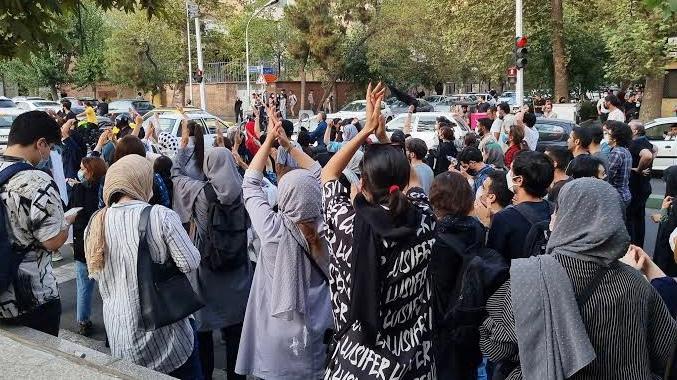
AP-verified video and other online footage indicate large demonstrations and chants against the supreme leader in parts of Tehran.
Reported crowd-control abuses
Multiple sources describe heavy-handed crowd-control methods. Witnesses and rights groups report security forces firing rifles and pellet shotguns, using water cannon and tear gas, carrying out beatings, and conducting mass arbitrary arrests. Human Rights Watch and Amnesty International explicitly condemned these tactics as unlawful.
The Guardian highlights documented instances of shooting with metal pellets and a pattern echoing previous crackdowns. The NZ Herald cites eyewitnesses saying security forces fired on demonstrators in Zahedan after Friday prayers and lists a wider range of measures used against protesters.

Official response and warnings
Iranian authorities and state media present a contrasting narrative. State outlets show pro-government rallies, report casualties among security forces, and portray the situation as largely under control. The Revolutionary Guards' intelligence arm warned it will not tolerate protests, calling protection of the revolution its 'red line'.
“State and semiofficial outlets showed pro-government rallies, footage they said depicted protesters firing weapons and attacking security forces, and reported arrests of alleged ‘operational terrorist teams’ with arms.”
Officials have signaled a tougher response; the Boston Globe reports the attorney general warned protesters and those who 'helped rioters' could be charged as 'enemies of God'. Exiled figures and rights lawyers warned of escalating violence, and Nobel laureate Shirin Ebadi warned security forces might be preparing a 'massacre' under a communications blackout.
Coverage of Iran protests
Verification challenges and international responses shape coverage. Independent reporting is constrained by communications cutoffs. International outlets such as Al Jazeera were able to report from inside Iran, and AP-verified footage captured large Tehran demonstrations.
Western leaders from France, the UK and Germany have publicly condemned the deaths of protesters and urged restraint, while U.S. political leaders voiced support for protesters. The tone varies across source types. Mainstream Western outlets emphasize human rights documentation and condemnations, as seen in the Guardian and NZ Herald.
Local Western reporting such as the Boston Globe combines activist counts with state claims and reports of legal threats from Tehran. One other source, the Greeley Tribune, lacks full material and signals gaps in available reporting.