1News
1NewsInternet blackout in Iran as protesters heed exiled prince's call
 1News
1NewsDeath toll in crackdown on protests in Iran spikes to at least 538
 aapnews.aap.au
Death toll from Iran protest violence 'reaches 116'
 Abb Takk News
Pakistan issues travel warning for Iran amid worsening security conditions
 Al Jazeera
Iran’s army pledges to defend national interests after US backs protesters
 Al Jazeera
Iran says over 100 officers killed as protesters defy government crackdown
 Al Jazeera
Iran’s Khamenei lashes out as Tehran struggles to quell protests
 Al Jazeera
US warns Iran amid growing antigovernment demonstrations and clashes
 Al-Jazeera Net
Iran protests enter their third week as internet outages continue
 Al-Jazeera Net
Tehran speaks of a decline in the protests, and Trump says, "Iran is looking for freedom."
 allisrael
Who is Reza Pahlavi, son of the Shah deposed during the 1979 Islamic Revolution, and a leading voice for the protests?
 Azerbaycan24
Protester puts pre-Islamic revolution Iran flag on London embassy
 Balkanweb
VIDEO/ Young Spiderman-like man climbs the walls of the Iranian embassy in London. Replaces the flag, puts up the "lion and the sun"
 BBC
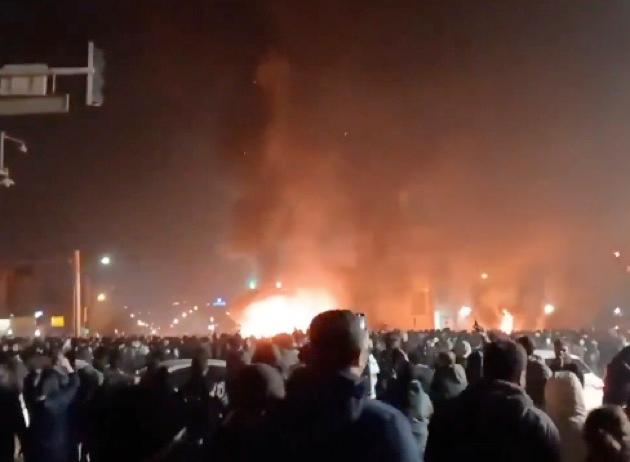
BBCIran protesters defy crackdown as videos show violent clashes
 BBC
BBCIran medics describe overwhelmed hospitals as protests continue
 BBC
BBCIran warns it will retaliate if US attacks, as hundreds killed in protests
 CBS News
Iranian protests rage as deaths mount and Trump renews warning of possible U.S. intervention
 CityNews Toronto
Iran supreme leader signals upcoming crackdown on protesters 'ruining their own streets' for Trump
 CNA
CNANew Trump warning as Iran cuts internet with protests across country
 CNN
CNNJanuary 11, 2026 — Iran protest death toll tops 500
 CNN
CNNJanuary 10, 2026 — Iran protests spread, death toll mounts amid internet blackout
 CNN
CNNWhy are Iranians protesting and what does it mean for the regime?
 Daily Mail
Thousands take to London streets as protests against Iranian regime spread around the world: Demonstrators target 'terrorist factory' embassies and call for revolution in Tehran as mullahs kill hundreds in bloody crackdown
 Daily Mail
Behind Iran's deadly blackout: Ruthless crackdown by regime's religious dictatorship exposed by brave protesters fighting for their freedom and lives
 Daily Mail
Is Iranian regime about to collapse? Huge crowds scream 'death to the dictator' as deadly riots spread across the country and Trump warns rulers will be 'hit hard' if they kill protesters
 Daily Sabah
Trump warns Iran of possible strikes amid growing protests | Daily Sabah
 DIE WELT
Iran: "Direct shots to the heads," reports a hospital employee — Trump is weighing military options
 DW
DWIran: Exiled crown prince calls for protests to continue
 DW
DWIran: Ayatollah warns regime 'won't back down' amid protests
 El País
Protests escalate in Iran, with hundreds dead and thousands detained.
 en.bd-pratidin
‘Iran recognizes rightful protests but stands firmly against terrorists’|54659|News24 TV
 Firstpost
Protester replaces Iranian regime flag, climbs embassy balcony in London | Watch
 Fox News
WATCH: Protester installs pre-revolution flag at Iranian embassy in London
 Fox News
Iran’s ‘distinctive’ drone deployment sees death toll soar amid violent protests
 France 24
Anti-government protests spread in Iran: Supreme Leader warns protesters
 Greater Kashmir
Over 60 killed as anti-govt protests intensify in Iran
 Greeley Tribune
Iran judiciary chief vows there will be ‘decisive’ punishment for protesters
 Haaretz
Trump Says Iran Reached Out for Nuclear Talks, May Meet With Them
 Haaretz
Khamenei Says Iran 'Will Not Yield' After Thousands Protest Across Country
 Herald Sun
Trump warns Iranian regime it will ‘pay hell’ if protesters killed
 Hindustan Times
'Don't abandon streets, Trump saw your bravery': Reza Pahlavi urges more protests in Iran in new message | World News
 Hindustan Times
Iran protests highlights: Internet shut amid protests, Reza Pahlavi's ‘urgent message’ for Trump | World News
 Hindustan Times
Iran protests Live Updates: Tehran Army vows to safeguard national interests as protests continue | World News
 Honolulu Star-Advertiser
Dozens of deaths reported as protests rage across Iran
 Irish Examiner
Iran shuts off internet as protesters start fires in widening unrest
 iwcp.net
US Warns Iran as Nationwide Protests Spark Fresh Clashes
 Juan Cole/ Informed Comment
Will the Islamic Republic of Iran be able to Celebrate its 47th Anniversary?
 Le Monde.fr
By crushing its own people, the Iranian regime paves the way for its own downfall
 livemint
Iran protests LIVE: ‘Goal is to seize and hold city centres,’ says son of ousted Iran shah Reza Pahlavi | Watch
 lokmattimes
Iran army vows to defend "national interests" as protests escalate
 lokmattimes
Iran's Revolutionary Guard denounces US President Donald Trump's "blatant intervention" in Iran's internal...
 lokmattimes
Iran: Isfahan Governor confirms 30 security personnel killed in foreign-backed riots
 Luxembourg Times
Iran protests escalate with 65 dead and over 2,300 arrested
 madhyamamonline
Iran protest death toll climbs to 116 as regime threatens 'death penalty' charges
 Mathrubhumi English
Iran protests enter second week as death toll rises to atleast 116
 Mint
MintIran Protests LIVE: Iran wants to ‘negotiate’? US Prez Donald Trump says ‘meeting is being set up’
 Mirage News
You Are Making Trump Happy: Iran Leader to Protesters
 MM News
Iran government in “Big Trouble,” Trump warns amid nationwide protests
 Moneycontrol
Trump warns Iran of 'hell to pay,' but keeps his distance as protests test Khamenei’s grip
 Moneycontrol
Protester climbs Iranian embassy balcony in London, replaces regime flag with pre-1979 emblem | Watch
 News Arena India
Trump mulling strikes on Iran amidst growing protests: Sources
 News18
Protester Climbs Balcony Of Iranian Embassy In London, Takes Down Regime Flag | Video
 news24online
Iran protests live updates: Iranian Army vows to protect national interests, Municipal building set ablaze in Karaj
 Newsmax
Trump's Iran Warning: You Start Shooting, 'We'll Start Shooting'
 Newsweek
Iran’s Supreme Leader Predicts Donald Trump ‘Will Fall’
 Northeast Herald
Iran erupts: Women burn Khamenei’s posters to light cigarettes as protests rock the regime
 NPR
NPRIran warns US troops and Israel will be targets if America strikes over protests as death toll rises
 NZ Herald
Iran protests swell as hundreds of thousands defy regime amid deadly crackdown
 Ommcom News
Trump Warns Iran Against Crackdown On Protesters
 open.kg
The son of the ousted Shah of Iran urged protesters to seize power.
 Peoples Gazette Nigeria
Iran’s supreme leader accuses protesters of ‘ruining their streets’ to please Trump
 PGurus
“We will hit them very hard”: Trump issues threat to Iran amid unrest
 PressTV
Calm returns after riots, deadly attacks on security forces
 PressTV
IRGC slams Trump's blatant intervention in Iran’s internal affairs
 PressTV
Thirty security forces killed in foreign-backed riots in Isfahan: Official
 PressTV
Iran's security forces detain riot leaders across multiple provinces
 Radio Free Europe/Radio Liberty
Iranian Protesters Remain On Streets As Trump, West Step Up Pressure On Tehran
 Radio Free Europe/Radio Liberty
Live Blog: Trump: 'Iran Is In Big Trouble'
 RBC-Ukraine
Mass protests sweep Iran: Will regime fall, what it means for Russia and Ukraine?
 Republic World
Iran Warns Protesters Of Death Penalty As Tehran Unrest Intensifies; Trump Vows Support, Warns Regime
 RNZ
RNZDonald Trump says Iran 'want to negotiate', after reports of hundreds killed in protests
 Sky News
US 'stands ready to help' Iranian protesters, Trump says, as at least 116 reported killed
 Sky News Australia
Govt issues dire warning to Australians in Iran as death toll soars
 South Florida Reporter
Iran on the Brink: Death Toll Surpasses 500 as Trump Weighs Military Options to Support Uprising (Video)
 The Australian
Iran ‘wants to negotiate’ says Trump as toll rises
 The Boston Globe
Death toll from protests in Iran hits at least 544, activists say, as Trump says Iran wants to talk
 The Daily Jagran
Why Protesters Replaced Iran's Regime Flag With Pre-1979 'Lion And Sun' At London Embassy Amid Protests | VIDEO
 The Economic Times
Venezuela and Iran name streets after Donald Trump? Explainer on Trump Street claims, protests and stateme
 The Economic Times
Iran protests enter third week: Death toll surges to 116 amid crackdown and 2,600 detained, say activists
 The Financial Express
Iran Protests LIVE updates: Iran warns ‘zero tolerance’ for protest inciters as pro-regime rallies chant ‘Death to America’
 The Financial Express
London embassy breach: Protester climbs onto balcony, tears down Iran’s flag – Watch
 The Guardian
Unpredictable Trump weighs up Iranian pleas for help against calls for restraint
 The Guardian
New protests erupt in Iran as supreme leader signals upcoming crackdown
 The Guardian
Trump says he is considering ‘very strong’ military options against Iran as protester death toll climbs
 The Hindu
Iran protests LIVE: Israel on high alert for possibility of U.S. intervention in Iran, sources say
 The Independent
Iran protests latest: Tehran says it has arrested 100 ‘armed rioters’ after threatening death penalty
 The Independent
Iran protests latest: Trump briefed on ‘strike options’ as military tightens grip
 The Independent
Iran protests latest: Trump ‘to consider strikes’ as death toll soars
 The Independent
Trump warns Iran ‘we’ll start shooting’ if demonstrators killed as protests continue
 The Independent
Protester tears down Iranian flag from London embassy
 The Indian Express
Iran Protests 2026 Live Updates: Death toll crosses 500, say activists; Tehran says will retaliate against any US attack
 The Jerusalem Post
Iranian doctors say hundreds killed in protests, hospitals in Tehran enter crisis mode - report
 The Korea Herald
Death toll in violence surrounding protests challenging Iran's theocracy reaches 116, activists say
 The Spectator Australia
Ten reasons why the Islamic Republic of Iran will fall
 The Sunday Guardian
‘USA Stands Ready to Help’: Trump Backs Iran Protesters as Tehran Threatens Death Penalty Amid Nationwide Unrest
 The Sunday Guardian
Iran Protest Latest Updates: Trump Turns Up Pressure Again on Khamenei as Protests Turn Deadly; Death Toll Reaches 48
 The US Sun
Trump 'ready to help' protesters in Iran as regime’s blackout sparks fear of ‘massacre’ and US considers military plan
 The Washington Post
Hundreds of Iranian protesters feared killed; U.S. considers military strikes
 THEJ.CA
Iran Crackdown Intensifies As Report Estimates Thousands Killed In Two Days Of Protests
 Times Now
Iran on Edge: 5 Signals the US May Intervene Amid Raging Anti-Government Protests
 Times of India
Iran unrest: Tehran accuses US and Israel of stoking protests; plays down risk of military intervention
 Times of India
Iran protests live: ‘We will not go back’— Reza Pahlavi calls for overthrow of Iran’s ruling system
 Times of India
Anti-Khamenei protests rage on: Iran govt imposes internet blackout; Trump warns to 'hit very hard'
 Times of India
Iran tense: Cyber expert warns of ‘internet kill switch’ as protests intensify — what it means
 tovima
Iran Protests Continue Despite Internet Shutdown and Threats of Crackdown
 Tribune India
'Will be hitting them very hard where it hurts...': Trump warns Iran, says US watching situation closely
 TRT World
Trump posts video, claiming protesters now control Iran’s Mashhad
 United News of Bangladesh
Deaths in Iran top 500 amid escalating crackdown, activists say
 VOI.id
President Trump Warns of Striking Iran if it Kills Protesters
 Washington Post
Khamenei says Iran won’t ‘back down’ amid mass protests and Trump threat
 Washington Post
Iran on edge as protests spread — and government threats grow
 Washington Post
Iran’s protests seem different this time. Is the regime on the brink?
 World Israel News
Protests sweep Iran despite internet shutdown as state TV warns of casualties