Full Analysis Summary
Crackdown on Iranian protests
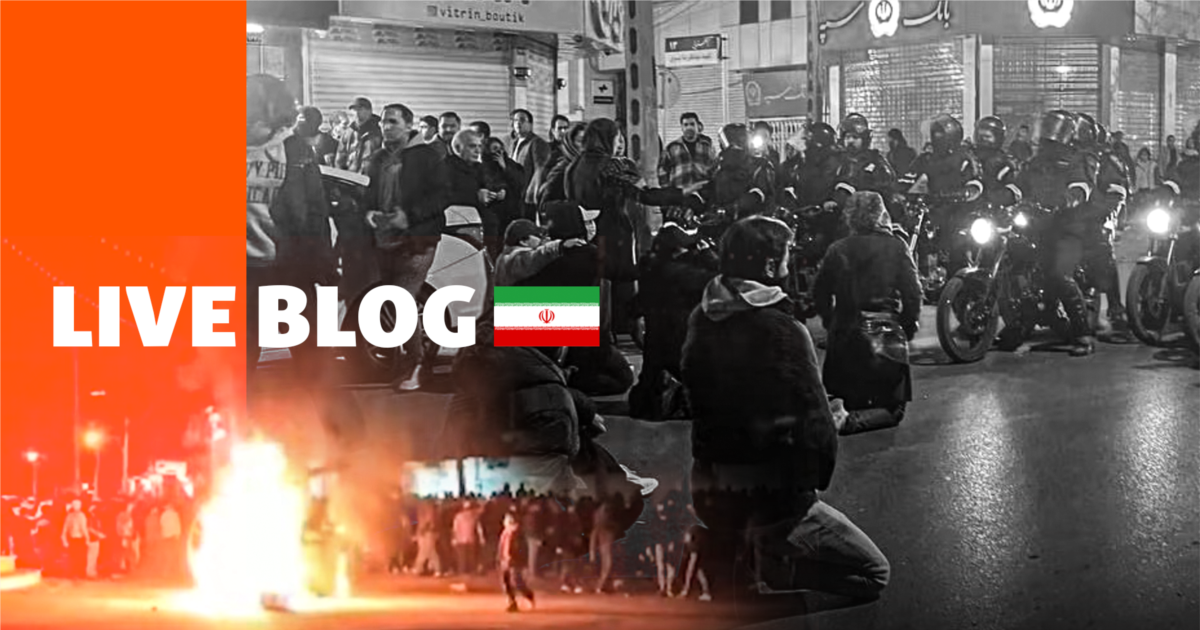
Iranian security forces launched a sweeping and lethal crackdown on widespread protests.
Human-rights monitors warned the death toll could be far higher than official figures.
The BBC reports monitors say the death toll is 'likely to rise' and cites groups such as Hrana and Norway-based Iran Human Rights.
Some monitors warn the final toll could exceed 25,000, while Iranian authorities have reported more than 3,100 deaths and said most were security personnel or bystanders killed by 'rioters'.
RFE/RL says 'thousands' were killed or detained in a harsh crackdown and describes the unrest as the biggest challenge to the Islamic regime in years.
Together, these sources describe a large-scale, violent response by security forces to a mass citizen uprising.
Coverage Differences
Tone and scale emphasis
BBC (Western Mainstream) highlights human-rights monitors’ high-end casualty estimates and verification efforts, reporting warnings that the toll could exceed 25,000 and documenting verification work by groups such as Hrana; RFE/RL (Western Mainstream) emphasizes the breadth of repression—‘thousands’ killed or detained—and adds detail on arrests, public trials, and state-TV confessions rather than headline large-scale toll estimates. BBC’s reporting quotes monitors and verification work, while RFE/RL focuses on judicial and media elements of the crackdown.
Verified live-fire reports
Eyewitness material and independently verified video footage reported by the BBC and RFE/RL show security forces using live ammunition against protesters.
The BBC says it has verified videos of security forces firing live ammunition and has found shotgun cartridges and rubber bullets on Tehran streets.
An eyewitness named Sahar described rapid escalation, with security forces firing live rounds, using lasers, and multiple friends wounded or killed amid a communications blackout.
RFE/RL published footage from the January 8 Mashhad protests showing protesters taking cover from repeated government gunfire and carrying the injured, reinforcing both outlets' accounts of live fire against demonstrators.
Coverage Differences
Narrative detail focus
Both BBC and RFE/RL report footage of live gunfire, but BBC emphasizes its own verification of videos and physical evidence found on streets (shotgun cartridges, rubber bullets) and an eyewitness’s traumatic account, whereas RFE/RL emphasizes released protest footage (Mashhad) and the depiction of protesters taking cover and aiding the injured; BBC foregrounds verification work and forensic evidence, RFE/RL foregrounds protest footage and the sequence of events shown in that footage.
Crackdown and media reporting
RFE/RL reports authorities have pursued mass arrests, expedited public trials, and televised confessions in a campaign to crush protests.
Human-rights groups cited by the BBC are working to verify casualties and document abuses.
RFE/RL says Iran’s judiciary released images from what appears to be a first public trial in Malard, showing defendants accused of killing law-enforcement officers.
It notes that human-rights groups say such trials lack fair standards and that some detainees were shown making confessions on state television.
The BBC’s reporting complements this with broader casualty verification and details on constraints on foreign reporting inside Iran.
Coverage Differences
Focus on legal process vs. casualty verification
RFE/RL (Western Mainstream) provides detailed reporting about the judiciary’s actions—public trials, accusations, and televised confessions—and reports human-rights groups’ critiques of fairness; BBC (Western Mainstream) concentrates on casualty verification, barriers to reporting (foreign media barred) and physical evidence on streets, meaning RFE/RL foregrounds judicial/propaganda mechanisms while BBC foregrounds documenting deaths and verification challenges.
Information control and reporting
The government defended an internet blackout as necessary to "preserve human lives."
Critics say the shutdown and state-media practices prevent accurate reporting and facilitate repression.
RFE/RL cites analysts such as Ilan Berman arguing Iran invested in domestic internet-control infrastructure, including Chinese technology, to enable censorship.
RFE/RL also records U.S. President Donald Trump describing the situation as "in flux" while noting a U.S. naval deployment.
The BBC’s reporting on communications blackouts and restricted foreign access aligns with concerns about information suppression but places stronger emphasis on on-the-ground verification of casualties.
Coverage Differences
Coverage of information-control and international angle
RFE/RL (Western Mainstream) explicitly traces censorship tools, quoting government defence of the blackout and analysts (Ilan Berman) on internet-control infrastructure, and includes international reactions (Trump, U.S. naval deployment); BBC (Western Mainstream) documents the blackout’s effect on trauma and verification and reports physical evidence and eyewitnesses, but RFE/RL provides more on infrastructure, analysts’ views, and international political signalling.
Media coverage summary
Taken together, the BBC and RFE/RL portray a severe and multifaceted campaign by Iranian security forces to crush a citizen uprising.
They document large-scale lethal force with verified use of live ammunition and gunfire footage, mass arrests and contested public trials, and sweeping information controls that hinder independent verification.
The BBC foregrounds casualty verification and eyewitness trauma and cites human-rights monitors warning of very high death tolls.
RFE/RL provides granular reporting on trials, televised confessions, the mechanics of censorship, and international responses.
Readers must weigh both the documented forensic evidence and the judicial and propaganda narratives reported.
Where details are ambiguous or contested (such as the final death toll or the fairness of trials), the sources report conflicting claims and emphasize limitations on independent verification rather than offering definitive conclusions.
Coverage Differences
Summary contrast and uncertainty
BBC (Western Mainstream) emphasizes casualty verification, eyewitness trauma, and human-rights monitors’ alarming estimates; RFE/RL (Western Mainstream) emphasizes arrests, public trials, state-TV confessions, and the information-control apparatus as tools of repression. Both report limits to independent verification (barred foreign media, internet blackouts) and therefore present differing emphases rather than fully reconcilable figures; both sources report claims rather than an established single authoritative account.