Full Analysis Summary
Investigation of January protests
BBC News Persian’s investigation documents widespread, violent repression of January protests across multiple Iranian cities.
It presents multi-source corroboration, including forensic analysis, verified video, medical records and eyewitness accounts.
The evidence indicates security forces used lethal force against demonstrators, employing rifles, shotguns, pistols, machetes and blunt instruments.
The violence produced mass eye injuries and multiple deaths.
Coverage Differences
Missing/Unavailable sources
Only BBC News Persian material was provided to me. Because no other source snippets were included, I cannot compare how other outlets or source types (e.g., West Asian, Western Alternative) describe the events, nor can I identify contradictions or tonal differences across sources. The following summary therefore relies solely on BBC’s reporting and does not reflect any comparative analysis.
Forensic weapon-use evidence
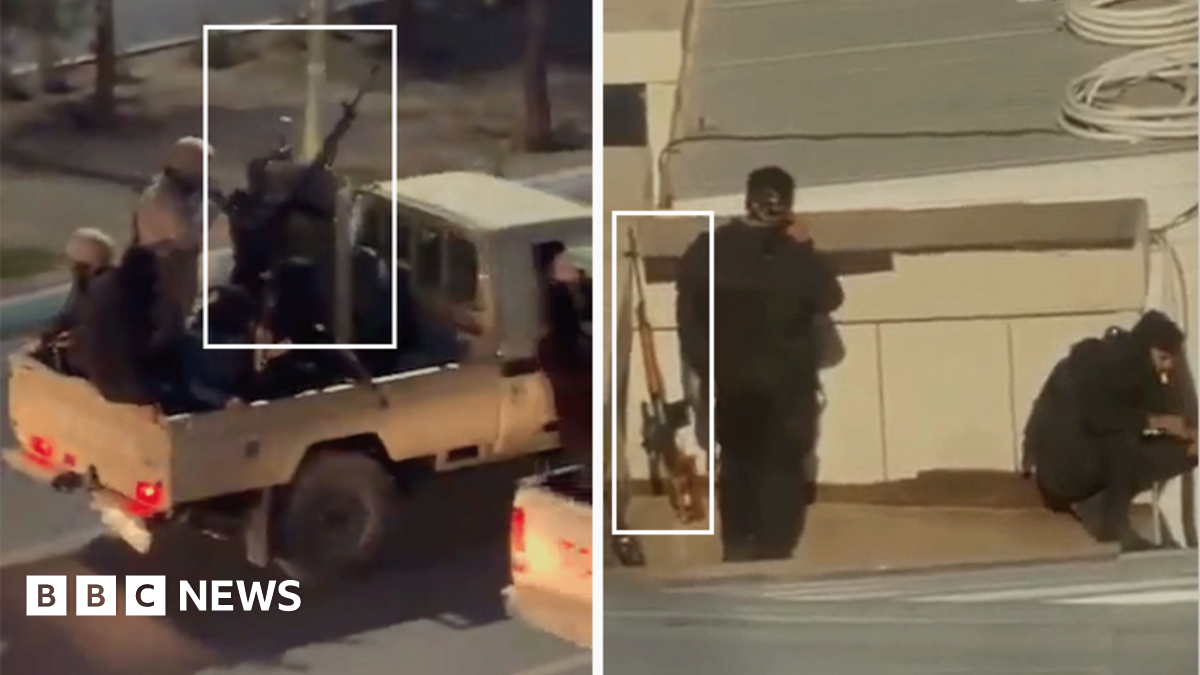
BBC Persian provides specific forensic and visual evidence of rifle use: video from Amol on 9 January shows a security officer aiming and firing a Kalashnikov-type rifle.
Forensic analysis of spent casings recovered from the streets confirmed 7.62x39mm rounds, the calibre associated with Kalashnikov-pattern weapons.
The report documents plainclothes agents in Kermanshah wielding pistols that analysts say resemble Beretta Model 50 or CZ 75 types.
CCTV footage from Tehran shows plainclothes agents attacking protesters with machetes.
Coverage Differences
Missing/Unavailable sources
No other source excerpts were provided to compare whether other outlets corroborate the same weapon-specific forensic details (e.g., calibre analysis) or describe different weapon types (such as explicit references to machine guns or sniper rifles). Thus, I cannot identify contradictions or confirmations from other source types.
Crackdown eye injury evidence
BBC Persian highlights severe eye injuries inflicted during the crackdown.
Verified footage and medical evidence include an exclusive CT scan showing a metal pellet embedded in a Mashhad protester’s eyeball.
Dr Ghasem Fakhraei, head of a major eye hospital, told ISNA that about 1,000 patients needing emergency surgery for ruptured eyeballs arrived at the hospital between 9 and 10 January.
The report links shotgun use to many deaths and widespread eye injuries.
Analysts identified several shotgun models, including the Iranian-made Maher in standard and short-barrel versions.
Coverage Differences
Missing/Unavailable sources
Without additional sources, I cannot determine whether other outlets corroborate the scale of eye injuries, report alternative casualty figures, or offer differing medical testimony. I therefore cannot assess variance in tone or emphasis across source types regarding these injuries.
Verified lethal repression evidence
Investigation documents record beatings, blunt-force trauma and fatalities confirmed by survivors' interviews and verified footage.
BBC Persian verified that Saghar Seifollahi Fars was killed by beating, and that Ali Taherkhani, though initially shot, later died after being beaten.
Footage and eyewitness accounts show protesters being struck with batons and gun-butts.
The combination of shootings, shotgun fire, machete assaults and beatings forms the basis of BBC's conclusion of lethal, multi-weapon repression.
Coverage Differences
Missing/Unavailable sources
I cannot contrast how other outlets assign responsibility, characterise intent (e.g., whether they use terms like 'massacre' or 'genocide'), or emphasize different victims or incidents, because those sources were not provided. As a result, cross-source comparisons about narrative tone or attribution are not possible here.
BBC excerpt limitations
The BBC report provides detailed evidence of lethal repression.
In the supplied excerpt it does not quantify thousands of protesters massacred or explicitly mention machine guns or sniper rifles.
It documents Kalashnikov-type rifle fire, shotguns, pistols, machetes, and beatings with corroborating forensic and medical evidence.
Because only the BBC excerpt was provided, I cannot present alternative framings, confirm casualty totals beyond what the BBC cites, or identify cross-source tonal differences.
Those comparisons would require additional source material.
Coverage Differences
Ambiguity / Missing information
BBC’s excerpt does not state figures such as 'thousands' killed nor mention 'machine guns' or 'sniper rifles' explicitly; therefore any claim beyond the BBC’s detailed findings would be unsupported by the provided material. No other source excerpts were supplied to validate broader claims or to show differing narratives across source types.