Full Analysis Summary
Crackdown on Iran protests
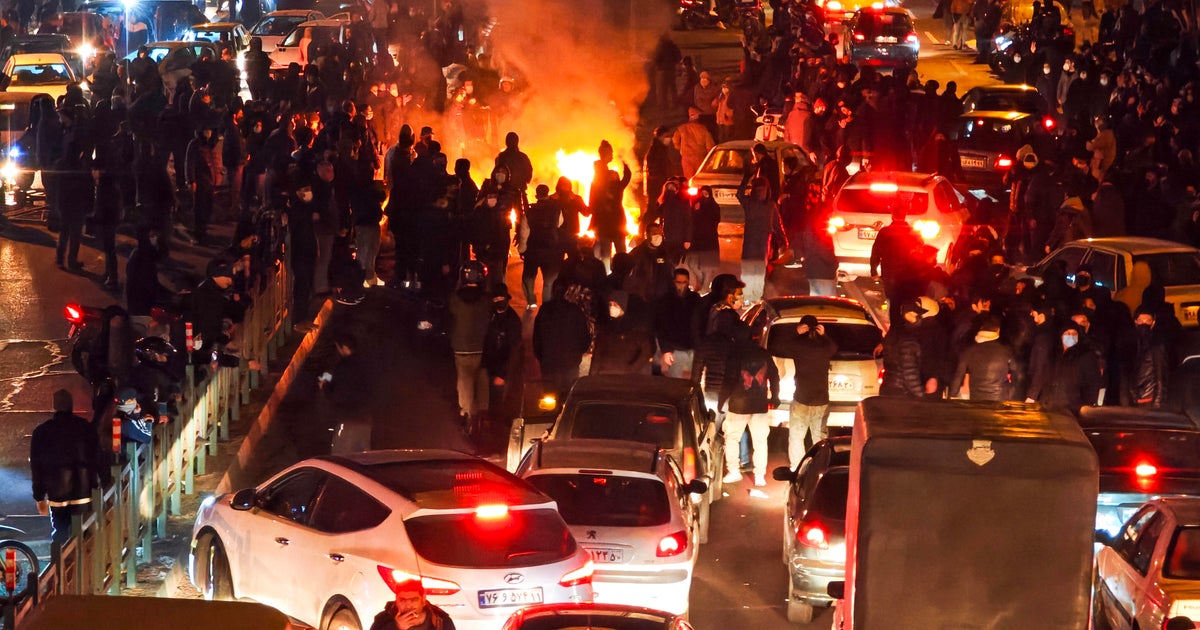
CBS News reports that Iranian security forces have conducted widespread night raids and arrests across Iran in a crackdown on nationwide protests that began in late December.
The report recounts a Jan. 16 case in which agents woke two sisters, forced phone passwords from them and detained them.
CBS News says similar home and workplace raids have been reported in cities and rural towns.
CBS frames the operations as large-scale domestic security actions targeting demonstrators and suspected organizers.
Coverage Differences
Missed Information
Only CBS News is available among the provided sources, so cross-source contrasts (such as government statements, opposition accounts, or regional outlets) are not present. Because of that limitation, we cannot show how other outlets frame the raids, nor can we verify additional details beyond CBS's reporting. This paragraph therefore reports CBS's narrative and flags the absence of other source perspectives.
Detained groups and conditions
CBS News reports that detainees span a wide range of professions and social roles, including university students, doctors, lawyers, teachers, actors, business owners, athletes, filmmakers and reformist figures close to President Masoud Pezeshkian.
The article says many of the arrested are often held incommunicado for days or weeks and barred from contacting family or lawyers, which suggests constrained legal access and opaque detention conditions.
Coverage Differences
Tone
With only CBS News provided, tonal contrasts (for example, human-rights advocacy outlets describing the crackdown as catastrophic versus state outlets describing it as law enforcement) cannot be shown. Here CBS uses descriptive language emphasizing the diversity of detainees and restrictions on communications, but we cannot compare that tone to other source types.
Arrest figures and verification
On the question of scale, CBS cites claims from human-rights groups and monitoring efforts but also flags verification limits.
The U.S.-based Human Rights Activists News Agency has reported more than 50,000 arrests (unverified by AP).
A monitoring committee has verified over 2,200 names, including 107 students, 82 children (as young as 13), 19 lawyers and 106 doctors.
CBS therefore presents both a very large unverified figure reported by an activist agency and smaller, verified tallies from monitoring groups.
Coverage Differences
Narrative Framing
CBS juxtaposes activist claims and verified lists, but without other sources we cannot show if government figures contest these numbers or if regional outlets emphasize different totals. The article explicitly notes the 50,000 figure is "unverified by AP," indicating CBS's caution about activist claims.
Surveillance and information controls
CBS describes surveillance and information-control tactics used in the crackdown.
CBS reports authorities "have used street and store cameras, drones and other surveillance to identify protesters."
CBS says "an internet blackout has made tracking detainees difficult."
These technical measures, combined with phone-password coercion reported in individual cases, illustrate both physical and digital dimensions of the security response as presented by CBS.
Coverage Differences
Unique Coverage
Because the single available source is CBS News, we cannot identify other outlets that may provide additional technological detail or government rebuttals. CBS emphasizes surveillance technologies and an internet blackout; without other sources we cannot confirm whether state media justify these measures or whether regional human-rights outlets provide technical analyses.
CBS coverage and limitations
CBS's account raises legal and human-rights implications, noting prolonged incommunicado detention, coercive password demands, and arrests of minors.
However, the source set for this article is limited to a single mainstream Western report, so it should be read as a close summary of CBS's coverage rather than a multi-perspective synthesis.
Other source types — West Asian outlets, state media, and regional human-rights groups — are not available in the provided materials, meaning key contrasting claims, official responses, and corroborating investigations are missing.
I therefore present CBS's details faithfully while flagging the absence of other source viewpoints.
Coverage Differences
Missed Perspectives
This paragraph explicitly notes the absence of other source types (e.g., West Asian, Western Alternative, state media). Because only CBS News is provided, we cannot show official Iranian statements, alternative framings, or corroboration from local monitoring groups beyond what CBS reports. The result is a faithful but single-source account.