Iran22 February, 20264 min read
Iranian Students Reignite Anti-Government Protests After Authorities Killed Thousands In Crackdown
Students staged anti-government protests at multiple universities nationwide as campuses reopened. Protests are the first large demonstrations since authorities killed thousands in a deadly crackdown.

13 outlets told this the same way.
University protests in Iran
Thousands of students at Iran’s top universities reignited anti-government protests as campuses reopened, bringing fresh confrontations to Tehran and other cities. Al Jazeera reports "Thousands of Iranian students staged a second day of protests at universities in Tehran and elsewhere as campuses reopened," and identifies major Tehran campuses including the University of Tehran, Sharif, Amirkabir and Shahid Beheshti as key sites of turnout. The Daily Jagran likewise describes "Thousands of students at major Iranian universities staged aggressive protests Saturday."
“Thousands of Iranian students staged a second day of protests at universities in Tehran and elsewhere as campuses reopened...”
Digital Journal notes students held "fresh pro- and anti-government rallies" with footage and eyewitness accounts of clashes at Sharif and other campuses. JFeed frames universities as "a focal point of the 2026 uprising," saying students chanted anti-regime slogans and held memorials for those killed in January’s crackdown.

Campus unrest and crackdown
The campus actions followed a deadly nationwide crackdown in January that rights groups say left thousands dead and prompted mass arrests and detentions.
Al Jazeera reports the earlier unrest was 'most deadly on the nights of Jan. 8–9 during a state communications blackout' and 'prompted the arrests of tens of thousands'.
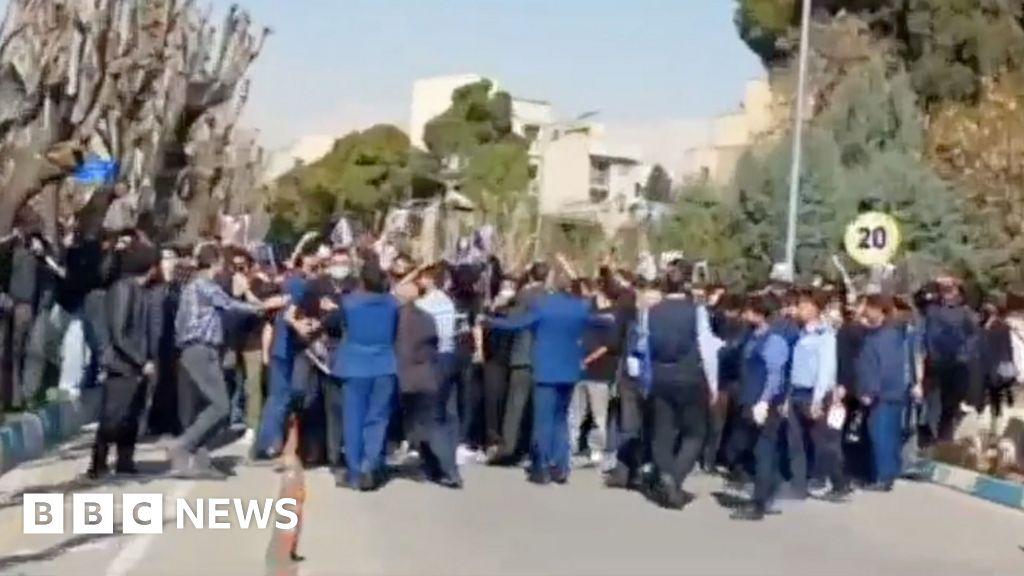
Radio Free Europe/Radio Liberty says students 'clashed for a second day with security forces and Basij paramilitaries' outside Amir Kabir and other universities.
Digital Journal and BBC similarly document clashes with security personnel and rival groups, noting footage showed violent pushbacks and dozens wounded or detained as authorities tightened campus security.
Death toll discrepancies
A central point of contention across reporting is the death toll and who is responsible for the killings. BBC cites the US-based Human Rights Activists News Agency (Hrana) as saying it 'had confirmed at least 7,015 deaths in that wave of unrest — including 6,508 protesters, 226 children and 214 people affiliated with the government — and was investigating a further 11,744 reported deaths.' BBC adds that 'Iranian authorities... say more than 3,100 people have been killed and that most victims were security personnel or bystanders attacked by ‘rioters’.'
“Hrana said on 15 February it had confirmed at least 7,015 deaths in that wave of unrest — including 6,508 protesters, 226 children and 214 people affiliated with the government — and was investigating a further 11,744 reported deaths.”
Al Jazeera similarly records Tehran’s official toll of '3,117,' notes HRANA and other independent monitors report 'much higher figures,' and cites a UN rapporteur estimate of 'over 20,000' and a U.S. official’s cited figure of '32,000.' Digital Journal and Radio Free Europe reiterate the split between low official counts and higher rights‑group tallies. These sources therefore contradict each other on the reported death toll and on attribution of responsibility.
Student uprisings and tensions
The student uprisings are unfolding amid heightened international tensions and a stepped-up US military posture that many sources link to the crisis. BBC reports "With US threats looming, Iranian forces are preparing for a possible confrontation with Washington," and cites US envoy Steve Witkoff saying President Trump criticized Iran for not having "capitulated." Radio Free Europe reports "U.S. and Israeli forces had struck several sites believed to be part of Tehran's nuclear infrastructure; the extent of any damage was unclear."
Herald Sun and Digital Journal note that Washington has "deployed two aircraft carriers" and bolstered regional forces as diplomacy in Geneva continued. JFeed collects alarmist reporting about nuclear facilities and warned the security situation increases the risk of strikes and broader conflict.
Campus protest symbolism
Campus protests have mixed symbolism and internal division. Students have held memorials for the January dead, waved national and pre-1979 flags, and chanted anti-government and pro-monarchy slogans. They have faced clashes with pro-state peers and Basij elements.
“Major Tehran campuses (University of Tehran, Sharif, Amirkabir, Shahid Beheshti) saw large turnouts and clashes between anti‑establishment students and pro‑state peers, some linked to the Basij paramilitary; heavily armed security forces were deployed and footage showed violent pushbacks.”
Al Jazeera describes "clashes between anti-establishment students and pro-state peers, some linked to the Basij paramilitary." Digital Journal reports videos of students "waving Iranian and pre-revolution flags" and chanting anti-government slogans.
The Daily Jagran highlights slogans and placards such as "We study for a future that does not exist." JFeed notes activists mobilizing support on social media (#FreeIranStudents) while authorities tighten campus security and monitor protests.
Tehran unrest coverage
Al Jazeera says Tehran refused an independent UN fact-finding mission, maintained strict internet restrictions, and has not released detailed arrest figures. The BBC notes that pro-government rallies were sometimes distinct from anti-government protests, and that monitoring those events is complicated. Radio Free Europe and the Herald Sun report that some countries have urged their citizens to leave amid fears of escalation.
JFeed and other outlets stress that the interplay of domestic unrest and international pressure leaves outcomes uncertain. Multiple sources describe the near-term outlook as ambiguous because authorities are limiting information and international responses vary.