Full Analysis Summary
Warnings over Khamenei attack
Iranian military officials warned that any hostile action targeting Supreme Leader Ayatollah Ali Khamenei would invite 'devastating retaliation,' calling such an attack tantamount to a declaration of war or a call to jihad.
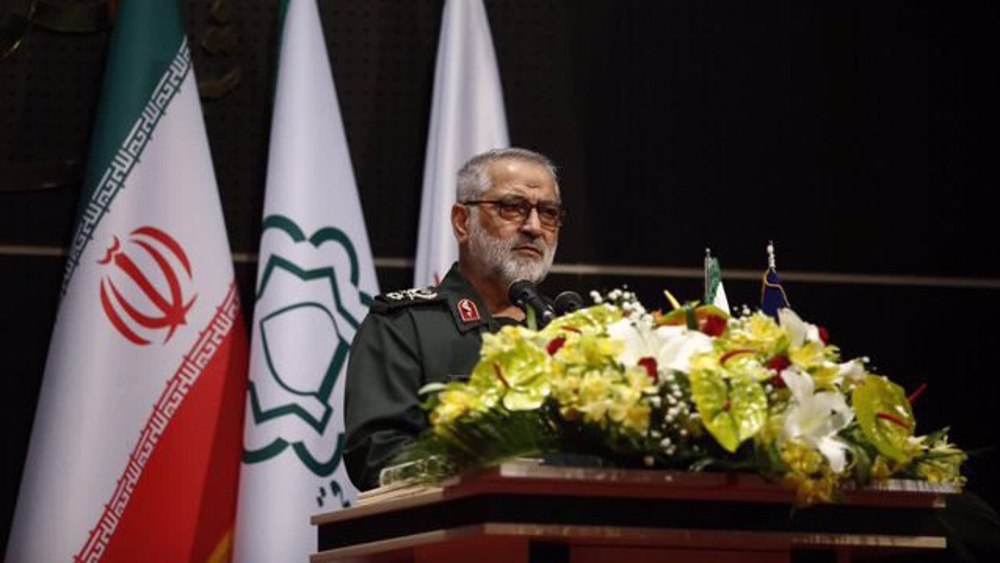
Gen. Abolfazl Shekarchi dismissed threats from U.S. President Donald Trump as 'psychological warfare,' and Iran’s parliamentary national security commission similarly said an assault on the Supreme Leader would cross a red line.
Officials cited recent military engagement as precedent, pointing to Iran’s response during a 12-day conflict in June 2025 as an example of the country's willingness to retaliate.
Coverage Differences
source-limitation and tone
Only a single West Asian source (PressTV) was provided for this briefing. As a result, comparisons across different source types (e.g., Western mainstream or Western alternative outlets) are not possible. PressTV frames the message in assertive, defensive terms—emphasizing retaliation, sovereignty, and a readiness to treat attacks on the supreme leader as war. The article quotes Gen. Abolfazl Shekarchi calling U.S. threats “psychological warfare,” and cites the parliamentary security commission’s warning that assaulting Khamenei would be treated as a declaration of war or a call to jihad.
Framing unrest as foreign interference
The article situates the threat within a broader domestic context, portraying recent unrest as driven by foreign-backed elements rather than purely internal grievances.
Shekarchi praised bazaar merchants and trade unions for refusing to join what the piece calls foreign-backed riots aimed at destabilizing the economy.
He also blamed the unrest on terrorist elements supported by the U.S. and Israel.
That narrative positions state institutions and segments of civil society as resistant to foreign interference while placing responsibility for violent unrest on external actors.
Coverage Differences
source-limitation and narrative
With only PressTV available, we cannot contrast how other outlet types portray the unrest (e.g., whether they emphasize domestic economic causes or repression). PressTV’s narrative explicitly attributes the unrest to foreign-backed or terrorist elements and praises domestic actors (bazaar merchants, trade unions) for not joining riots; these are presented as facts in the report rather than disputed claims. The article quotes Shekarchi praising merchants and trade unions and blaming “terrorist elements” supported by foreign powers.
PressTV's account of unrest
The snippet emphasizes that state forces—specifically the police, the Basij and the Islamic Revolutionary Guard Corps (IRGC)—showed restraint while confronting violent rioters and asserts that most riot victims were innocent civilians.
PressTV’s framing serves two functions: it defends security forces against accusations of excessive force and casts the movement’s casualties as victims rather than as insurgents.
Simultaneously, Iranian officials in the piece link economic discontent to external pressure, citing U.S. sanctions on the central bank and oil exports as factors that have aggravated grievances.
Coverage Differences
tone and emphasis
Because only PressTV is available, we cannot present alternate framings (for example, sources that question restraint claims or that emphasize state repression). PressTV emphasizes restraint by security forces and portrays riot victims as mostly innocent, and it links the economic drivers of unrest to U.S. sanctions on financial and oil sectors—placing blame on external economic pressure rather than domestic policy failures.
Iran's deterrence messaging
The invocation of past military action — the June 2025, 12-day conflict — functions as both a warning and a signal to domestic and foreign audiences that Iran possesses and will use credible military options.
PressTV reports officials referencing that response explicitly as precedent for potential retaliation, reinforcing deterrence messaging.
The article's stark language about treating any assault on the supreme leader as a call to jihad elevates the issue from a purely geopolitical matter to one with ideological and religious implications in the Iranian context.
Coverage Differences
narrative escalation and ideological framing
Only PressTV’s account is available to show how Iranian officials tie military precedent to current threats; other outlets might contextualize the June 2025 events differently (e.g., evaluating proportionality or legality). PressTV frames the precedent as justification for retaliation and emphasizes ideological language (a “call to jihad”), which heightens the severity and moral framing of the threat in its reporting.
PressTV assessment and caveats
The PressTV piece presents a cohesive, state-aligned narrative emphasizing deterrence, attributing unrest to foreign-backed 'terrorist elements,' lauding civilian restraint from merchants and unions, and linking economic strain to U.S. sanctions.
Only this West Asian source was provided, so independent corroboration, alternative framings, and critical perspectives from different source types are not available in this summary.
This limitation should be noted by readers seeking to understand the broader international and human-rights context.
The article therefore conveys a strong official position but cannot alone establish the full facts or competing interpretations.
Coverage Differences
explicit limitation and sourcing
The single-source nature of the provided material is the principal limitation: PressTV’s West Asian, state-aligned perspective shapes a narrative that cannot be balanced here with Western mainstream, Western alternative, or other international reporting. The piece is quoted repeatedly on the government’s warnings and attributions (e.g., psychological warfare, terrorist elements, sanctions), illustrating how the source’s identity influences its tone and claims.