Iran’s Cheap Drones Force U.S. to Confront Cost Imbalance, New York Times Says
Key Takeaways
- Iran's attack-drone production has risen tenfold in recent months.
- The U.S. counter-drone effort relies on interceptors around $15,000 each.
- Shahed drones cost roughly $30,000–$50,000 per unit (NYT estimates about $35,000).
Cheap drones, costly defense
The war with Iran has shown, in the view of the New York Times, that Iran is “a surprisingly capable adversary against the United States,” and that it has forced the U.S. and regional allies to confront “the rise of cheap drones on the battlefield.”
“- The US Army has purchased thousands of cheap interceptor drones since the Iran war started”
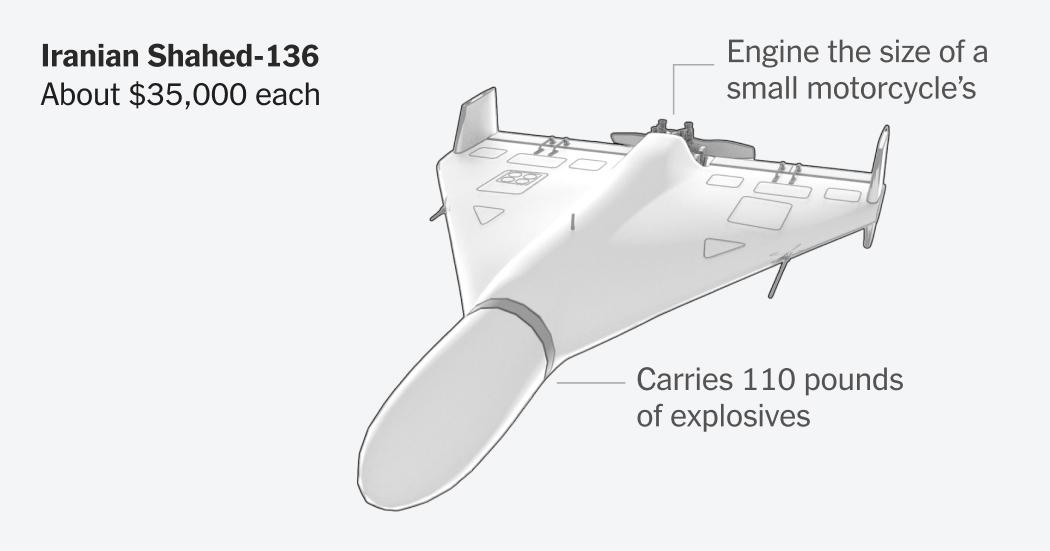
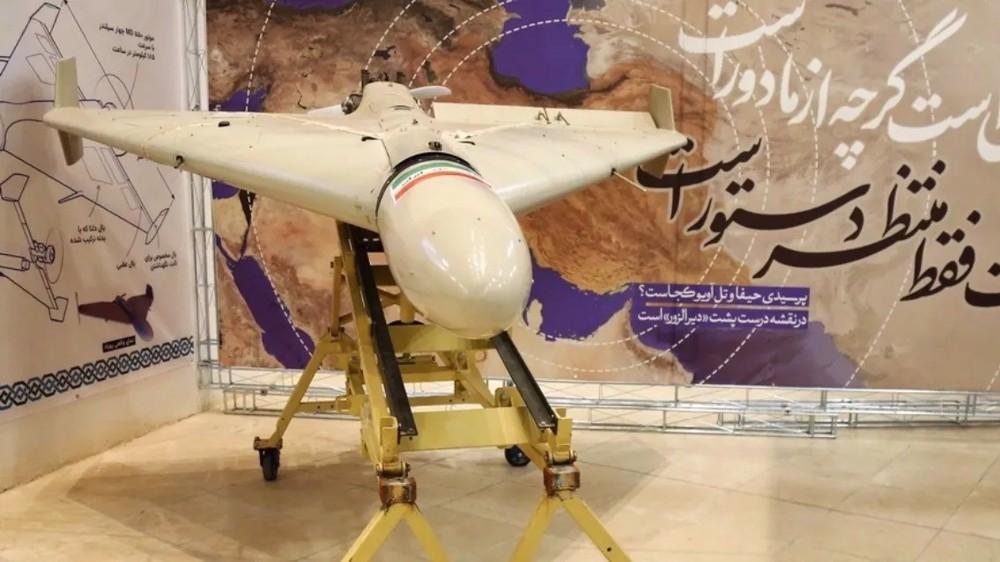
The New York Times says Iranian drones, made with commercial-grade technology, cost “roughly $35,000 to produce,” which it describes as “a fraction of the cost of the high-tech military interceptors sometimes used to shoot them down.”
The same article frames the economic imbalance as a driver of how the conflict has unfolded, noting that “Cheap drones changed the war in Ukraine” and that they have enabled Iranians to exploit “a gap in American defense investments.”
It also cites a Pentagon official in the Biden administration, Michael C. Horowitz, saying, “But there has not been the impetus to scale a solution.”
In the first six days, the New York Times reports that “the U.S. spent $11.3 billion on the war with Iran,” while it adds that the White House and Pentagon “have not provided updated estimates.”
The New York Times further reports that the American Enterprise Institute estimated in early April that the U.S. had spent “approximately $25 and $35 billion on the war,” with interceptors driving much of the cost, and it notes that “Many missile defense experts also fear interceptor stockpiles are now running dangerously low.”
Layered defenses and limits
The New York Times describes how the U.S. and allies have tried to counter Iran’s drone threat with a layered approach that includes air-based strikes, ground-based systems, and ship-based defenses, but it emphasizes that availability and design constraints have limited effectiveness.
For air-based strikes, it says an early warning aircraft can spot a drone “when it is still several hundred miles out from a target,” after which “a fighter jet, like an F-16, is dispatched from a military base,” and the F-16 can use “Advanced Precision Kill Weapon System (APKWS) II rockets” to shoot a drone “from about six miles away.”
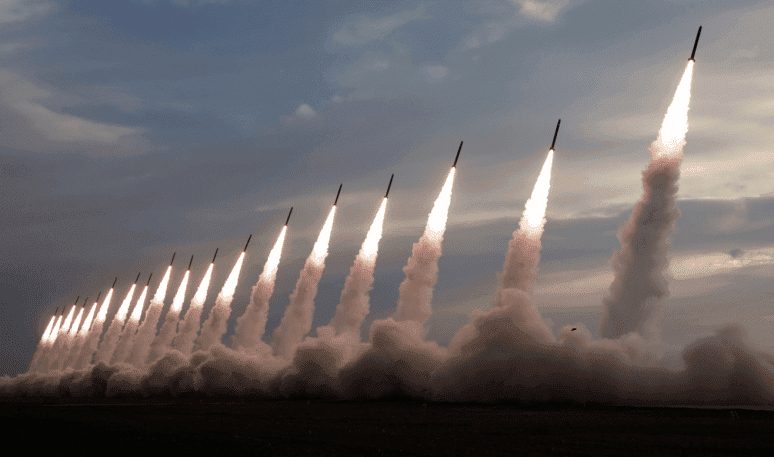
The article says defensive air patrols are “cost-efficient” but “haven’t always been available because of the vast scope of the conflict,” and it adds that “Iran has also targeted early warning aircraft that the U.S. needs to detect a drone from that distance.”
It also explains that ground-based detection systems are constrained because their ability to spot “low-flying drones is limited by the curvature of the earth.”
For shorter-range interception, it highlights the Coyote system, saying it can intercept drones “up to around nine miles away,” and it notes that “relatively few Coyotes have been procured by the U.S. military in recent years.”
The New York Times adds that when Iran-backed militias launched attacks on U.S. ground troops in 2023 and 2024, “troops had to shuffle the systems between eight different bases in the region almost daily,” citing a report from the Center for a New American Security.
It then turns to ship-based defenses, describing a Navy destroyer’s radar detecting drones “from 30 miles away” and using “Standard Missile 2 (SM-2) interceptors,” while noting that protocol requires “at least two missiles be fired.”
Merops and the cost curve
As the New York Times frames the problem as a mismatch between expensive defenses and cheaper drones, Business Insider reports that the U.S. Army has been buying low-cost interceptor drones to “flip the cost war” with Iran’s Shaheds.
Business Insider says the Army has purchased “thousands of cheap interceptor drones since the Iran war started,” and it reports that the interceptors cost “$15,000 apiece,” designed “to lower the cost of counter-drone defense.”
It attributes the disclosure to Army Secretary Dan Driscoll, who told lawmakers that after the U.S. began Operation Epic Fury, the Army purchased “13,000 interceptor drones for its Merops system within roughly eight days.”
Driscoll is quoted saying the interceptor drones “are incredible,” and he added, “They’re about $15,000 apiece right now,” while saying, “We think as they scale, they’ll get to less than [$10,000].”
Business Insider also provides the economic comparison Driscoll used, quoting him that the U.S. can “take Shaheds down that cost $30,000 to $50,000,” and it reports his conclusion that this is “amazing because it puts us on the right end of the cost curve.”
The War Zone similarly quotes Driscoll’s testimony, repeating that “within about eight days, we were able to purchase…13,000 Merops, which are incredible,” and it again cites the $15,000 per unit figure and the projected reduction “less than [$10,000].”
The War Zone adds that the Merops drone costs “about $15,000,” and it contrasts that with the “$30,000 to $50,000 Shaheds they intercept,” while stating that larger orders could drive prices to “$3,000 to $5,000 per unit.”
How Merops works in practice
Business Insider describes Merops as a counter-drone system made by the U.S. initiative Project Eagle, and it explains how the system’s design is intended to make interception cheaper and faster to field.
It says Merops “launches a small interceptor called the ‘Surveyor’ that can destroy targets like Iran's Shahed one-way attack drone by colliding with them or exploding in proximity.”
The article characterizes Surveyor as “propeller-driven,” and it says operators can “flexibly launch from ground stations or mobile platforms like a pickup truck,” while the drone “can fly over 175 mph and use artificial intelligence to navigate areas saturated with electronic warfare.”
Business Insider also reports that the Merops system is operated by “a small crew that can be trained in days,” and it says Surveyor is piloted using “off-the-shelf Xbox controllers that troops can quickly pick up.”
It adds that Merops was “first deployed to Ukraine,” where it has intercepted “more than 1,000 Shahed-type drones launched by Russia,” and it says “Last year, Poland and Romania purchased the system following Russian incursions into NATO airspace.”
The War Zone provides additional detail about the acquisition and deployment context, stating that the U.S. deployed Merops to the Middle East “in early March after the start of Operation Epic Fury to protect American and allied forces in the region from Iranian drone attacks.”
It also notes that Merops is “developed as part of the US-backed Project Eagle initiative,” and it cites the Ukraine Defense Tech Community’s description that the system is “built around Surveyor drones, which act as airborne interceptors capable of destroying enemy UAVs mid-flight.”
Stockpiles, timelines, and stakes
Beyond the immediate push for cheaper interceptors, Sahm reports that the U.S. is building what it calls an “expensive barrier against cheap Iranian drones,” and it frames the issue as a structural procurement flaw tied to stock constraints.
“One of the biggest takeaways of the war with Iran is that it has proven itself to be a surprisingly capable adversary against the United States”
It says a single drone valued at $50,000 is met with interceptors costing “millions of dollars,” and it states that the cost of Iranian Shahed drones ranges between “$20,000 and $50,000 per unit.”
Sahm reports that the U.S. intercepts them using PAC-3 Patriot missiles costing about “$4 million per missile,” and THAAD missiles costing between “$12 million and $15 million per missile,” and it adds that “No new THAAD intercept missiles have been delivered since August 2023,” with the next batch “not expected until April 2027.”
It also says Alpine Macro estimates the U.S. “may have consumed nearly half of its total THAAD stockpile,” and it reports that “About 600 PAC-3 missiles are produced annually,” adding that this rate “has already proven insufficient during the opening strikes of a war.”
Sahm also reports that the U.S. reduced its stockpile of JASSM-ER stealth cruise missiles to about “425 units from a pre-war stock of 2,300.”
It quotes Alpine Macro Chief Innovation Strategist Noah Ramos saying, “The cost misalignment defining the Iranian conflict is the most significant structural force reshaping defense procurement today,” and it includes his argument that “Sovereignty will belong to the force that uses the right tool for the right mission at the right cost.”
The New York Times similarly warns that “Many missile defense experts also fear interceptor stockpiles are now running dangerously low,” and it ties the broader problem to the cost of interceptors driving spending.
More on Iran

Israeli Strike Kills Ayatollah Ali Khamenei, Buried at Imam Reza Shrine in Mashhad
19 sources compared
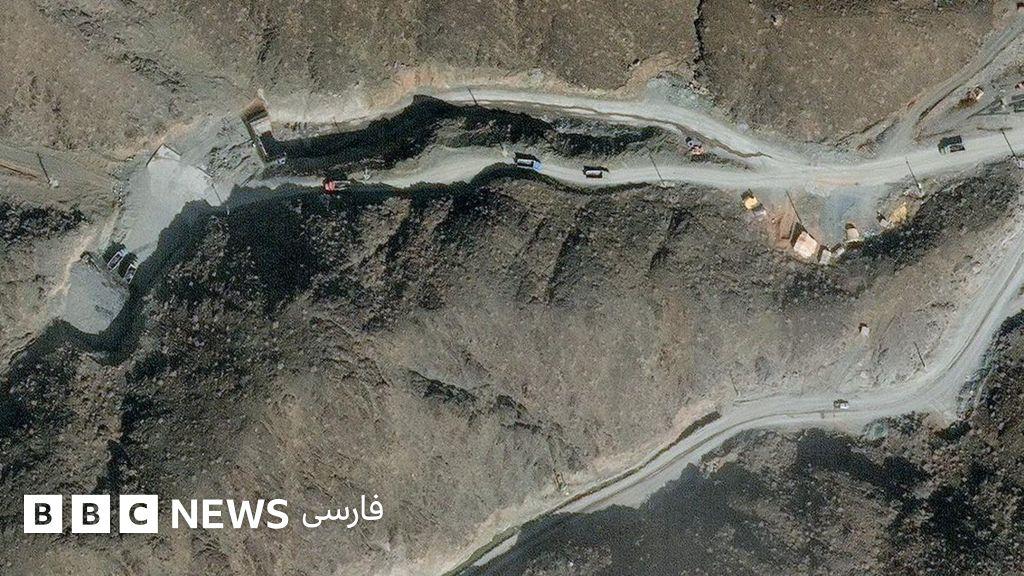
Iran Attempts To Restore Nuclear Sites Damaged In US And Israel Strikes, CNN Satellite Images Show
15 sources compared
Abbas Araghchi and Prince Faisal Bin Farhan Discuss Regional Developments After US Attacks
11 sources compared

Trump Says U.S. Agreed to Continue Iran Talks, Ceasefire Is Over
19 sources compared