Iran-Israel31 January, 20263 min read
Iran's Clerical Authorities Kill At Least 6,563 Protesters, Rights Group Says
This article is an automated aggregation of coverage from news outlets. Our editorials offer in-depth analysis curated by the NewsCord team.
Human-rights groups report thousands killed during Iran’s violent crackdown on nationwide protests Iranian leaders accuse the US, Israel, and Europe of inciting and exploiting the protests

7 outlets told this the same way.
Outlets did split on U.S. Intercepts Iran Message Activating Sleeper Cells After U.S.-Israel Strike Kills Khamenei →
Iran crackdown and casualties
The U.S.-based rights group Human Rights Activists News Agency (HRANA) says clerical authorities' crackdown on protests in Iran killed at least 6,563 people, which HRANA breaks down as 6,170 protesters and 214 security personnel. HRANA also reports mass arrests and a severe information blackout accompanying the killings. TimesLIVE cites HRANA's 6,563 figure and says the two-week nationwide protests were 'quashed in a bloody crackdown'.
“US-based rights group HRANA says at least 6,563 people were killed, including 6,170 protesters and 214 security personnel; Iran’s foreign minister Abbas Araqchi gave a lower toll of about 3,100 dead, including some 2,000 security forces.”
Breitbart gives a slightly different HRANA count of 6,479 deaths and highlights internet restrictions that are 'hindering information flow'. CNN reports 'thousands reportedly died' and notes HRANA says 'at least 40,000 people were arrested'. Iran International also frames the crackdown as decisive, saying last year's anti-government protests 'were crushed' and noting an internet blackout that worsened economic and security anxieties.
Iran's stance on unrest
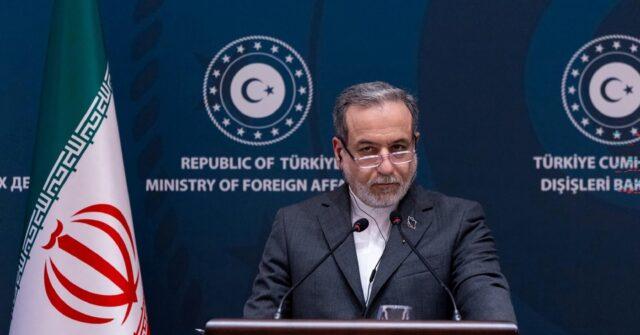
Iranian officials publicly blamed foreign actors for fomenting unrest while also signaling readiness for talks and refusing to barter away defensive capabilities. President Masoud Pezeshkian accused US, Israeli and European leaders of trying to 'tear the nation apart' by supplying resources to protesters, TimesLIVE reports. Iran’s foreign minister Abbas Araghchi said missiles would not be negotiable and that Tehran was prepared for 'either negotiations or conflict,' according to reports.
CNN quotes Araghchi saying Iran would join any 'meaningful, logical and fair' diplomatic process but rejected negotiating over its 'defensive capabilities'. Iranian news outlet ایران اینترنشنال reports Tehran has rejected preconditions such as halting enrichment or curbing long‑range missiles. Breitbart reports Iranian leaders said they 'have never sought war' but would give an 'immediate and firm response' to any aggression.

Military and diplomatic moves
Regional and U.S. military movements and diplomatic maneuvers feature prominently in coverage.
“U.S. officials say a military buildup is nearing completion even as diplomacy remains on the table, and recent high‑level visits, an expanded force posture and explicit linkage of military options to Iran’s domestic crackdown have moved U.S. action from a remote contingency to an imminent choice.”
ایران اینترنشنال reports that Gulf governments hosting U.S. forces urged Washington to avoid strikes.
It reports Saudi Arabia refused to allow its airspace to be used.
It says Qatar, Oman and Egypt lobbied for restraint.
The outlet also says U.S. officials report a military buildup is nearing completion.
TimesLIVE notes Turkey, the UAE and Saudi Arabia have been mediating to avert a U.S.-Iran military confrontation.
TimesLIVE cites reporting of a U.S. Navy destroyer docking at Eilat.
Breitbart quotes President Trump saying Tehran does want to make a deal.
That outlet frames U.S. pressure as pushing Iran toward negotiations or preparation for conflict.
CNN reports U.S. officials said Trump was reviewing options and had voiced support for demonstrators.
Information suppression and verification
Information suppression and verification problems are a recurrent theme.
Multiple outlets note internet restrictions and reporting limits.

Breitbart says 'internet restrictions since Jan. 8 are hindering information flow,' ایران اینترنشنال describes an 'internet blackout' that has worsened economic and security fears, and TimesLIVE frames the unrest and casualties against a backdrop of a 'bloody crackdown.'
CNN cautions that its reporting is being done with Iranian government permission and places the casualty and arrest figures in context rather than presenting an independently verified comprehensive body count.
Together the sources point to both a high human cost and significant barriers to impartial verification.
Uncertainty in Iran reporting
What remains uncertain is as important as what is reported: casualty counts differ, motives are disputed, and both diplomacy and military posturing are being presented as possible next steps. TimesLIVE and CNN record Iranian officials' insistence that missiles and defensive capabilities are non‑negotiable, citing Araqchi's comments.
“US-based rights group HRANA says at least 6,563 people were killed, including 6,170 protesters and 214 security personnel; Iran’s foreign minister Abbas Araqchi gave a lower toll of about 3,100 dead, including some 2,000 security forces.”
The Persian-language outlet ایران اینترنشنال lists U.S. demands that Tehran rejects, while Breitbart notes U.S. warnings and Trump's public remark that Tehran "does want to make a deal." Taken together, these sources depict deep domestic repression and substantial international risk, but diverging tolls, official denials, reporting limits, and differing editorial emphases mean the exact human cost and the proximate path forward remain unclear.
