Full Analysis Summary
Iran protest casualty verification
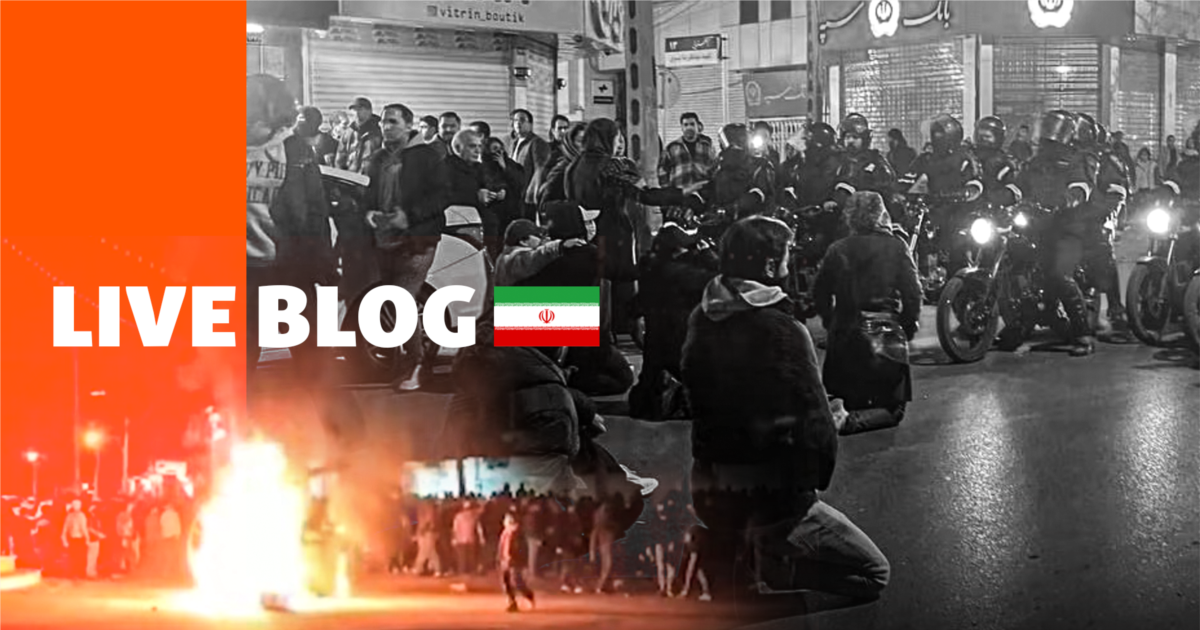
Claims circulating that Iran's clerical regime massacred over 36,500 protesters are not supported by the three provided sources.
Radio Free Europe/Radio Liberty reports that thousands of Iranians have been killed or detained in a brutal crackdown and documents state intense repression, contested trials, and forced confessions, but it does not present a 36,500 figure.
Hindustan Times reports that activists say the crackdown killed at least 5,000 people, and the article notes this figure is reported by activists and not independently verified.
NPR emphasizes that Iran is under a near-total internet blackout, with only an estimated 3% of people online via Starlink, which the government has made illegal.
This underscores that independent verification of casualty counts is severely constrained.
Taken together, these sources indicate substantial and contested death toll claims and significant verification limits, but none of the provided excerpts corroborate the specific 36,500 number.
Coverage Differences
Contradiction / Omission
Hindustan Times reports an activist-provided numeric estimate (5,000) and clearly flags it as unverified, whereas RFE/RL uses broader language—'thousands'—and provides detailed accounts of state repression without promulgating a single aggregated death toll; NPR focuses on the communications blackout that impedes verification. None of the three provided sources report the 36,500 figure, so the large specific number is absent from these accounts.
State violence and trials
Radio Free Europe/Radio Liberty reports that Iran’s judiciary released images from what appears to be the first public trial of a protester tied to the unrest.
The judiciary also showed footage of a bloodied officer and alleged that a defendant stabbed the officer, while the defense counsel disputed the evidence.
RFE/RL documents new video of protesters taking cover from repeated government gunfire and reports that some detainees were forced to confess on state television.
Hindustan Times frames the situation as a harsh government crackdown amid growing tensions with the United States.
NPR focuses less on courtroom detail and more on the communications blackout and how information about such incidents is getting out and being monitored internationally.
Coverage Differences
Narrative emphasis / Tone
RFE/RL emphasizes courtroom spectacle, alleged forced confessions, and graphic footage asserting direct state violence; Hindustan Times places the crackdown amid geopolitical tensions, quoting Trump and noting diplomatic reactions; NPR treats the subject through the lens of communications and verification challenges rather than courtroom specifics. These differences show RFE/RL foregrounds human-rights and legal-process details, Hindustan Times foregrounds regional/diplomatic ramifications, and NPR foregrounds the technical barriers to documenting abuses.
Communications blackout impact
NPR reports Iran is under a near-total internet blackout and only about 3% remain online via Starlink, which Iran has made illegal.
This blackout hinders outside monitoring and verification of casualties.
RFE/RL says the government defends the shutdown as necessary to preserve human lives, while rights groups counter it prevents accurate casualty and arrest reporting.
Commentary cited by RFE/RL warns the regime has used extensive internet-control infrastructure, partly with Chinese technology, to enable broad repression.
Hindustan Times calls the outages one of the longest and most comprehensive internet shutdowns and reports that restrictions have been partially lifted, illustrating how scale and timing of connectivity vary across accounts.
Coverage Differences
Detail and source framing
NPR gives technical figures (3% via Starlink) and focuses on how monitoring is done; RFE/RL includes the government’s stated justification to 'preserve human lives' and reports rights groups’ counterarguments and commentary about Chinese technology; Hindustan Times stresses the duration and partial lifting of the blackout. Together, these accounts converge on a major blackout but diverge on emphasis—technical monitoring (NPR), rights and political implications (RFE/RL), and duration/partial restoration (Hindustan Times).
Voices on Evin crackdown
RFE/RL relays condemnations smuggled out of Evin Prison.
Activist Reza Khandan called the events one of the most 'brutal, horrific, and bloody massacres' in recent protest history.
Abolfazl Ghadiani described the suppression as a 'crime against humanity' and urged Supreme Leader Ali Khamenei to step down.
Such language frames the events as severe human-rights violations.
Hindustan Times reports activists' numeric death estimate but flags it as unverified.
The outlet also highlights diplomatic fallout, including Tehran's warning of a risk of all-out war if tensions escalate and the ambassador thanking India after a UN vote.
NPR focuses on how messages and monitoring persist despite the blackout, noting that a small fraction of people stay online and scientists track connectivity.
These different emphases produce complementary but not identical portraits of suffering, political response, and information flow.
Coverage Differences
Tone and quoted claims
RFE/RL quotes prison activists using very strong language ('brutal, horrific, and bloody massacres', 'crime against humanity'), directly conveying inmate calls for accountability; Hindustan Times quotes activists' casualty estimates but explicitly marks them as unverified and foregrounds diplomatic maneuvers and war-risk rhetoric; NPR largely avoids relaying emotive prison quotes and instead details how information is transmitted and monitored externally. This shows RFE/RL foregrounds testimonial denunciations of the regime, Hindustan Times foregrounds reported activist estimates and geopolitical context, and NPR foregrounds verification mechanisms.
International reactions and verification limits
All three sources record heightened international concern and the difficulty of independent verification.
RFE/RL notes U.S. President Donald Trump told Axios the situation is "in flux," citing U.S. naval deployment and suggesting Tehran may seek a deal.
RFE/RL also includes commentary on the regime’s internet-control investments.
Hindustan Times highlights rising tensions, reporting Trump’s warning that an 'armada is heading' toward Iran and Tehran’s diplomatic responses, including praise for India’s UN vote.
NPR documents how outside observers use technical monitoring to study connectivity.
Together, these accounts show consistent alarm and dispute, plus clear limits to the available record.
The internet blackout and contested figures mean casualty totals differ by source and often rely on activist claims or leaked documents rather than independent verification.
Coverage Differences
Focus and sourcing
RFE/RL mixes human-rights reporting with references to international reactions and commentary about internet-control infrastructure; Hindustan Times emphasizes diplomatic and military rhetoric and votes at international bodies; NPR concentrates on the technical methods used by outsiders to monitor the blackout. These divergent emphases affect how definitive each outlet can be about casualty totals and the broader narrative they present.