Iran’s Internet Blackout Leaves Tehran Residents Struggling With Unemployment and Security
Key Takeaways
- Nationwide internet blackout has lasted 57 days.
- Economic disruption and daily-life impacts accompany the outage nationwide.
- NetBlocks confirms the outage began after the Feb. 28 attack.
Blackout and daily life
In Tehran, life has been shaped by unemployment, reinforced security, and a sustained internet blackout that has left residents struggling to communicate and access basic information.
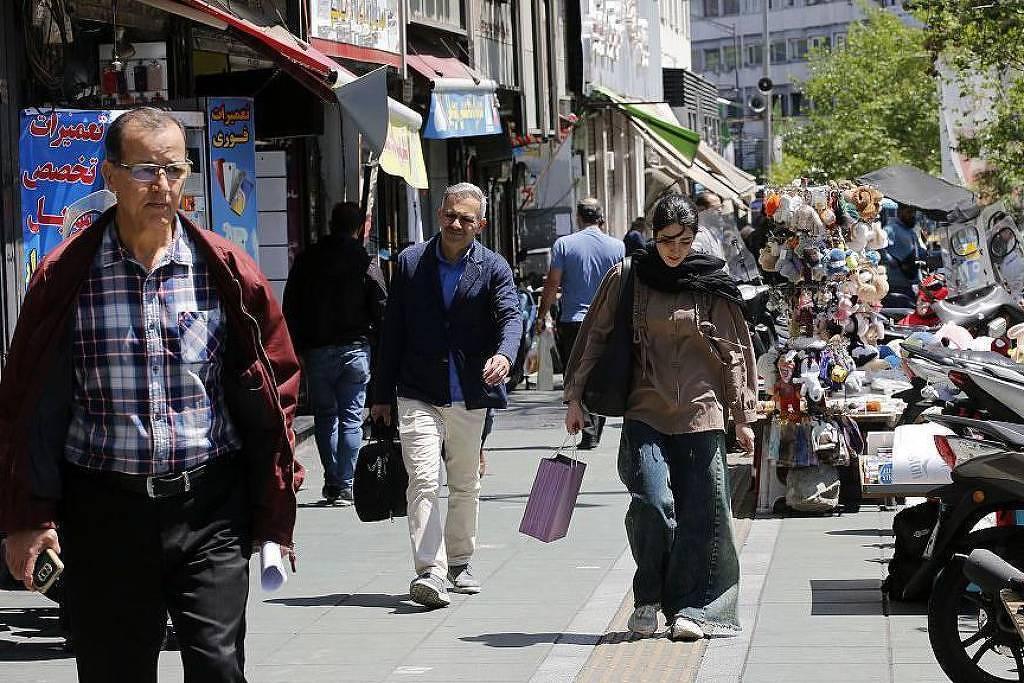
“On a sunny spring day in Tehran, Sanaei Ghaznavi Street, with its mix of shops selling groceries and home goods, as well as fast food and flowers, looks like an ordinary place”
Folha de S.Paulo describes Sanaei Ghaznavi Street as a place that looks ordinary, with shops selling groceries and home goods, fast food, and flowers, while people try to survive day by day as their future depends on forces beyond their control.
The article says Mohammad, who runs a shoemaker shop, notes that many people have lost their jobs and are unemployed, and his father Mustafa says the shoe business has been in their family for 40 years.
Folha de S.Paulo adds that an unofficial estimate on the Iranian site Asr-e Iran suggests that up to 4 million jobs may have been lost or affected by the combined effects of the war with the United States and Israel and the government’s near-total internet shutdown in Iran.
The same report describes a digital blockade that has been in place for more than 50 days, with a 45-year-old architect and professor saying he is frustrated at not being able to access a translation site while reading a book.
It also depicts visible security changes, saying plainclothes security—Basij paramilitary volunteers or the Islamic Revolutionary Guard Corps—are now everywhere.
The article quotes the architect saying, when asked what one change would make a big difference in his life, “Freedom is the answer,” adding “freedom of thought and freedom to have a future.”
How the shutdown began
Multiple reports tie Iran’s nationwide internet blackout to a specific escalation point and provide a timeline for how long it has lasted.
Gulf News says citizens have been subjected to a continuous internet blackout for 57 days, stating it marks exactly eight weeks since the Iranian regime severed the country’s digital access, according to NetBlocks.

Gulf News reports that the total blackout was implemented immediately following the joint US and Israeli strikes on Tehran on 28 February, and it adds that NetBlocks identified the ongoing crisis earlier this month as the “longest nation-scale internet shutdown on record in any country.”
Türkiye Today similarly says the disruption began after the U.S. and Israel attacked Tehran on Feb. 28 and has lasted 1,344 hours, according to NetBlocks.
Türkiye Today quotes NetBlocks saying, “The disruption, now entering its 57th day after 1344 hours, stifles the voices of Iranians, leaves friends and family out of touch and damages the economy.”
ایـران اینترنشنال also reports that the nationwide blackout has reached eight weeks since it was imposed on Feb. 28, entering its 57th day, and says it has severed international connectivity for more than 1,300 hours.
In Folha de S.Paulo, the digital blockade is described as being in place for more than 50 days, and it says restrictions are being eased slowly and selectively while security authorities say they will remain in place while there are enemy threats.
Voices inside Iran
Accounts from residents and officials describe how the blackout is experienced as isolation, economic strain, and restricted access to information.
“Iranians are leaving the country just to access the internet VAN, Turkey — Dazed by the sun and tired by more than a dozen hours of travel by bus, the woman from Tehran, Iran's capital, crossed into eastern Turkey”
Folha de S.Paulo includes Shahla, an elderly woman in central Tehran, who tells the reporter that “people are paying three times as much for bread now,” and says “many are going through hell just to buy bread.”
She also addresses the war negotiations, telling authorities “to stop this, that nothing good will come of it because Trump is only threatening people.”
The same Folha de S.Paulo report quotes a 45-year-old architect and professor who says he is trying “to live his life and do things to enjoy” and does not want to get involved in “the Iran and the region’s supposedly very complicated politics.”
It also quotes Iran’s Communications Minister, Sattar Hashemi, calling for an end to the ban and saying that “about 10 million people, mainly from the middle and lower classes, depend on digital connectivity for work and that internet access would be a public right.”
NPR describes the human impact in a different setting, with a woman from Tehran crossing into eastern Turkey and saying, “I only want to make a video call and go back [to Iran.] That is it,” while she travels every three days to use the internet for a few hours to contact her son.
NPR also quotes a second Iranian woman traveling in eastern Turkey saying, “The only voice is the voice of the Iranian regime now, because they have cut the internet. They have shot our voices and cut our tongues.”
Different framings of the same event
While the core facts of a prolonged internet blackout are consistent across outlets, the emphasis and framing differ in how each describes the disruption and its broader implications.
Gulf News presents the blackout as a historic isolation event, saying the nation is cut off from global access as the shutdown reaches historic scale, and it quotes NetBlocks that “the disruption, now entering its 57th day after 1344 hours, stifles the voices of Iranians, leaves friends and family out of touch and damages the economy.”
Türkiye Today similarly centers NetBlocks’ metrics, stating the disruption began after the U.S. and Israel attacked Tehran on Feb. 28 and has lasted 1,344 hours, and it repeats the NetBlocks quote about stifling voices and damaging the economy.
ایـران اینترنشنال also cites NetBlocks and uses the same 57th-day framing, but it adds a wider set of regional and policy developments, including Foreign Minister Hakan Fidan saying Turkey could consider taking part in demining operations in the Strait of Hormuz following a possible Iran-US peace agreement.
In NPR’s account, the blackout is framed through individual behavior and travel patterns, describing how Iranians are leaving the country just to access the internet and quoting a traveler who crosses into eastern Turkey to find Wi‑Fi.
NPR also describes the technical and policy structure of Iran’s internet controls, saying for the last decade and a half Iran has been restructuring internet infrastructure to enable the regime to shut off the internet for all but a select few people.
It quotes Hesam Nourooz Pour saying, “This is true a highly centralized architecture,” and adds that Iran routes international traffic through “a small number of the state-controlled gateways.”
Consequences and next steps
The sources describe consequences that extend beyond connectivity, including economic disruption, restricted access to information, and legal or security risks for people trying to obtain internet access.
“Iran’s nationwide internet blackout has reached eight weeks since it was imposed on Feb”
Folha de S.Paulo says an unofficial estimate suggests up to 4 million jobs may have been lost or affected by the combined effects of the war with the United States and Israel and the government’s near-total internet shutdown in Iran, and it describes a digital blockade in place for more than 50 days.
Gulf News and Türkiye Today both attribute damage to the economy to the disruption, with NetBlocks saying it “damages the economy” while leaving friends and family out of touch.
NPR describes how Iranians cope by traveling to Turkey for Wi‑Fi, but it also emphasizes fear of arrest and asset seizure, noting that interviewees requested total anonymity because they fear arrest and their assets being seized in Iran for speaking to foreign media.
NPR further states that authorities have been arresting hundreds of people for using the internet, and it includes a law enforcement officer in Yazd province saying “six people had been arrested in late March for using Starlink equipment.”
NPR also reports that Iranian authorities said they had arrested 466 people for using the internet to hurt national security, and it quotes Abbas Milani saying it is “extremely dangerous even to buy [Wi-Fi] because the regime has declared that this is a counterrevolutionary activity.”
Across the accounts, the blackout is presented as ongoing, with NetBlocks marking it at 57 days and 1,344 hours, while Folha de S.Paulo says restrictions are being eased slowly and selectively but will remain in place while security authorities cite enemy threats.
More on Iran

Iran’s Foreign Minister Abbas Araghchi Arrives in Islamabad as Trump Cancels US Envoys
15 sources compared

Netanyahu Orders IDF To Vigorously Strike Hezbollah Targets In Lebanon
17 sources compared

Iranian Foreign Minister Abbas Araghchi Meets Oman’s Sultan Haitham bin Tariq in Muscat
14 sources compared

Iran FM Abbas Araghchi Meets Pakistan PM Shehbaz Sharif as Trump Cancels Envoys
127 sources compared