Full story
Hormuz Tensions Ignite
A new round of confrontation around the Strait of Hormuz has unfolded as the United States pushes “Project Freedom” to escort ships through the waterway and Iran rejects American claims about commercial traffic.
“An explosion and fire have rocked a South Korean cargo ship in the Strait of Hormuz”
The Daily Express reports that “An explosion and fire have rocked a South Korean cargo ship in the Strait of Hormuz,” citing Seoul’s Foreign Ministry, while also describing Iranian claims that “it has hit a US Navy vessel with two missiles” as a US Navy frigate was sailing near Jask.

The Express Tribune adds that the UAE said a fire broke out at the Fujairah Oil Industry Zone after what it described as a drone attack originating from Iran, and it quotes the UAE defence ministry saying, “The UAE has intercepted three missiles fired from Iran over its territorial waters, with a fourth missile crashing into the sea.”
In parallel, Iran’s IRGC and Iranian state-linked outlets insist no commercial or oil tanker vessels have passed through the strait in recent hours, with Kurdistan24 quoting the IRGC statement: “No commercial vessels or oil tankers have passed through the Strait of Hormuz in the past few hours, and the claims of American officials are baseless and completely false.”
The Times frames the escalation as a response to a ceasefire that was “shattered by exchanges of fire after President Trump launched the operation he called ‘Project Freedom’,” and it reports that Iran fired its first missile and drone attack on the UAE since the ceasefire came into force on April 8.
Across the reporting, the central dispute is whether ships are transiting safely under US escort and whether Iran is attacking or merely responding to perceived threats.
Claims, Counterclaims, and Ceasefire
The dispute over what is happening in the strait is being fought through competing claims about ship movements, attacks, and the status of ceasefire arrangements.
Anadolu Ajansı reports that Iran rejected US claims that commercial vessels had recently transited the Strait of Hormuz, saying the IRGC statement carried by IRNA described the reports as “baseless and false,” and it warns that any maritime activity not aligned with rules set by Iran’s naval forces would face “serious risks,” with “violating vessels would be stopped.”
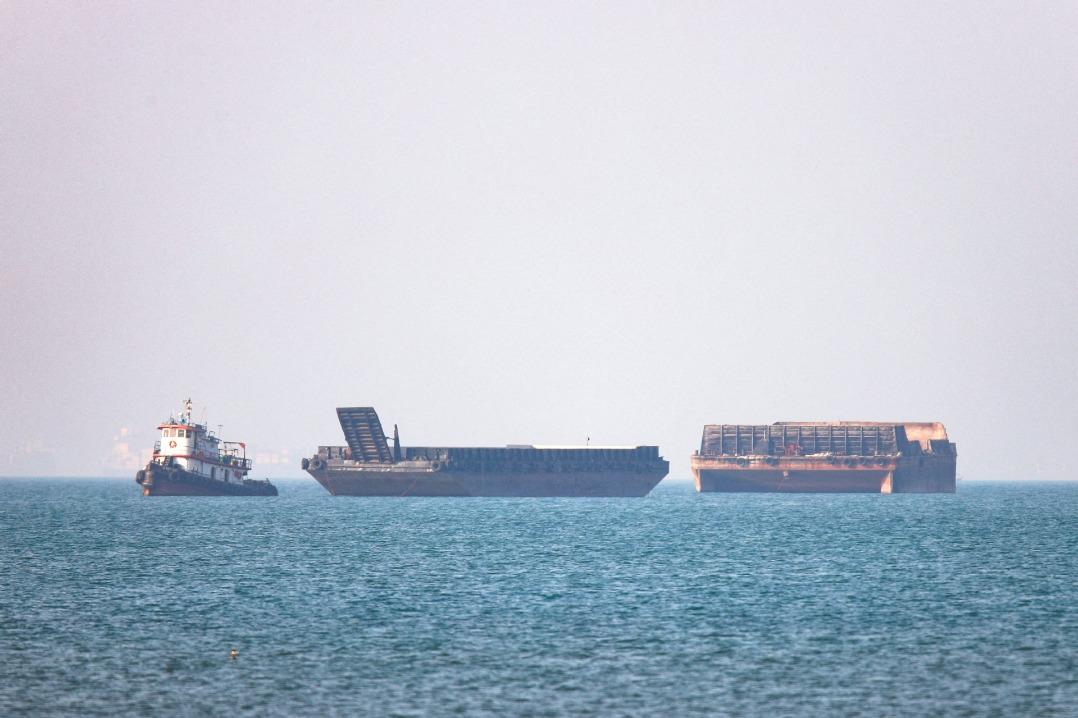
China Daily similarly quotes the IRGC saying “No commercial vessel, oiler crossed Strait of Hormuz during past hours without permission,” while also citing Iran’s Khatam al-Anbiya Central Headquarters warning that “any foreign armed forces, especially the aggressive US army, will be attacked if they intend to approach and enter the Strait of Hormuz.”
The Times, meanwhile, says a four-week ceasefire in the Gulf was “shattered by exchanges of fire” after Trump launched “Project Freedom,” and it reports that a drone struck an oil port in Fujairah, injuring three people, with “several missiles were shot down over the sea.”
The Jerusalem Post adds that there were “no signs of increased vessel traffic through the Strait on Monday,” and it cites MarineTraffic data showing only “one tanker” and “a few cargo ships and a cable-laying vessel” passed into the Gulf of Oman.
The Express Tribune also captures the friction between Iranian and US narratives, stating that Iranian state media said “two missiles hit a US warship in the Strait of Hormuz,” while the US Central Command said in a post on X that “no US Navy ships had been struck.”
Trump’s Threat and US Posture
President Donald Trump’s public messaging is portrayed in the sources as both a warning to Iran and a justification for US escort operations.
“they’ll be blown off the face of the earth”
The Daily Express quotes Trump telling reporter Trey Yingst that any attack on US vessels involved in “Project Freedom” would trigger extreme consequences, saying, “they’ll be blown off the face of the earth.”
It also reports that Trump said US forces “have destroyed seven small Iranian boats,” describing them as “fast boats,” and it adds that Trump said there had been “no further damage to ships transiting the strait beyond the reported South Korean vessel.”
The Times similarly reports that Trump called it “a mini-war — they don’t have ships anymore,” and it includes a statement from the head of US Central Command, Admiral Brad Cooper, saying the IRGC “is doing everything it can to terrorise and threaten commercial shipping,” while Cooper wrote that “My operational assessment overall is that the US military has the clear advantage.”
In the same reporting, Trump is described as telling ABC in a phone interview that “They [Iranian missiles] were shot down for the most part … One got through. Not huge damage.”
The Express Tribune and other sources also show the US posture through CENTCOM’s claims about escorting and transit restoration, including a quoted CENTCOM statement that “As a first step, 2 US-flagged merchant vessels have successfully transited through the Strait of Hormuz and are safely headed on their journey.”
UAE and South Korea React
The sources also document reactions from the United Arab Emirates and South Korea as the conflict spills into nearby maritime and airspace.
The Times reports that “A drone struck an oil port in the emirate of Fujairah, injuring three people,” and it says “several missiles were shot down over the sea, according to the UAE defence ministry.”
The Express Tribune provides additional detail by reporting that Fujairah said a fire broke out at the Fujairah Oil Industry Zone after what it described as a drone attack originating from Iran, and it quotes the UAE defence ministry on X: “The UAE has intercepted three missiles fired from Iran over its territorial waters, with a fourth missile crashing into the sea.”
It also quotes the UAE defence ministry saying that “The Ministry of Defence affirmed that the sounds heard in different parts of the country are a result of air defence systems engaging threats,” and it includes a further UAE foreign ministry statement condemning “renewed treacherous Iranian aggression using missiles and drones,” while reserving a “full and legitimate right” to respond.
South Korea’s role appears in multiple sources: Daily Express says Seoul’s Foreign Ministry stated that “An explosion and fire have rocked a South Korean cargo ship in the Strait of Hormuz,” and it describes South Korea probing a possible attack on a Korean-flagged ship.
The Times adds that “South Korea said one of its ships had been set ablaze off the UAE and Iran claimed it had fired at US navy ships,” and it reports that South Korea said it would enforce its closure of the strait in defiance of Trump’s plan.
New Control Zones and Shipping Standstill
As the standoff continues, the sources describe Iran tightening its maritime control and issuing new maps and control zones, while shipping groups report disruption and uncertainty.
“issued a new map of the area of the Strait of Hormuz under its control”
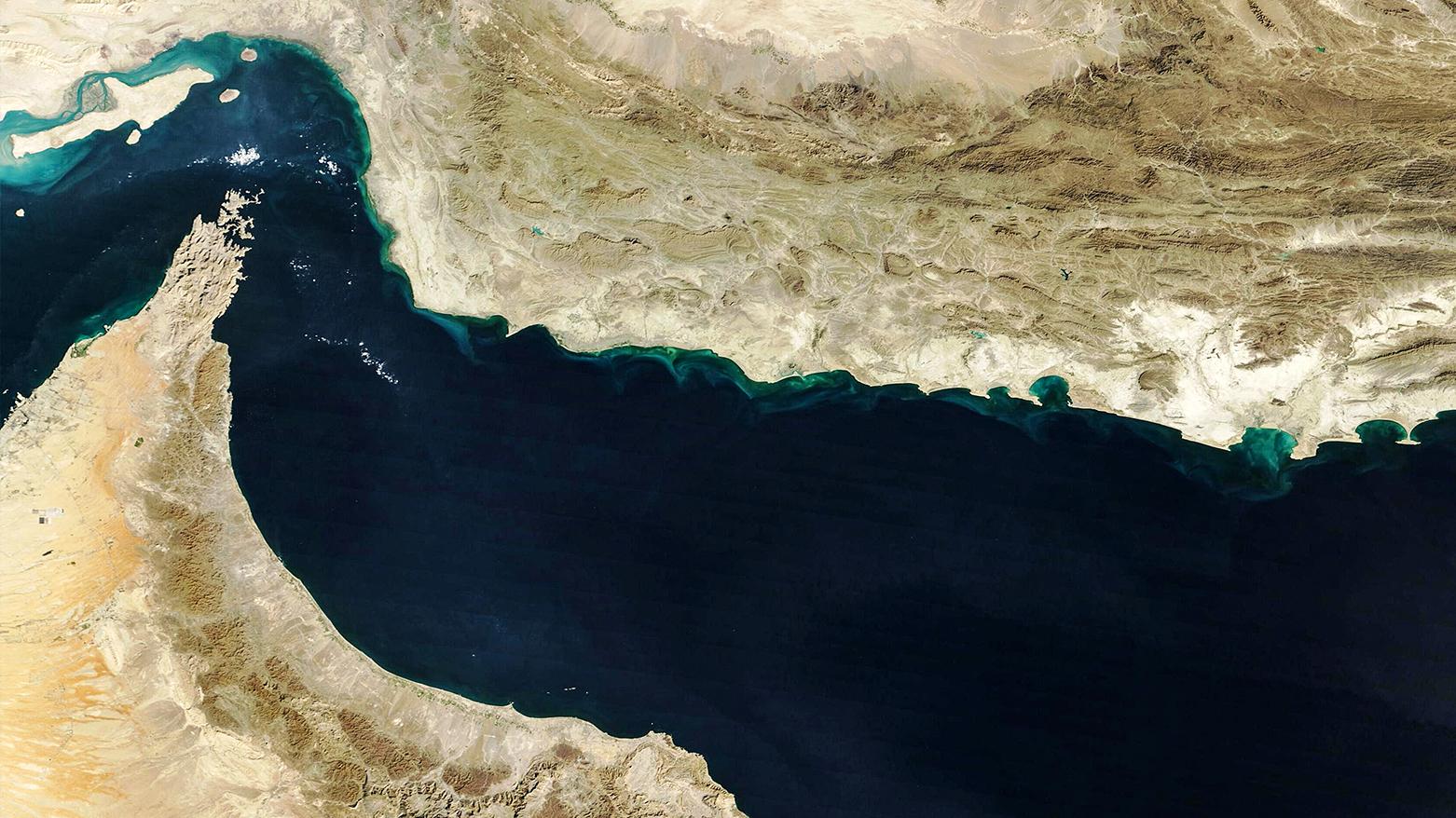
The Jerusalem Post reports that the IRGC navy “issued a new map of the area of the Strait of Hormuz under its control,” defining a western boundary “between the westernmost tip of Iran's Qeshm Island and the United Arab Emirates' emirate of Umm al-Qaiwain” and an eastern boundary “between Iran's Mount Mobarak and the UAE's Emirate of Fujairah.”

It says there were “no signs of increased vessel traffic through the Strait on Monday,” and it cites MarineTraffic data showing only “one tanker” and “a few cargo ships and a cable-laying vessel” passed into the Gulf of Oman.
The Jerusalem Post also quotes BIMCO’s chief safety and security officer, Jakob Larsen, saying, “Without consent from Iran to let commercial ships transit safely through the Strait of Hormuz, it is currently not clear whether the Iranian threat to ships can be degraded or suppressed.”
The Tsenim report says the IRGC declared a new maritime control area of “smart control,” defining the south as “the line between Mount Mobarak in Iran and south of Fujairah in the United Arab Emirates” and the west as “the line between the end of Qeshm Island in Iran and Umm Al Quwain in the United Arab Emirates.”
It also quotes Major General Ali Abdollahi warning that “any foreign military force, particularly the US, will come under attack if it attempts to approach or enter the Strait of Hormuz,” and it adds that “Hundreds of commercial vessels and up to 20,000 seafarers have been unable to transit the waterway,” citing the International Maritime Organization.