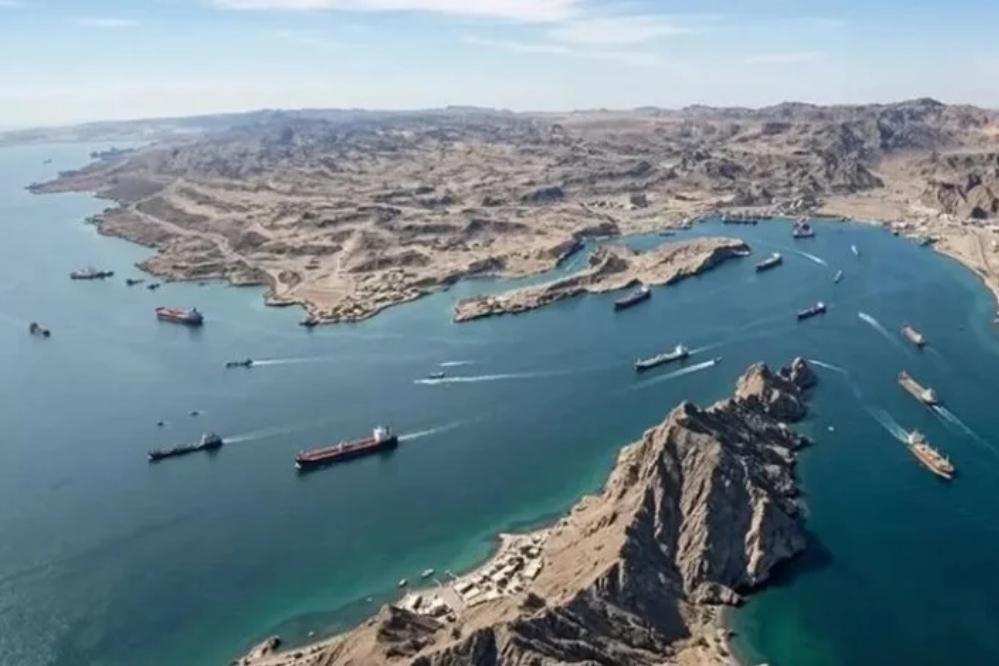
Trump Threatens Iran Over Strait Of Hormuz As Project Freedom Guides Ships
Key Takeaways
- Iran releases new map outlining Hormuz under its control.
- Iranian officials say control of the Strait of Hormuz is fully in Iran's hands.
- Map release comes amid ongoing US-Iran tensions over the Strait of Hormuz.
Trump threatens Iran over Hormuz
Tensions around the Strait of Hormuz pushed a ceasefire between the United States and Iran “to the brink” as US President Donald Trump threatened Iran with catastrophic consequences if it attacks US ships.
“US President Donald Trump has warned that Iran would be “blown off the face of the Earth” if it attacks United States ships as tensions around the Strait of Hormuz push the truce between the two countries to the brink”
In Al Jazeera’s account, Trump warned that Iran would be “blown off the face of the Earth” if it attacks United States ships, while hostilities renewed in the region on Monday as Iran attacked the United Arab Emirates.

Al Jazeera reported that Trump said the US military shot down seven small Iranian boats near Hormuz, and it also described Trump’s emphasis on US military capability in an interview with Fox News.
Trump said, “We have more weapons and ammunition at a much higher grade than we had before,” and he added, “We can use all of that stuff, and we will, if we need it.”
The same Al Jazeera report said the US military began implementing on Monday a Trump plan dubbed Project Freedom to guide ships through Hormuz and break the Iranian blockade on strategic shipping lanes.
It further stated that Washington said it helped two US merchant vessels through the strait, while ship-tracking websites showed traffic through the waterway remained largely suspended.
In parallel, the Jerusalem Post reported that there were “no signs of increased vessel traffic through the Strait on Monday,” and it described MarineTraffic data showing only one tanker and a few other ships passing into the Gulf of Oman.
Iran-UAE attacks and US response
Alongside the US-Iran standoff, Al Jazeera described Iran renewing its attacks on the United Arab Emirates on Monday, reporting that the UAE Defence Ministry said the country’s forces engaged 12 ballistic missiles, three cruise missiles and four drones.
Al Jazeera also said the media office in the emirate of Fujairah confirmed that an Iranian attack caused a fire in the Fujairah Petroleum Industry Zone and injured three people.

The report quoted the UAE Foreign Ministry saying, “The UAE emphasised that it will not tolerate any threat to its security and sovereignty under any circumstances, and that it reserves its full and legitimate right to respond to these unprovoked attacks,” and it added that an Iranian official told IRIB that the attack on Fujairah was the result of US policy.
In the same Al Jazeera account, the US military’s Project Freedom was framed as a defensive effort to guide ships through a “narrow trade corridor,” and it quoted CENTCOM head Admiral Brad Cooper saying the US had reached out to dozens of ships and shipping companies to encourage traffic flow.
Cooper said, “Over the last 12 hours, we’ve reached out to dozens of ships and shipping companies to encourage traffic flow through the [Strait of Hormuz], consistent with the president’s intent to help guide ships safely through a narrow trade corridor,” and he described stranded vessels as “innocent bystanders.”
Al Jazeera also reported that South Korea confirmed one of its vessels suffered an explosion and a fire off the coast of the UAE, while UKMTO said fires were reported on two ships in the area.
The Jerusalem Post added a separate operational picture, saying CENTCOM would begin helping to restore freedom of navigation through the Strait on Monday while continuing its blockade of Iranian ports.
Maps and claimed control
As the shipping situation remained constrained, Iran and the US both presented competing claims about control and safe passage.
The Jerusalem Post reported that Iran’s Islamic Revolutionary Guard Corps (IRGC) navy issued a new map of the Strait of Hormuz under its control on Monday, with state media describing a zone that begins in the west along a line between the westernmost tip of Iran's Qeshm Island and the United Arab Emirates' emirate of Umm al-Qaiwain.
It said the area stops in the east along a line between Iran's Mount Mobarak and the UAE's Emirate of Fujairah, and it noted that it was “not immediately clear if and to what extent their claimed area of control has changed.”
Anadolu Ajansı similarly described Iran releasing a new map outlining areas in Hormuz under its control, saying the designated zone stretches between two defined maritime lines, one running from the western tip of Iran’s Qeshm Island to Umm Al Quwain and another extending from Kuh-e Mobarak in Iran to the area south of Fujairah in the UAE.
Anadolu Ajansı placed the map amid ongoing tensions with the US and said the US and Israel launched strikes against Iran on Feb. 28, triggering retaliation and “the closure of the Strait of Hormuz.”
In parallel, Al Jazeera and Mehr News Agency carried Iranian messaging that the Strait is fully in Iran’s hands, with Mehr quoting a senior Iranian security-political source telling Al-Mayadeen: “The control of the Strait of Hormuz is completely in Iran’s hands.”
Mehr also included the official’s warning, “Our message to the Americans is that if they come forward, they will be targeted,” and it said continued US hostile actions would likely lead to expanding the experience of managing the Strait.
Shipping standstill and safety warnings
While Iran issued maps and the US launched Project Freedom, the shipping picture described by the Jerusalem Post and other reporting remained dominated by standstill and uncertainty.
The Jerusalem Post said there were “no signs of increased vessel traffic through the Strait on Monday,” and it cited MarineTraffic data showing “Only one tanker, a sanctioned, handy-sized LPG carrier” along with a few cargo ships and a cable-laying vessel passed into the Gulf of Oman on Monday.

It added that “No tankers or other commercial vessels were seen lining up to transit,” and it said German shipping group Hapag-Lloyd reported that transit for its vessels remained impossible due to a lack of clarity over secure passage procedures.
The report quoted BIMCO’s chief safety and security officer, Jakob Larsen, saying, “Without consent from Iran to let commercial ships transit safely through the Strait of Hormuz, it is currently not clear whether the Iranian threat to ships can be degraded or suppressed.”
It also said the International Maritime Organization reported that “Hundreds of commercial vessels and up to 20,000 seafarers have been unable to transit the waterway as a result of the Iran war.”
In the same Jerusalem Post account, CENTCOM described its missions as “defensive” and said it would combine diplomatic efforts with military coordination, while Iran warned the US Navy to stay out of the Hormuz and said commercial vessels would need to coordinate any passage with its military.
The Jerusalem Post also reported that the US-led Joint Maritime Information Center advised mariners to consider routing via Omani territorial waters south of the traffic separation scheme, and it said the maritime security threat level remained “critical.”
Diplomacy, threats, and the next steps
Alongside operational moves, multiple reports described diplomatic channels and competing narratives about negotiations and ceasefire terms.
“Iran releases new map outlining areas in Hormuz under its control IRGC's map comes amid ongoing tensions with US on Strait of Hormuz Serdar Dincel 04 May 2026•Update: 04 May 2026 ISTANBUL Iran's Islamic Revolutionary Guard Corps (IRGC) on Monday issued a new map outlining areas in the Strait of Hormuz that it says under its control”
Al Jazeera said Trump had been trying to rally international support for military plans to forcibly open Hormuz and described Washington’s assurances to protect ships in the strait, while it also noted that energy markets continued to climb, including the price of one gallon (3.8 litres) of gas or petrol in the US rising from less than $3 before the war to more than $4.45 on Monday.

It also quoted an Iranian official cited by Al Mayadeen saying the administration of the Hormuz Strait remains fully in Tehran’s hands and warning, “Move forward and you will be targeted.”
The Jerusalem Post described CENTCOM missions as “defensive” while continuing its blockade of Iranian ports, and it said Iran warned the US Navy to stay out of the Hormuz.
In a separate thread, Al Jazeera’s reporting on ceasefire dynamics was echoed by Al Sharq, which said Iran was studying the “American reply” delivered by Pakistan to Tehran’s proposal to end the war, while Washington said it was “engaged in talks.”
Al Sharq quoted US President Donald Trump saying his representatives are conducting “very productive talks” with Iran and that discussions could lead to a “very positive outcome for everyone,” and it quoted US special envoy Steve Weitkoff saying, “We are in touch.”
Al Sharq also quoted Iranian Foreign Ministry spokesman Ismail Bagheri saying, “The U.S. stance on Tehran's proposal is currently under study and Iran's response will be submitted after reaching a final conclusion,” and it included Bagheri’s statement that “we have never negotiated under deadlines or ultimata,” adding that “guaranteeing the agreement is Iran's strength.”
More on Iran

U.S. Sinks 7 Iranian Boats as Iran Launches Missiles and Drones at UAE
10 sources compared
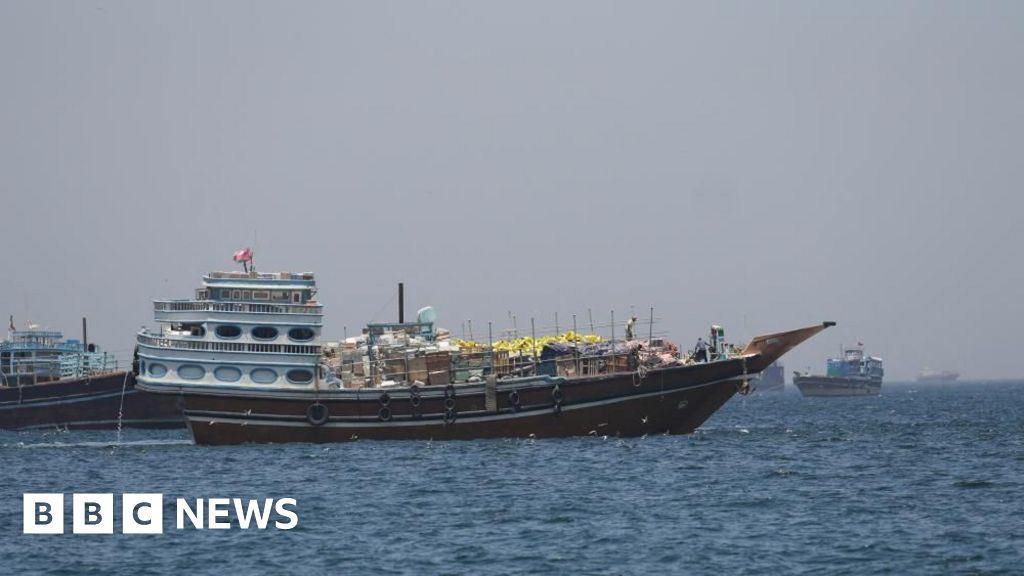
U.S. Launches Project Freedom to Reopen Strait of Hormuz After Iran Attacks UAE
21 sources compared
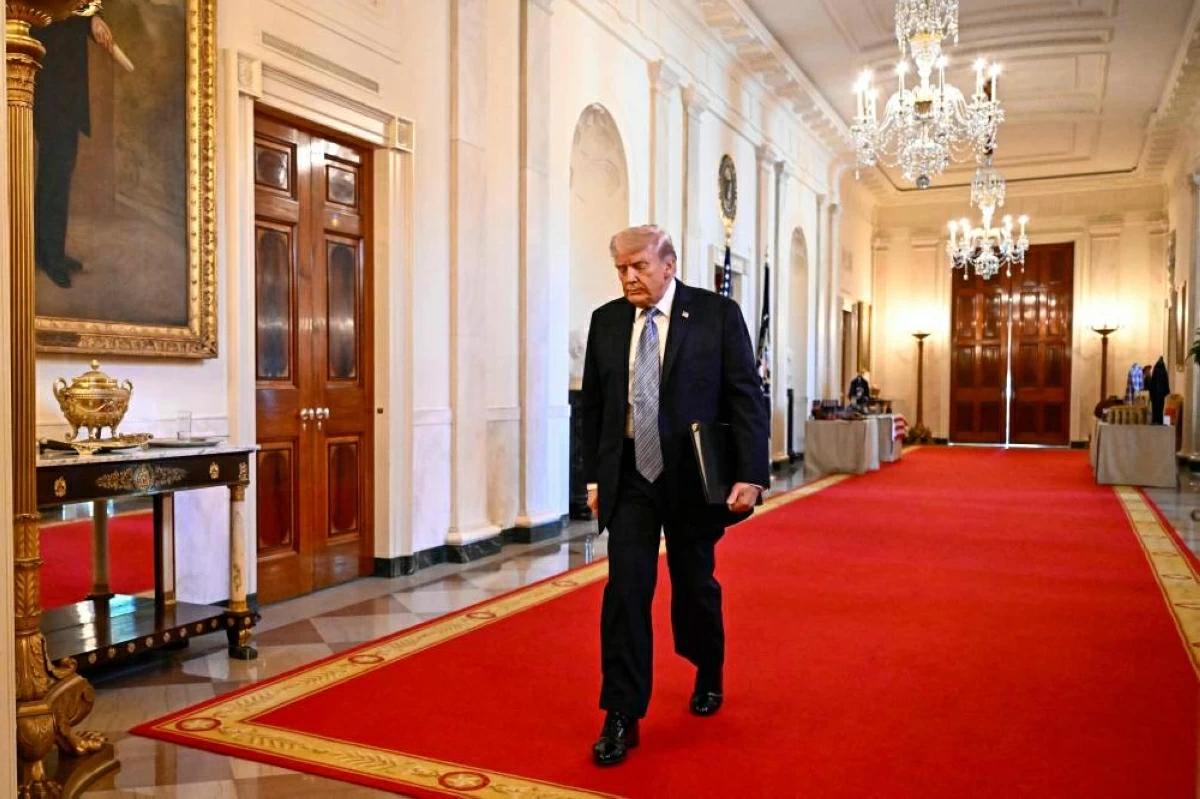
US Guided-Missile Destroyers Open Strait of Hormuz Route After Iran Fires Missiles and Drones
32 sources compared

Trump Threatens Iran After U.S. Operation Targets Drones and Small Boats in Strait of Hormuz
19 sources compared