Full Analysis Summary
Seizure in Strait of Hormuz
Iran’s Islamic Revolutionary Guard Corps (IRGC) naval forces seized a foreign oil tanker in the Strait of Hormuz, accusing it of fuel smuggling and detaining 16 crew members.
Authorities did not disclose the vessel’s flag or the crew’s nationalities.
State media framed the seizure as part of a recurring pattern of detentions in the strategically vital strait.
The Strait of Hormuz is a waterway through which roughly a fifth of globally traded oil and a quarter of seaborne oil passes.
Officials said the tanker was carrying about 4 million litres of fuel.
The incident was reported amid already-high regional tensions.
The U.S. Navy’s 5th Fleet routinely patrols the area to keep lanes open.
Previous seizures and maritime attacks formed part of the background to this latest action.
Coverage Differences
Narrative focus / omission
Euronews (Western Mainstream) reports the seizure and places it explicitly in the context of periodic detentions and regional tensions, while PressTV (West Asian) and Mehr News Agency (West Asian) in their available briefings focus on Iran’s naval exercises and international deployments, not on this reported seizure — i.e., the West Asian outlets emphasize proactive naval diplomacy and drills rather than reporting the detention. PressTV and Mehr ‘report’ exercises and deployments but do not mention the tanker seizure in the provided excerpts.
Maritime seizure and tensions
Euronews’ account emphasizes the security implications of the seizure, noting Tehran has repeatedly threatened to block the waterway.
It says the incident follows other recent seizures, including the UK-flagged Stena Impero in 2019 and the Portuguese-flagged MSC Aries in April 2024.
The piece situates the capture amid a string of maritime incidents and broader geopolitical friction.
It references the U.S. exit from the 2015 nuclear deal and past accusations of Iranian attacks on tankers in 2019.
It also notes a 2021 drone strike on an Israeli-linked vessel and a June Iran–Israel confrontation that reportedly led to Israeli strikes on Iranian sites and deaths in Israel from Iran’s retaliatory missile attack.
Coverage Differences
Context framing
Euronews (Western Mainstream) frames the seizure as part of a history of maritime confrontations and ties it to wider geopolitical disputes with the West, while PressTV (West Asian) frames Iran’s naval activity in terms of international exercises, maritime security and escort missions — a more state-forward, promotional framing. Mehr News Agency (West Asian) similarly highlights expanding maritime engagement and exercises, not the pattern of confrontations emphasized by Euronews.
Media portrayals of Iran's navy
State and regional sources differ on emphasis and tone.
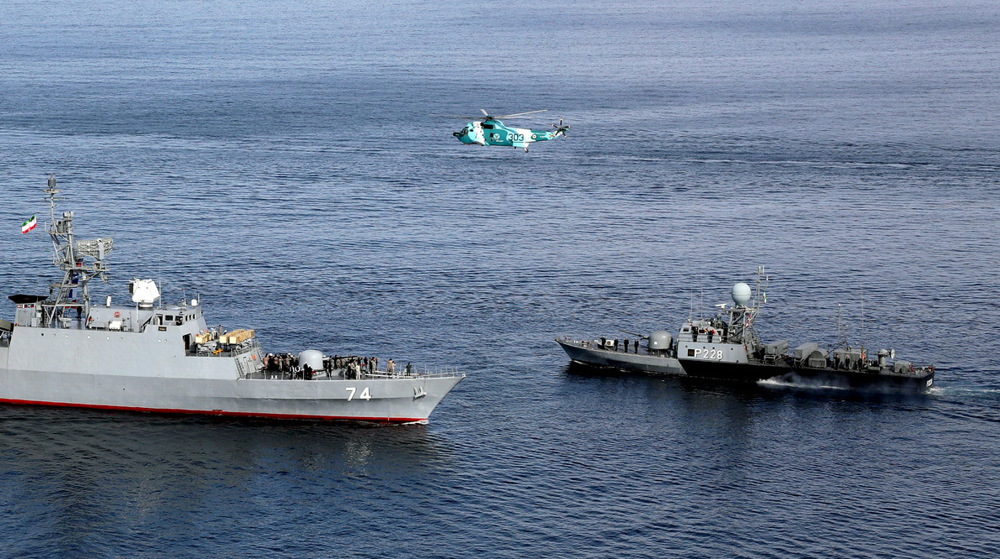
West Asian outlets (PressTV and Mehr) present Iran's navy as expanding its international engagements, citing 12 international events in the current Iranian year, flotillas en route to exercises, and missions to escort commercial ships, and they stress priorities such as maritime security, sailor safety, and environmental protection.
By contrast, the Western mainstream report (Euronews) highlights the seizure and alleged fuel smuggling, and links the incident to past maritime attacks and broader geopolitical tensions with the West, projecting a security-centric narrative.
Coverage Differences
Tone and emphasis
PressTV (West Asian) and Mehr News Agency (West Asian) emphasize Iran’s proactive naval diplomacy and routine exercises — e.g., PressTV ‘reports’ the 103rd and 104th task groups are en route to South Africa to escort commercial ships and join BRICS drills — while Euronews (Western Mainstream) emphasizes seizures, smuggling allegations and longstanding tensions with the West. The West Asian sources frame presence in distant waters as supporting national security, which the provided PressTV snippet explicitly attributes to Supreme Leader Khamenei.
Coverage of tanker seizure
Operational details in the available reporting are limited and some facts remain unclear.
Euronews reports the tanker carried about 4 million litres of fuel and notes 16 crew were detained, but it discloses neither their nationalities nor the ship’s flag.
PressTV and Mehr provide specific information about flotillas, exercises and roles, including escort duties and participation with BRICS, but their provided excerpts do not address this seizure.
This contrast leaves a gap: West Asian sources describe ongoing naval activity and priorities while the Western mainstream source documents an enforcement action.
Taken together, the pieces show both Iran’s outward-facing naval diplomacy and, according to state media cited by Euronews, enforcement operations in the Strait.
Coverage Differences
Missed information / gap
Euronews (Western Mainstream) supplies the seizure’s specific operational details — "about 4 million litres of fuel" and "16 foreign crew members were detained" — while PressTV (West Asian) and Mehr (West Asian) in the excerpts do not mention the seizure at all, focusing instead on exercises and escort missions; this is a clear omission in the West Asian briefs provided. Each source’s priorities shape what details are presented.
Media narratives on naval activity
Taken together, the sources present two complementary but different narratives.
Euronews, representing Western mainstream coverage, offers a security-oriented report focused on a seizure and a detained crew, framed by historical maritime incidents and tensions with the West.
PressTV and Mehr, representing West Asian outlets, portray Iran’s naval activity as expanding, routine and cooperative, highlighting exercises, escorts and claims that distant-water presence contributes to national security.
Readers should note these differing emphases and the gaps in each outlet’s excerpts: West Asian outlets highlight diplomatic and operational deployment details, while the Western mainstream outlet foregrounds enforcement, alleged smuggling and geopolitical friction.
Coverage Differences
Overall framing and narrative
Euronews (Western Mainstream) frames the story through enforcement and geopolitical tension; PressTV (West Asian) and Mehr News Agency (West Asian) frame Iranian naval activity as international engagement, exercises and security priorities. The West Asian sources ‘report’ flotillas, exercises and escort missions; Euronews ‘reports’ a seizure and cites historical incidents and U.S. patrols.