
Iran’s Judiciary Chief Mohseni-Eje’i Warns US-Israeli War Coalition May Strike Again
Key Takeaways
- Judiciary chief Mohseni-Eje'i calls for full readiness against possible renewed US-Israeli aggression.
- He warns the US-Israeli coalition may resort to savage aggression.
- The call was made during a meeting with provincial heads of justice.
Judiciary urges readiness
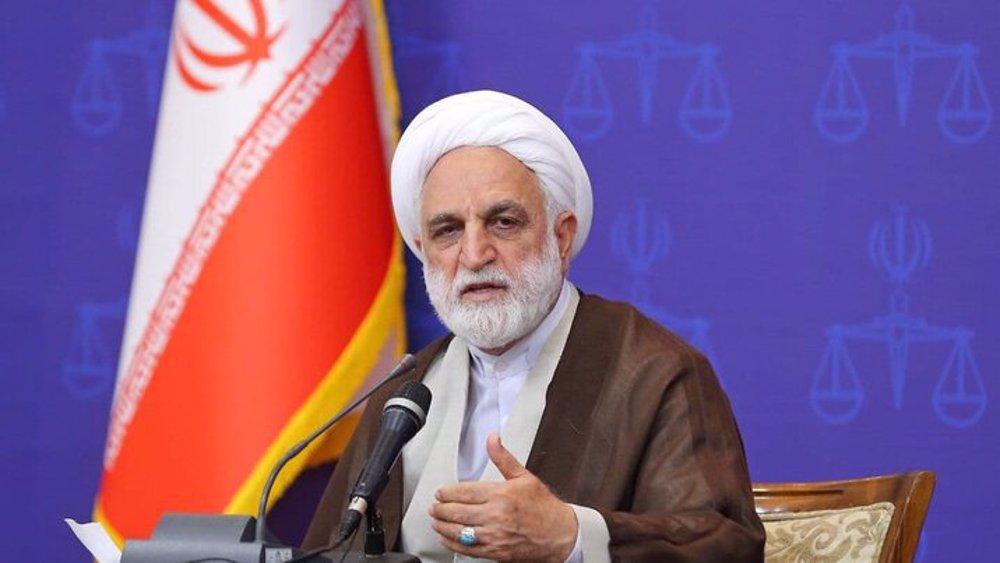
Iran’s Judiciary chief Gholam-Hossein Mohseni-Eje’i urged “full readiness of all forces and sectors” against a “defeated” US-Israeli war coalition, warning that it may “once again resort to ‘savage aggression’ against the country.”
“Islamabad, Pakistan – Iran has signalled that it has no plans to send negotiators to Islamabad for a new round of talks with the United States, threatening Pakistan’s plans for multiday negotiations between the warring nations less than 48 hours before a fragile ceasefire is set to expire”
Speaking during a meeting with “a group of heads of provincial justice departments,” Mohseni-Eje’i said the “arrogant enemy launched an existential war against our country with all its might and equipment, but failed to achieve any of its malicious goals and evil objectives.”
He added, “Therefore, this defeated and aggrieved enemy is waiting to strike our country again, and there is a possibility that it will once again commit savage aggression.”
The PressTV account ties the warning to a timeline that begins with “the United States and the Israeli regime” launching “their latest bout of unprovoked aggression” on “February 28,” and says “Iranian Armed Forces responded with 100 waves of retaliatory strikes, codenamed Operation True Promise 4.”
PressTV further says the response involved “hundreds of ballistic and hypersonic missiles as well as drone attacks” against “sensitive and strategic American and Israeli targets throughout the region.”
It also states that “Forty days into the war, on April 8, a Pakistan-mediated two-week ceasefire went into effect,” and that “on April 11 failed to reach a deal” in Islamabad due to “excessive demands and shifting goalposts by the American delegation.”
Ceasefire frays at sea
Iranian officials and allied voices portrayed the ceasefire as fragile and repeatedly violated, with the dispute centering on maritime actions in the Strait of Hormuz and the Sea of Oman.
In an Al Jazeera report from Islamabad, Iran’s Ministry of Foreign Affairs spokesman Esmaeil Baghaei said Washington had “violated the ceasefire from the beginning of its implementation,” citing “the US naval blockade of the Strait of Hormuz since April 13” and “the overnight capture of an Iranian container ship by the US military.”

Baghaei warned that if “the US and Israel launched aggression again,” Iranian forces “will respond accordingly,” and he reaffirmed that Tehran’s “10-point proposal” remained the basis for negotiation.
The same Al Jazeera account describes US President Donald Trump announcing that “his representatives were heading to Pakistan for a second round of negotiations with Iran,” while also reviving threats to bomb Iran’s “energy and power facilities.”
It quotes Trump accusing Iran of a “Total Violation of our Ceasefire Agreement” after Iranian gunboats fired on vessels in the Strait of Hormuz, including “a French vessel and a British freighter.”
Al Jazeera also reports that in the early hours of Monday, Trump said the US Navy guided missile destroyer USS Spruance intercepted an Iranian-flagged cargo ship, the Touska, and that “US Marines have now taken charge of the vessel,” which Iran described as “piracy.”
In parallel, PressTV frames the maritime dispute as a ceasefire violation and “an instance of war crime,” quoting Mohseni-Eje’i: “The US regime’s so-called blockade of Iran’s ports and coasts, as well as its aggression against an Iranian commercial vessel in the waters of the Sea of Oman, constitutes a violation of the ceasefire and an instance of war crime.”
Negotiations in doubt
As talks approached their deadline, Iran signaled it would not send negotiators to Islamabad, casting doubt on Pakistan’s mediation plans.
“For over a month, Israeli and US strikes have targeted every major city and province across Iran”
Al Jazeera reported that Iran “has signalled that it has no plans to send negotiators to Islamabad for a new round of talks with the United States,” and it said the move came “less than 48 hours before a fragile ceasefire is set to expire.”
The report quotes Esmaeil Baghaei warning that “The US is not learning its lessons from experience,” adding that “this will never lead to good results.”
Al Jazeera also describes how Pakistan was preparing for the second round of negotiations, saying “Islamabad has been gearing up to host the second round of talks between the US and Iran aimed at ending their war,” with the Marriott Hotel asking guests to vacate “by Sunday afternoon.”
It says the Serena Hotel “soon issued the same order and stopped taking reservations,” and that “Roads into the Red Zone, the capital’s most heavily fortified area, were sealed,” with “Thousands of additional police and paramilitary personnel” arriving.
The report further states that unlike the first round held in Islamabad on “April 11,” Pakistan aimed for “multiple days of negotiations,” potentially extending the ceasefire via a “memorandum of understanding (MoU).”
It adds that “If the MoU is agreed, it would give negotiators a longer window – even up to 60 days – to secure a longer peace deal,” but that “all of that will hinge on the participation of Iran.”
In a separate West Asian report, Tabnak said Iran would “reveal new cards in case of new US-Israeli aggression,” with Ghalibaf denouncing Donald Trump for acting on a “delusion” and saying, “We do not accept negotiations under the shadow of threats.”
Regional voices back Iran
Beyond Iran’s own statements, the sources also show regional political leaders framing the conflict as part of a broader struggle against US-Israeli aggression.
Mehr News Agency carried a speech by Sayyid Abdul Malik Al-Houthi, leader of the Yemeni Ansarullah movement, who said the slogans of “changing the Middle East” under the pretext of “fighting terrorism” were “deceptive and false.”

Mehr quoted Al-Houthi criticizing Arab rulers who “Obeying and obeying the enemies and joining them is one of the worst manifestations of apostasy and retreating from the principles, values and noble Islamic morality.”
He said this “haste and cowardice” serves “the American-Israeli aggression that targets this nation,” and he argued that in some Persian Gulf countries “anyone who writes a tweet expressing sympathy for the Palestinian people is punished, imprisoned and fined.”
Mehr also quoted Al-Houthi describing restrictions on sympathy for Hezbollah and Lebanese people, saying “security organizations have issued instructions that prohibit any expression of sympathy for Hezbollah and the Lebanese people in the face of Israeli aggression.”
The report then states that Al-Houthi rejected “neutrality,” saying, “Our position against the American-Israeli aggression that targeted the nation and the Islamic Republic of Iran is clear and already declared, and it is not neutrality.”
He added, “If the enemy escalates tensions, we will also escalate tensions,” while also warning that “The current ceasefire is on the verge of ending and was very fragile, and the possibility of escalating tensions is high.”
In a separate Anadolu Ajansı report, Turkish Foreign Minister Hakan Fidan said Iran’s bombardment of Gulf states is “a very wrong strategy,” arguing that Iran’s strikes on Oman, Qatar, Kuwait, Bahrain, Saudi Arabia, the United Arab Emirates and Jordan “without any discrimination” are “a very wrong strategy.”
War claims and counterclaims
The sources also present competing accounts of the war’s conduct and effects, including claims about nuclear facilities, casualty figures, and the operational framing of strikes.
“Iran’s Judiciary chief has called for full readiness of all forces and sectors against the “defeated” US-Israeli war coalition, warning that they may once again resort to “savage aggression” against the country”
Xinhua’s interview with Tehran-based foreign policy expert Abas Aslani said the situation in the region and the Strait of Hormuz “will not return to the status quo ante,” and it argued that Iran is “exhibiting no signs of weakness or surrender.”
Xinhua quotes Aslani saying Iran’s goal is “to reopen the Strait of Hormuz,” and it states that “U.S.-Israeli attacks on Iran's civilian infrastructure are indicative of their failure to achieve their military and strategic objectives in the war.”
Xinhua also says Aslani described the strikes as “war crimes and violations of international law,” adding that “They have been even attacking Iran's peaceful nuclear facilities, including the active Bushehr nuclear power plant.”
In a separate report, Iran’s foreign minister Abbas Araqchi told Iran International that “The United States was successful in attacking our nuclear facilities,” while also asserting, “Iran's nuclear program has not been destroyed.”
The same Iran International account quotes Araqchi confirming “the 'destruction of many' of the Islamic Republic's nuclear equipment” during the “US- and Israel-led attack during the 12-day war.”
Another source, Xinhua’s multimedia report, says Israel’s statement claimed “200 fighter jets” carried out an airstrike on “western and central Iran,” striking “500 targets,” and it says “more than 200 people were killed, according to the Iranian Red Crescent Society.”
By contrast, PressTV’s narrative emphasizes “100 waves of retaliatory strikes” under “Operation True Promise 4” and describes a ceasefire timeline involving “April 8” and “April 11.”
More on Iran
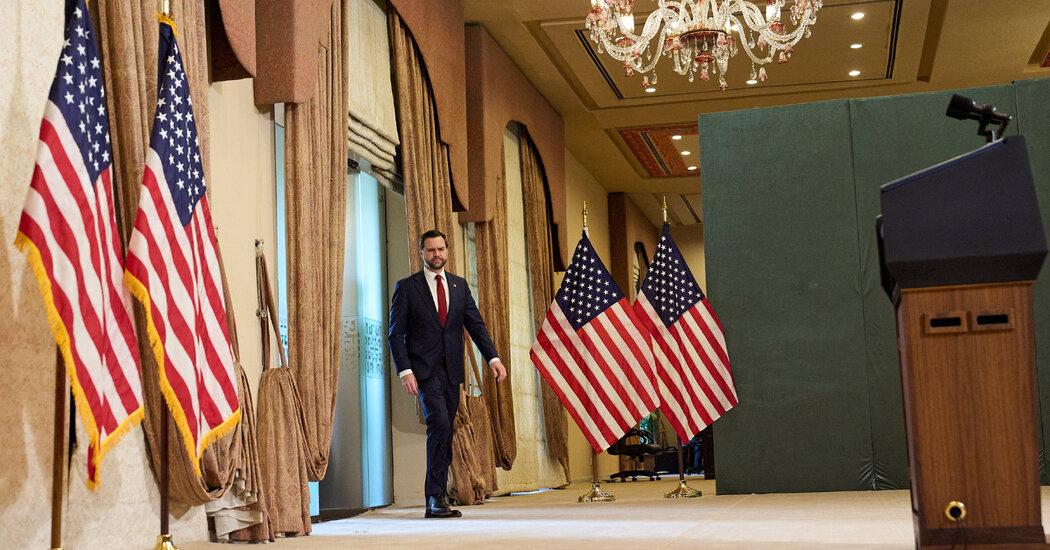
Trump Warns U.S. Will Resume Bombing If Iran Talks Fail Before Ceasefire Deadline
11 sources compared

Reuters/Ipsos Poll Finds 36% Approve Trump’s Job Performance Amid Iran War And Pope Feud
10 sources compared

Trump Says U.S. Expects a Great Deal With Iran, Won’t Extend Ceasefire Deadline
25 sources compared
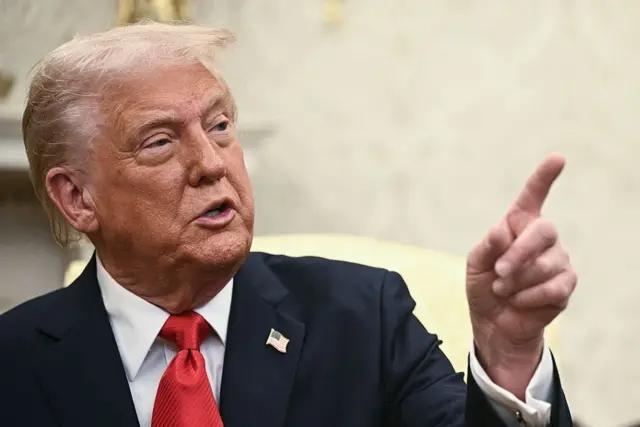
Donald Trump Urges Iran To Release Eight Women Facing Execution Ahead Of Talks In Islamabad, Pakistan
12 sources compared