Trump Warns U.S. Will Resume Bombing If Iran Talks Fail Before Ceasefire Deadline
Key Takeaways
- Trump warns he expects to resume bombing if Iran talks stall before deadline.
- Ceasefire deadline nears; talks uncertain and both sides threaten to resume fighting.
- Blockade of Hormuz remains until a deal; Tehran demands lifting before talks.
Ceasefire at the Brink
A two-week ceasefire between the United States and Iran is set to expire Wednesday, but last-minute talks in Pakistan have remained uncertain as both sides warned they were prepared to resume fighting without a deal.
“Diplomatic efforts to end the US-Israel war on Iran remain uncertain, with Tehran refusing to negotiate under what it calls the “shadow of threats””
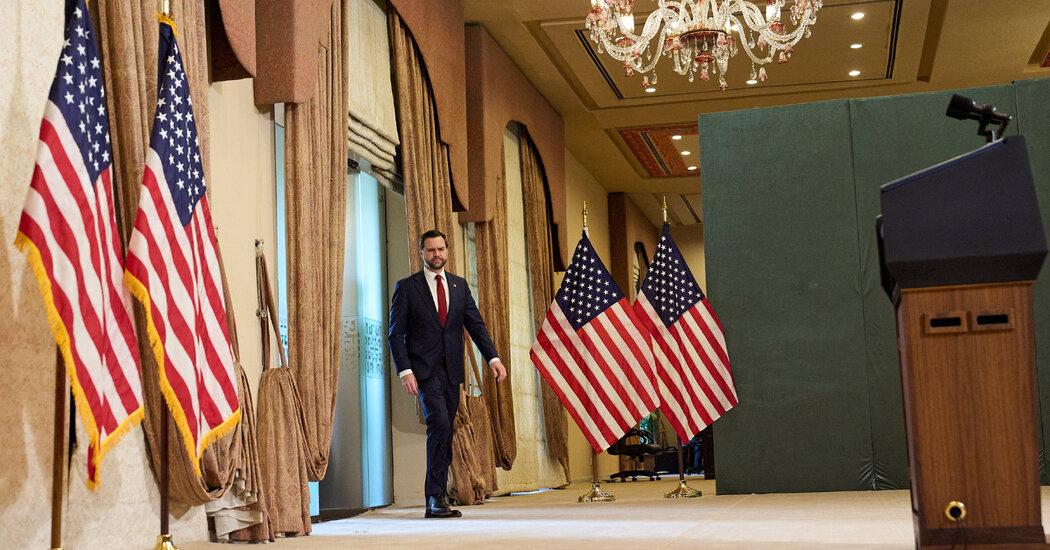
The Associated Press reported that U.S. Vice President JD Vance, expected to lead U.S. negotiators if talks continue in Pakistan, remained in Washington on Tuesday, while Pakistan said it was still awaiting confirmation on whether Iran would participate.

AP also reported that Iranian Foreign Ministry spokesman Esmail Baghaei told Iran’s state TV there has been “no final decision” on whether to attend because of “unacceptable actions” by the U.S., apparently referencing its recent blockade in the Strait of Hormuz.
In parallel, the AP said U.S. President Donald Trump warned “lots of bombs” will “start going off” if there’s no agreement before the ceasefire deadline, while Iran’s chief negotiator said Tehran has “new cards on the battlefield” that haven’t yet been revealed.
The New York Times added that Vance’s trip to Pakistan for a second round of negotiations has been put on hold after Tehran failed to respond to American negotiating positions, even as the trip could be back “at a moment’s notice.”
NBC News similarly described uncertainty over whether Vance would head to Islamabad today, while quoting Trump saying, “We’re going to end up with a great deal,” and adding that Iran had “no choice” but to send a delegation to Pakistan.
The BBC reported that it remained unclear when, and if, Vance and the rest of the U.S. negotiating team would head to Islamabad, and that Vance was confirmed to be participating in policy meetings at the White House rather than traveling.
What Derailed Talks
The uncertainty has been driven by competing signals about whether Iran will attend talks in Islamabad and by disputes over actions taken during the ceasefire.
The Associated Press said Pakistan had been urging both sides to return to Islamabad and was “still awaiting confirmation on whether Iran would participate,” while also reporting that Iran’s Foreign Ministry spokesman Esmail Baghaei said there has been “no final decision” because of “unacceptable actions” by the U.S.
The New York Times reported that Vance’s trip was suspended because Tehran did not respond to American negotiating positions, and that Iran said it had not yet decided whether to resume talks with the United States.
NBC News quoted Baghaei saying “No final decision” had been made on whether Iran would take part in peace talks in Pakistan, explaining it was because of “contradictory messages, inconsistent behavior, and unacceptable actions from the American side,” including U.S. attacks on Iranian vessels and its blockade on the Strait of Hormuz.
CNN added that the U.S. blockade of the Strait of Hormuz contributed to uncertainty, and that Iran chalked up its hesitation to attend negotiations to “contradictory” messages and actions from the US.
The Guardian described the White House waiting for a signal that Iran’s negotiators were willing to sign a deal, and said the trip could resume if Iran meets U.S. terms.
The BBC reported confusion about when the ceasefire expires, with Pakistan saying it expires at 23:50 GMT on Tuesday and Iran saying it will expire approximately 24 hours later on Wednesday.
Al Jazeera’s live coverage also framed the diplomatic impasse around Tehran’s refusal to negotiate under what it calls the “shadow of threats,” while noting that the U.S. wants Iran to halt its nuclear programme and hand over enriched uranium, a demand Tehran rejects.
Rhetoric and Negotiators
As the deadline approached, both sides ratcheted up rhetoric while key negotiators remained in motion—or in some cases, stayed put.
“Bernd Debusmann Jr White House reporter It's been another confusing day in Washington, where it remains unclear when - and if - Vice President JD Vance and the rest of the US negotiating team will head to Islamabad for talks with their Iranian counterparts”
The Associated Press reported that Trump warned “lots of bombs” will “start going off” if there’s no agreement before the ceasefire deadline, while Iran’s chief negotiator said Tehran has “new cards on the battlefield” that haven’t yet been revealed.
CNBC quoted Iran’s parliamentary speaker Mohammad Bagher Ghalibaf criticizing Trump for “imposing a siege and violating the ceasefire,” and for seeking to turn the negotiation into “a table of surrender or to justify renewed warmongering.”
CNBC also quoted Ghalibaf saying, “In the past two weeks, we have prepared to reveal new cards on the battlefield,” and added, “We do not accept negotiations under the shadow of threats.”
CNN reported that Trump reiterated he does not want to extend the new Iran ceasefire deadline of Wednesday evening ET and said he expects “to be bombing” if a deal isn’t reached.
The BBC reported that Vance was not on his way and was participating in policy meetings at the White House, while also saying there was confusion about when exactly the ceasefire expires.
The New York Times said Vance’s trip could be back “at a moment’s notice,” but also reported that Tehran failed to respond to American positions, leaving it unclear what steps either side would take next.
NBC News described Iran’s top negotiator warning it will not negotiate “under the shadow of threat” and has prepared “new cards on the battlefield,” as Tehran signaled it was also ready if the war resumes.
Different Frames, Same Facts
Even when the underlying events were similar, the outlets emphasized different aspects of the same standoff, from the mechanics of travel to the meaning of the ceasefire and the role of the Strait of Hormuz.
The Associated Press centered its account on uncertainty about whether Iran would participate, reporting that Pakistan was “still awaiting confirmation” and that Esmail Baghaei said there has been “no final decision” because of “unacceptable actions” by the U.S., while also describing Trump’s warning that “lots of bombs” will “start going off.”

The New York Times focused more tightly on the travel disruption, saying Vance’s trip to Pakistan was put on hold after Tehran failed to respond, and that the trip could be back “at a moment’s notice,” while also noting that Trump suggested he did not want to extend the truce without a longer-term agreement.
NBC News framed the story as a near-term ultimatum, quoting Trump saying “We’re going to end up with a great deal,” and warning he was ready to resume bombing if talks don’t go well as tomorrow’s ceasefire deadline looms.
CNN emphasized the operational and diplomatic linkage between the blockade and negotiations, saying the U.S. blockade of the Strait of Hormuz contributed to uncertainty and quoting Baghaei’s claim that the reason was “not indecision; it is because of contradictory messages, contradictory behaviors, and unacceptable actions by the American side.”
The Guardian highlighted the political posture around extending the ceasefire, reporting that Trump said he does not want to extend it and that the White House was waiting for a signal that Iran’s negotiators were willing to sign a deal.
BBC reporting highlighted the confusion over timing, stating that Pakistan said the ceasefire expires at 23:50 GMT on Tuesday while Iran said it would expire approximately 24 hours later on Wednesday.
Al Jazeera’s live coverage broadened the frame to include the wider war diplomacy context, saying Tehran refused to negotiate under what it calls the “shadow of threats,” while also describing the U.S. demand that Iran halt its nuclear programme and hand over enriched uranium.
What Comes Next
The stakes extend beyond the talks themselves, with the Strait of Hormuz, shipping enforcement, and military options all tied to whether negotiations produce an agreement before the ceasefire ends.
The Associated Press reported that the U.S. imposed the blockade to pressure Tehran into ending its stranglehold on the Strait of Hormuz, described as a key shipping lane through which “20% of the world’s natural gas and crude oil transits in peacetime,” and said Iran’s grip on the strait has sent oil prices soaring.

The Associated Press also reported that on Tuesday the U.S. said its forces boarded an oil tanker previously sanctioned for smuggling Iranian crude oil in Asia, with the Pentagon saying U.S. forces boarded the M/T Tifani “without incident,” and adding that “international waters are not a refuge for sanctioned vessels.”
It further said the U.S. military on Sunday seized an Iranian container ship, and that Iran’s joint military command called the armed boarding an act of piracy and a violation of the ceasefire.
NBC News said Iran demanded the immediate release of a cargo ship seized by the U.S. and vowed retaliation, while describing the U.S. boarding of another sanctioned tanker overnight as part of the effort to disrupt support for Iran.
Al Jazeera’s live coverage said the U.S. wants Iran to halt its nuclear programme and hand over enriched uranium, while Iran says its nuclear programme is for research purposes and that it does not intend to make an atomic bomb.
CNBC added that a first round of talks in Islamabad led by Vice President JD Vance and U.S. special envoys Steve Witkoff and Jared Kushner ended on April 12 with no resolution to thorny issues like Iran’s nuclear program, and that the U.S. and Iran agreed to a two-week ceasefire on the evening of April 7.
The New York Times reported that the delay is another hurdle in the Trump administration’s push to secure an agreement that would curb Iran’s nuclear program, and said the Pentagon was reviewing military options should Trump conclude that Tehran is not negotiating in good faith.
More on Iran

Reuters/Ipsos Poll Finds 36% Approve Trump’s Job Performance Amid Iran War And Pope Feud
10 sources compared

Iran’s Judiciary Chief Mohseni-Eje’i Warns US-Israeli War Coalition May Strike Again
11 sources compared

Trump Says U.S. Expects a Great Deal With Iran, Won’t Extend Ceasefire Deadline
25 sources compared
Donald Trump Urges Iran To Release Eight Women Facing Execution Ahead Of Talks In Islamabad, Pakistan
12 sources compared