
Iran’s Major General Ali Abdollahi Says Strong Iran Strategy Will Shape Persian Gulf Order
Key Takeaways
- Khamenei's strategies will shape a future Persian Gulf order with no foreign powers.
- Ali Abdollahi, commander of Khatam al-Anbia, emphasizes IRGC-led regional order.
- Spoke in memorial ceremony for martyrs of the recent US-Israeli war against Iran.
Hormuz strategy and closure
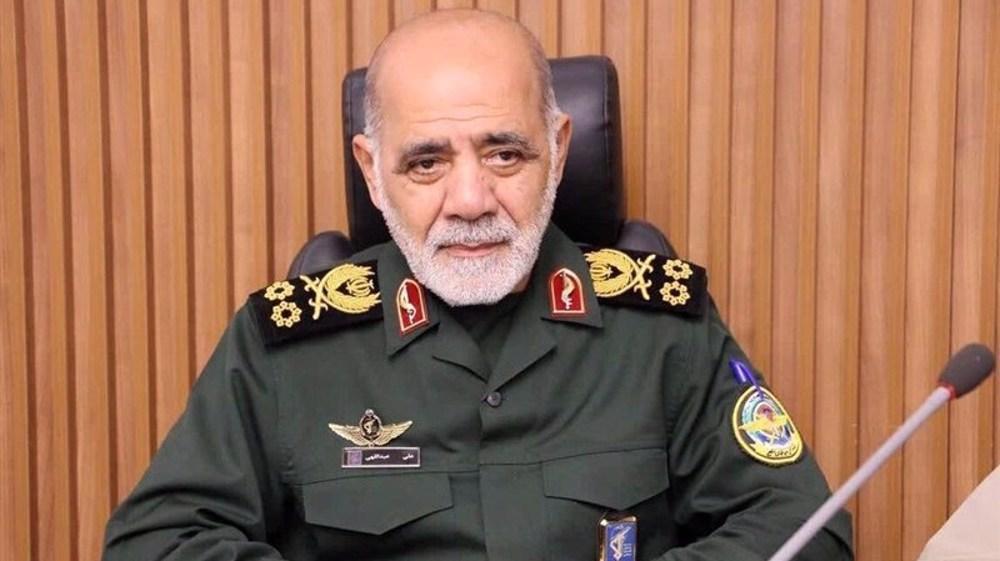
Major General Ali Abdollahi, commander of Iran’s Khatam al-Anbia Central Headquarters, said the plans and strategies of the Leader of the Islamic Revolution for managing the Persian Gulf and the Strait of Hormuz will shape a future regional and global order under a “Strong Iran” strategy with “foreigners will have no place.”
“A senior Iranian military commander says outsiders will have no place in the future of the region based on the strategies devised by Leader of the Islamic Revolution Ayatollah Seyyed Mojtaba Khamenei”
Tehran Times said Abdollahi stressed the continuation of resistance, vigilance, and wisdom in confronting the US and Zionist enemies, and warned, “We are ready to deliver a harsh and hellish response to any aggression.”
The Tehran Times account also linked the messaging to a shift in policy after what it described as the “unprovoked joint military aggression by the United States and the Israeli regime against Iranian soil on February 28,” when Tehran announced the immediate closure of the strait and suspended its longstanding policy of open passage.
It further described the Strait of Hormuz as a strategic corridor for global trade maintained by Iran’s navy for freedom of navigation in line with historical practice and international law, before that policy was suspended following the February 28 aggression.
Memorial ceremony and named figures
WANA News Agency reported that Abdollahi made the comments in a statement marking a memorial ceremony for those killed in the “Ramadan War,” saying Iran’s leadership envisions a future Persian Gulf and Strait of Hormuz order without the presence of foreign powers.
In that WANA statement, Abdollahi said the Supreme Leader’s plans and strategies for managing the Persian Gulf and the Strait of Hormuz “will guarantee the future of the region and a new regional and global order under the strategy of a ‘Strong Iran,’ in which foreign actors have no place.”

WANA also said Abdollahi referred to what he described as a “third sacred defense” and warned that Iran was prepared to deliver a “harsh and devastating response” to any military aggression or attack.
The WANA account added that the statement mentioned senior Iranian military figures including Ali Shamkhani, Seyed Abdolrahim Mousavi, Mohammad Pakpour, Aziz Nasirzadeh, and Alireza Tangsiri as symbols of “resistance and perseverance,” while describing Khatam al-Anbiya Central Headquarters as the highest operational military coordination body overseeing joint operations between the Iranian Army and the Islamic Revolutionary Guard Corps.
Retaliation timeline and regional framing
PressTV said Abdollahi reiterated that outsiders will have no place in the future region based on strategies devised by Ayatollah Seyyed Mojtaba Khamenei, and warned, “We stand fully prepared to deliver a harsh and hellish response to any form of aggression.”
“WANA (May 24) –Major General Ali Abdollahi, commander of Iran’s Khatam al-Anbiya Central Headquarters, said in a statement marking a memorial ceremony for those killed in the “Ramadan War” that the Islamic Republic’s leadership envisions a future regional order in the Persian Gulf and the Strait of Hormuz without the presence of foreign powers”
PressTV also asserted that the “criminal US-Israeli aggression against Iran began on February 28” with airstrikes that assassinated senior Iranian officials and commanders, including Ayatollah Seyyed Ali Khamenei, and said Iran responded by launching daily missile and drone operations targeting locations in the Israeli-occupied territories as well as US military bases and assets across the region.
It further stated that Iran retaliated by closing the Strait of Hormuz, which “resulted in a significant increase in oil prices and its by-products,” and said that on April 8, “forty days into the war,” a Pakistan-brokered temporary ceasefire between Iran and the US took effect.
PressTV framed Iran’s approach to security in the Persian Gulf as centered on eliminating what it called the enemy’s abuse of the waterway, while calling for more vigilance and intelligence and urging adherence to Ayatollah Khamenei’s guidelines.
More on Iran
Donald Trump Says U.S. Iran Framework Extends Ceasefire 60 Days, Reopens Strait of Hormuz
21 sources compared

Donald Trump Tells U.S. Negotiators Not To Rush Iran Deal On 60-Day Ceasefire
38 sources compared

Trump Says US-Iran Deal Is Largely Negotiated, Framework Gives 60 Days
21 sources compared
Donald Trump Says U.S. and Iran Have Largely Negotiated Deal to Reopen Strait of Hormuz
24 sources compared