Iran19 April, 20267 min read
Iran’s Navy Fires on Ships as It Reimposes Strait of Hormuz Restrictions
Iran reimposed control of the Strait of Hormuz amid the US blockade. IRGC gunboats fired on ships attempting to cross; two Indian-flagged vessels hit and returned.
BBC was read line by line by the Watchdog: 6.0. See the score →
Hormuz shuts again
Iran reimposed restrictions on the Strait of Hormuz on Saturday, warning that it would continue to block transit as long as the U.S. blockade of Iranian ports remained in effect, according to multiple outlets. The AP reported that Iran’s joint military command said “control of the Strait of Hormuz has returned to its previous state ... under strict management and control of the armed forces.” Reuters reported that merchant vessels attempting to cross received radio messages from Iran’s navy telling them they were “not allowed to pass,” and that at least two ships reported being hit by gunfire.
“Approaching the Strait of Hormuz will be considered co-operation with the enemy, and the offending vessel will be targeted.”
The BBC said Iran told ships it was closing the strait again to commercial vessels and that any ship that approaches it will be targeted. In the Reuters account, the incidents were reported in waters between the Qeshm and Larak islands, and the vessels turned back without completing the crossing.

The BBC added that the IRGC Navy warned in a statement that “no vessel is to move from its anchorage in the Persian Gulf or the Sea of Oman.” In the same BBC report, the IRGC said it would shut again until the U.S. stopped its blockade of Iranian ports, and it warned that “Approaching the Strait of Hormuz will be considered co-operation with the enemy, and the offending vessel will be targeted.”
Gunfire and targeted ships
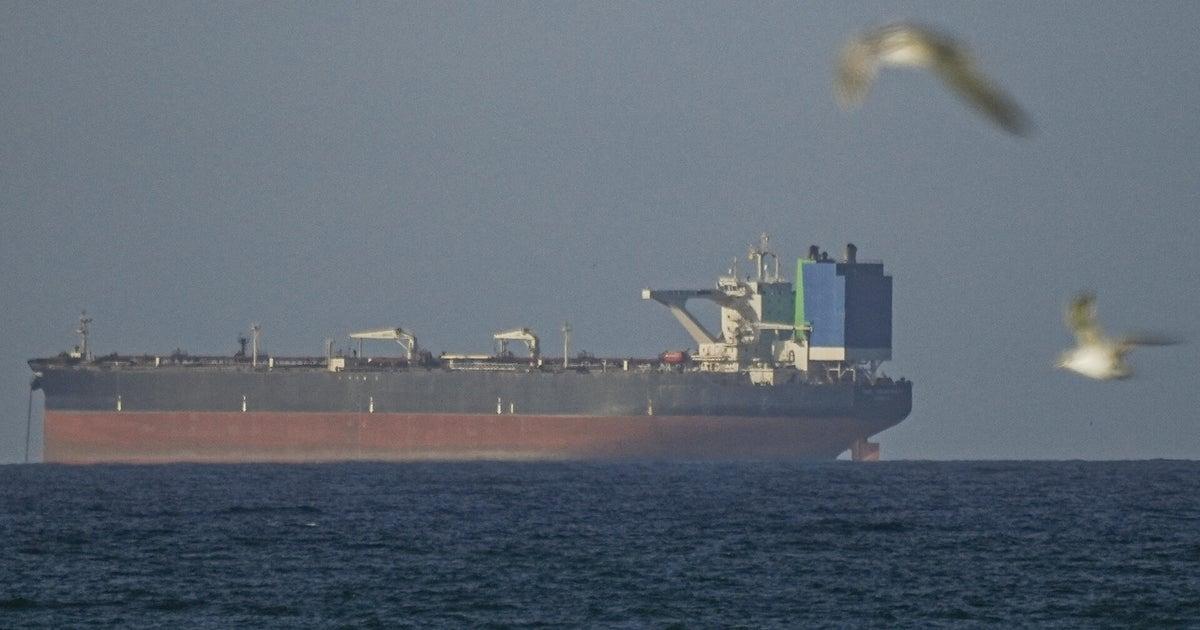
Alongside the closure, multiple reports described attacks on vessels in and near the strait. Reuters said a tanker received a report from the UK Maritime Trade Operations (UKMTO) agency of an incident 20 nautical miles northeast of Oman, and that the captain said it had been approached by two Islamic Revolutionary Guard Corps gunboats that fired on the vessel. Reuters added that the tanker and its crew were safe, and that a container ship was also hit by gunfire, according to a maritime security source.
The BBC similarly reported that two Iranian gunboats opened fire on a tanker in the strait, and that a container ship was hit by an “unknown projectile” off the north-eastern coast of Oman, damaging some containers. The Los Angeles Times said two Islamic Revolutionary Guard Corps gunboats opened fire on a tanker and that an unknown projectile hit a container vessel, damaging some containers, while reporting the tanker and crew as safe. CNN reported that Iranian gunboats fired on a tanker trying to pass through the Strait of Hormuz after Iran’s announcement, and that a second vessel was hit by a projectile in the region.
CBS News said two Iranian gunboats fired on a tanker in the strait, and that India also confirmed two of its ships were targeted in attacks by Iran. Several outlets also described how ships responded by turning around or changing course; Reuters said the vessels turned back without completing the crossing, while the BBC said data from MarineTraffic showed some vessels were able to make it through while others were forced to change their route after the IRGC denied them access.
Why Iran says it closed
Iran’s decision to reverse course and close the strait again was framed by Tehran as a response to the U.S. blockade of Iranian ports and to what it described as U.S. breaches of trust.
Reuters quoted a VHF radio message from Iran’s navy declaring: “Attention all ships, regarding the failure of the U.S. government to fulfil its commitment in the negotiation, Iran declares the Strait of Hormuz completely closed again. No vessel of any type or nationality is allowed to pass through the Strait of Hormuz,”.
The AP reported that Iran reversed course on reopening the Strait of Hormuz and warned it would continue to block transit as long as the U.S. blockade of Iranian ports remained in effect.
The BBC said the IRGC blamed a continuing U.S. blockade for its decision, which came a day after Iran’s foreign minister announced the key global shipping channel had been temporarily reopened.
CNN said Iran announced it would close the Strait of Hormuz again on Saturday, citing “repeated breaches of trust” as the U.S. maintained a naval blockade on Iranian ports.
NBC News reported that the head of Iran’s National Security Commission said the closure was a response to “America's untrustworthiness,” and it also said Iran reasserted “strict control” over the Strait of Hormuz, reversing its declaration a day earlier that the vital shipping lane was fully open.
In the Los Angeles Times account, Iran’s reversal came after Tehran had reopened the strait to commercial vessels on Friday, and it warned it would continue to block transit as long as the U.S. blockade of Iranian ports remained in effect.
The BBC added that the U.S. said it had turned away 23 ships since it began enforcing the blockade on 13 April, while Iran’s Supreme National Security Council said this was a violation of the ceasefire agreement and that it would stop the reopening of the strait while it was still in place.
Competing reactions and warnings
Public statements from U.S. and Iranian officials underscored the hostility around the strait and the negotiations.
CNN reported that U.S. President Donald Trump said Iran cannot “blackmail” the US with threats regarding the waterway, and it also described Trump’s earlier reaction after Iran announced the strait was “fully open and ready for full passage. Thank you!”
The BBC said Trump told the BBC that Iran cannot “blackmail” the US with threats regarding the waterway, and it quoted the IRGC warning that “Approaching the Strait of Hormuz will be considered co-operation with the enemy, and the offending vessel will be targeted.”
NBC News said the head of Iran’s National Security Commission described the closure as a response to “America's untrustworthiness,” and it also quoted Iran’s parliamentary speaker Mohammad-Bagher Ghalibaf saying there was “still a distance to a final agreement.”
In a national televised address, CBS News reported Ghalibaf said, “We are still far from the final discussion,” and added that “we made progress in the negotiations, but there are many gaps and some fundamental points remain.”
The BBC also said the U.S. had turned away 23 ships since it began enforcing the blockade on 13 April, while Iran’s Supreme National Security Council said this was a violation of the ceasefire agreement.
In addition to the U.S.-Iran exchange, India’s response appeared in multiple reports: the BBC said India’s foreign ministry summoned the Iranian ambassador to convey its “deep concern,” and DW said India’s Ministry of External Affairs summoned the Ambassador of the Islamic Republic of Iran in New Delhi.
What happens next
The renewed closure raised immediate stakes for shipping and for the broader diplomatic effort to reach a deal. Reuters said hundreds of ships and about 20,000 seafarers remained stranded in the Gulf, waiting to pass through the key waterway, which handles about 20% of global oil and liquefied natural gas flows. The BBC similarly said about 20% of the world’s oil and liquefied natural gas (LNG) is usually transported through the strait, and it added that the number of ships making the journey has dramatically decreased during the recent conflict.
The Los Angeles Times described the strait’s closure as “perhaps its most powerful weapon,” threatening the world economy and inflicting political pain on Trump, while the U.S. blockade keeps up pressure and could strangle Iran’s already weakened economy. Several reports also tied the strait dispute to the status of a ceasefire elsewhere and to the negotiation timeline. The BBC said a two-week ceasefire currently in effect is due to expire on 22 April, and it reported that peace talks held earlier this month ended without an agreement.

CNN said the move may threaten momentum toward a peace deal between the two countries, and it described U.S. and Iran as agreeing on very little beyond being prepared to meet again. NBC News said Iranian officials said new U.S. proposals are under review, but there is still no date set for the next round of negotiations, and it also reported that the Trump administration says its blockade of Iranian ports remains in force. In the same NBC News reporting, the British ambassador to the U.S. said Iran “is isolated and needs to make a deal,” and it cited a joint statement by France and the U.K. calling for “the unconditional, unrestricted, and immediate re-opening of the Strait of Hormuz.”