Full Analysis Summary
Iran unrest reporting
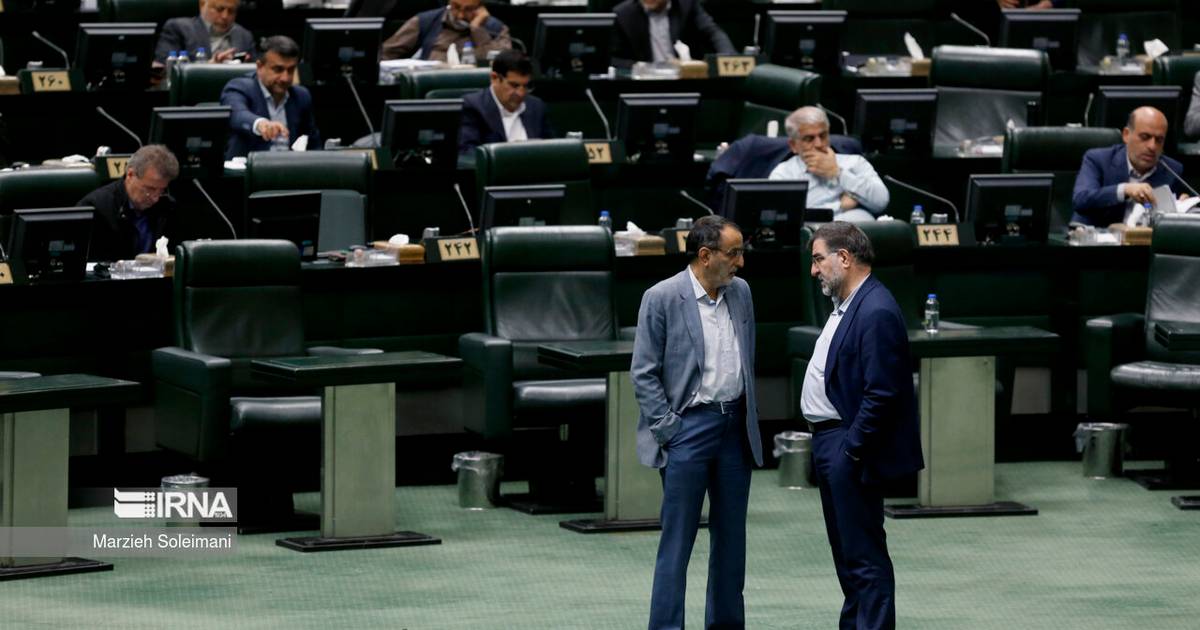
Available reporting shows widespread unrest in Iran and active parliamentary responses.
However, the specific claim that Iran’s parliament "halts impeachment of ministers on Khamenei’s orders" is not directly corroborated by the provided sources.
WANA News Agency reports that Iran’s parliament recently approved a new law defining an "open place" after months of debate and protests sparked by economic hardship, framing the measure as an attempt to set clearer rules for demonstrations.
PressTV quotes parliamentary speaker Mohammad Bagher Qalibaf calling recent deadly attacks part of an "organized" campaign, accusing foreign states of fomenting unrest, and pledging support for Khamenei while tying protests to a sharp fall in the rial.
The Iran International snippet provided does not include a full article and explicitly states it cannot be accurately summarized from the single sentence given.
An interpretive note in that snippet suggests protest slogans may have shifted toward affirmative demands.
Collectively, these sources document protests, parliamentary activity, and government claims of foreign interference.
But none of the supplied snippets plainly state that parliament halted ministerial impeachment on the Supreme Leader’s orders, so that specific assertion remains unverified in the available material.
Coverage Differences
Missing/Unverified claim
None of the supplied sources explicitly confirm the headline claim that parliament halted impeachment of ministers on Khamenei’s orders. WANA focuses on a new law about public spaces and demonstrations, PressTV emphasizes government accusations of external orchestration and political loyalty to Khamenei, and Iran International’s snippet is incomplete and warns it cannot be accurately summarized from a single sentence. The contrast is that WANA reports legislative steps, PressTV reports political accusations and alignment with Khamenei, and Iran International signals lack of sufficient material and highlights protest demands. Each of these represents a different piece of the situation, but none provides direct evidence for the impeachment-halt claim.
Media portrayals of protest law
WANA frames parliamentary action as a legislative clarification in response to protests and reports that lawmakers approved a definition of "open place" visible to the public.
WANA presents the measure as an attempt to protect peaceful protest while distinguishing it from actions authorities label as chaos or terrorism, and situates the law in the aftermath of unrest including the 2022 Mahsa Amini protests.
By contrast, PressTV highlights a sharper, security-focused narrative, quoting Speaker Qalibaf accusing the US and Israel of orchestrating violent incidents and describing the violence as part of a premeditated campaign.
PressTV also links the violence to hostility against Iran and Khamenei.
The Iran International snippet does not provide full article coverage of parliamentary moves but suggests interpretively that protest slogans have evolved toward positive demands, differing from both WANA’s legal framing and PressTV’s security narrative.
Coverage Differences
Narrative and tone
WANA (Other) uses neutral, legislative framing about clarifying rules for demonstrations and protecting peaceful protest; PressTV (West Asian) adopts an accusatory, security-oriented tone that quotes officials blaming foreign states and emphasizes loyalty to Khamenei; Iran International (West Asian) lacks the full text and instead foregrounds protestors’ demands and interpretive context. These produce differing lenses: law-and-order/legal clarification (WANA), external-threat/security justification (PressTV), and protester-driven political demands or missing coverage (Iran International).
Media portrayals of protests
Sources differ in how they describe external interference in the protests but show areas of overlap.
PressTV relays strong accusations from Qalibaf blaming the United States and Israel and cites Khamenei tying the unrest to foreign leaders.
WANA reports officials saying the protests were "hijacked by foreign agents" who committed violent acts such as burning religious sites and killing civilians and police.
A limited excerpt from Iran International foregrounds protester messaging and suggests the movement may shift toward affirmative demands instead of focusing on foreign plots.
These distinctions matter because they reflect different institutional and editorial priorities.
Government-aligned outlets stress external threats and loyalty to leadership, regional outlets frame legal responses, and Iran International highlights protester agency.
Coverage Differences
Attribution of causality
PressTV (West Asian) quotes officials explicitly blaming US and Israeli actors, including a reported quote tying the incidents to a mid‑June US‑Israeli offensive and citing Khamenei; WANA (Other) reports authorities saying protests were "hijacked by foreign agents" and lists alleged violent acts; Iran International (West Asian) focuses on protest slogans and agency, and the snippet warns that the full article is missing, which limits its ability to confirm or deny government attributions. Thus, government/official accusations appear in PressTV and WANA, while Iran International emphasizes protesters and lacks full coverage.
Impeachment claim verification
The supplied excerpts do not explicitly document any parliamentary decision to halt ministerial impeachments at the Supreme Leader’s direction, so the headline claim remains unconfirmed by these sources.
PressTV reports parliamentary figures publicly aligning with Khamenei and denouncing alleged foreign plots — for example, Qalibaf pledged full support for Iran and Khamenei — which indicates political solidarity within official institutions.
Expressions of solidarity within institutions are not the same as a documented order to halt impeachments.
WANA’s account focuses on new legislation and legal definitions after unrest, while Iran International’s snippet notes the full article is missing, limiting independent verification.
Given these gaps and differences in emphasis, the assertion that Parliament halted impeachments on Khamenei’s orders should be treated as unverified until a source directly reporting that decision is provided.
Coverage Differences
Missed information and ambiguity
All three sources either do not mention impeachment (WANA focuses on a new law; Iran International lacks the full article; PressTV emphasizes accusations and loyalty to Khamenei but does not state an order halting impeachments). This is a case of missing information rather than direct contradiction: the headline claim cannot be confirmed from the supplied texts, so it should be treated as ambiguous and unverified.