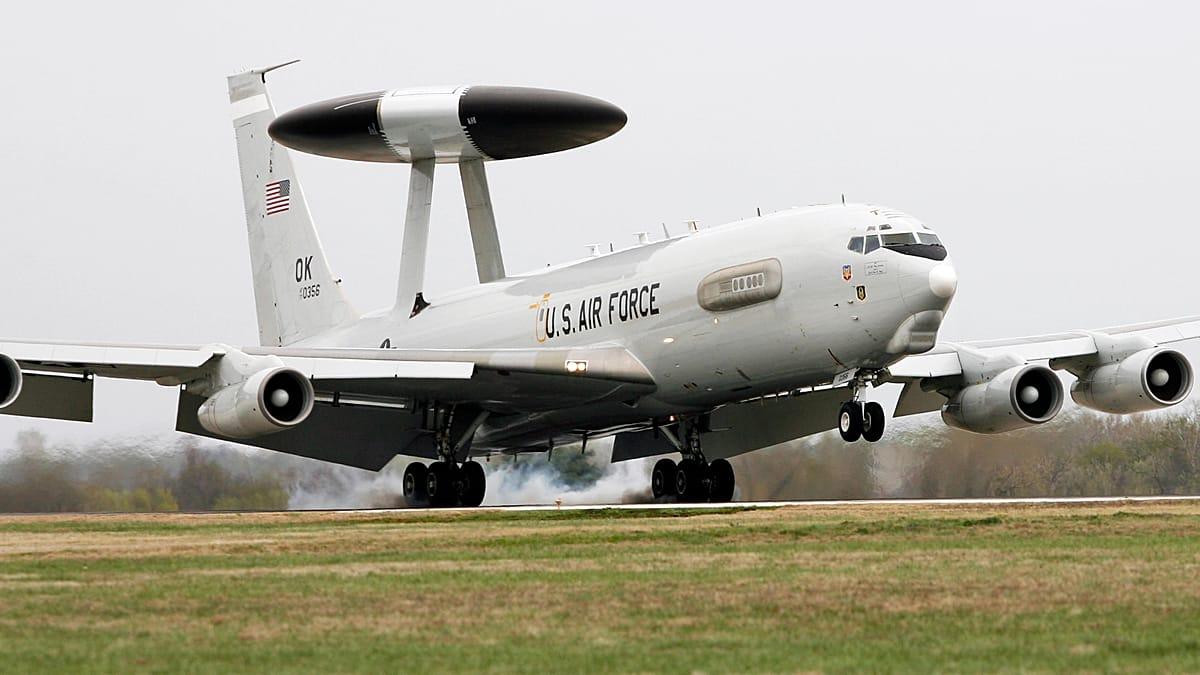
Iran’s Parliament Speaker Mohhamed Baqer Qalibaf Calls Army Symbol Of Power And Security
Key Takeaways
- Qalibaf labeled the army the symbol of Iran's power and security.
- Remarks delivered on Army Day amid praise from other officials.
- Officials tied the remarks to responses against recent US-Israeli aggression.
Army Day Messages
Iran’s top officials used Army Day to frame the country’s military as a central pillar of national security, issuing a series of congratulations that tied the armed forces to recent conflict with the United States and Israel.
Speaker of Iran’s Parliament Mohhamed Baqer Qalibaf thanked the army’s personnel for their sacrifices during the “recent US-Israeli aggression,” saying, “The army is the symbol of Iran’s power and security.”
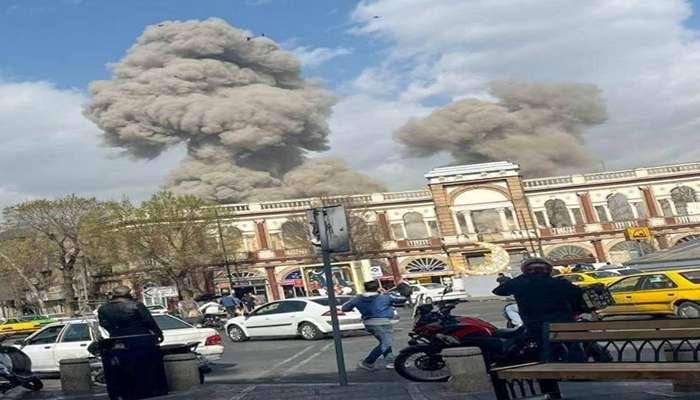
Qalibaf also said, “The army, its personnel and commanders have shown their full commitment to the protection of Iran and its people, whether during war or natural disasters.”
Judiciary Chief Gholam-Hossein Mohseni-Eje'i congratulated army personnel and the people of Iran, describing the army as having “stood in front of this country’s enemies, from bloodthirsty Saddam Hussein to genocidal US and Israel, like a strong mountain.”
Foreign Minister Abbas Araghchi said, “During these difficult days, it was the commendable role of the armed forces which defended the country from the nefarious plans of the enemy.”
In a post on X, the spokesperson for the Ministry of Foreign Affairs Esmaeil Baqaei commemorated the memory of Dena Destroyer personnel who were martyred “by the oppressive US regime in international waters.”
The PressTV account also asserted that on February 28 the US and Israel initiated a “large-scale, illegal, and unprovoked war on Iran,” assassinating Ayatollah Seyyed Ali Khamenei and several high-ranking military commanders, and killing “hundreds of Iranian civilians in airstrikes on the country.”
Escalation and Regional Targets
Iranian officials and state-linked reporting portrayed the conflict as continuing beyond Iran’s borders, with Tehran saying it would strike what it called “points of aggression” in neighboring countries even after an apology by President Masoud Bezhkian.
In a statement attributed to Gholam-Hossein Mohseni-Eje'i, the head of Iran’s judiciary and a member of the Interim Leadership Council, Tehran said it would continue to attack “points of aggression” in neighboring countries and accused some states of putting their capabilities at the disposal of the “enemy” during the US-Israeli attack on Iran.

Mohseni-Eje'i said, “strong strikes on these targets will continue” and that the strategy “enjoys consensus among Iran's ruling institutions.”
The Arabic-language report also described ongoing bombardment, saying “The United States and Israel continue their heavy bombardment of Iran on the eighth day of the war, while Tehran responds by targeting Israel.”
It added that Tehran’s attacks on Gulf states, Iraq and Jordan continued under the pretext of targeting American interests, while “Qatar, the United Arab Emirates, Saudi Arabia, and Kuwait repelled new attacks.”
The report described strikes near Baghdad International Airport, saying missiles and then drones struck the vicinity of the airport in the evening, which “houses a military base hosting a logistics support team affiliated with the U.S. embassy, according to Iraqi authorities.”
It also said that in the north, “a powerful explosion shook the city of Erbil,” followed by “a rising column of smoke from one of the city’s hotels,” after the United States warned of possible targeting of hotels in the Kurdistan Region of Iraq frequented by foreigners.
The New Arab further quoted Ali Larijani, the secretary of Iran's Supreme National Security Council, saying, “When the enemy targets us from its bases in the region, it is clear that we will respond to him—this is our right and our sustainable policy.”
Bezhkian Apology Clarified
Iran’s messaging about strikes on Gulf neighbors was presented as conditional, with CNN Arabic reporting that President Masoud Bezhkian apologized to Gulf Arab states and pledged to halt strikes unless Iran faced aggression from American bases in the region.
CNN Arabic said Iran pledged to respond firmly if it were subjected to any aggression coming from American bases in the region, “following President Masoud Bezhkian's apology to the Gulf Arab states, and his saying that Iran would stop striking its neighbors unless they were attacked.”
Hours after Bezhkian’s remarks, CNN Arabic reported that the deputy head of Bezhkian's office issued a “clarification” of the president's statements, which U.S. President Donald Trump claimed were evidence that Iran had “surrendered” to its neighbors.
The office of the Iranian president said in a statement: “We will respond firmly to any aggression coming from the American bases.”
The statement added: “The message from President Bezhkian is clear: if regional states do not cooperate in facing the American attack on us, we will not attack them.”
CNN Arabic also reported that a senior Iranian official told the network that Iran was looking for new American targets to strike in response to Trump’s warning that Iran “will face very strong blows.”
The official said the United States “clearly threatened to expand the scope of the war against the Iranian people and kill them directly,” and that Iran would “seriously study American areas, forces, and affiliates that have not yet been listed on Iran's armed forces' target list.”
CNN Arabic further described operational claims, saying the Iranian Revolutionary Guard Corps announced that its naval forces attacked Al Dhafra Air Base in the UAE with a large number of drones, and that the IRGC announced the start of the 25th wave of its attacks using the Emad and Fateh missiles.
U.S. Carrier Moves and Talks
While Iranian officials emphasized continued pressure and conditional restraint, Reuters reporting carried by BBC described U.S. military preparations for possible multi-week operations against Iran, framed as dependent on whether Donald Trump orders an attack.
BBC said Reuters reported that “the U.S. military, by deploying its second aircraft carrier to the Middle East, is preparing for a possible multi-week operation against Iran.”
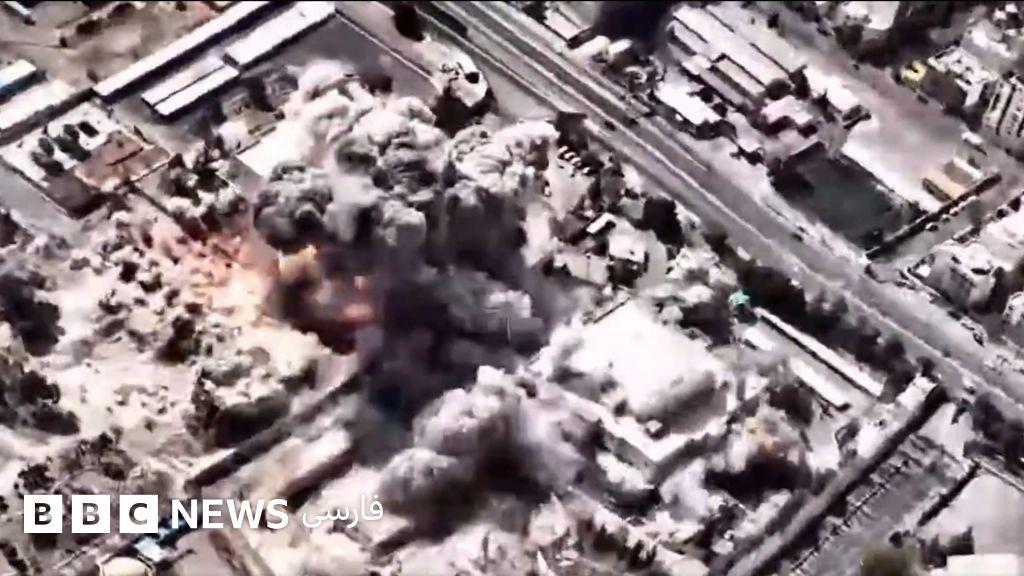
Reuters, cited by BBC, said the planning poses risks to ongoing U.S.–Iran negotiations, noting that Iran and the United States held the first round of indirect talks last Friday in Muscat, the capital of Oman.
BBC reported that Reuters, citing two American officials, said the planning this time is more complex than before, and that “in a sustained operation the U.S. military could strike Iran's government and security facilities, not just its nuclear facilities.”
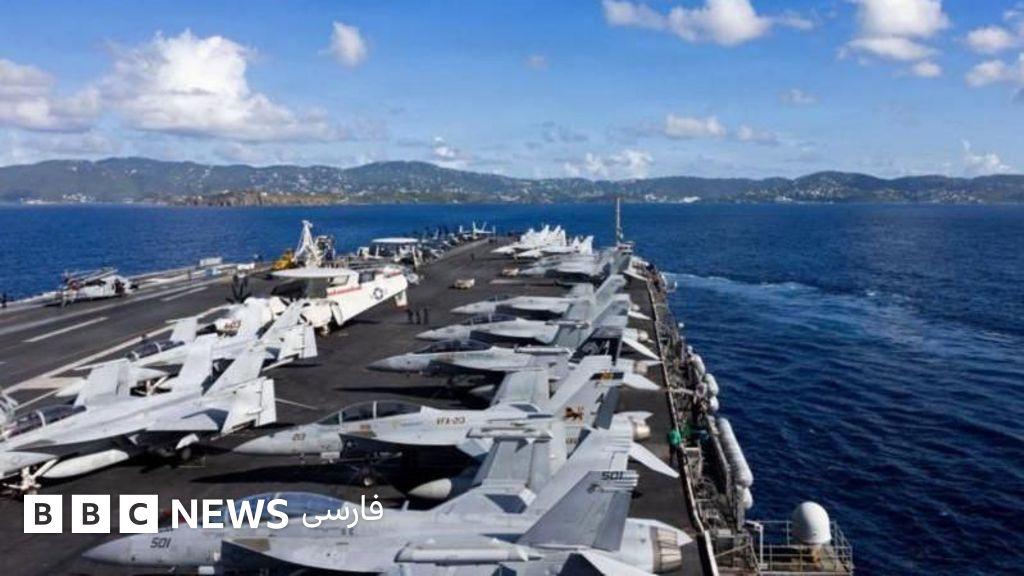
The BBC account said that on Friday the United States announced the deployment of the Gerald R. Ford, described as “the world's largest aircraft carrier,” to the Middle East, where it would join the carrier Abraham Lincoln, several guided-missile destroyers, fighter jets, and surveillance aircraft moved to the region in recent weeks.
It also included Trump’s remarks to U.S. troops at a base in North Carolina, where he said “reaching a deal” with Iran has “been difficult,” and that “this is the best thing that could happen” regarding regime change in Iran.
BBC quoted Trump saying, “There are people,” when asked whom he would like to see in power in Iran, and it reported that he declined to say whom he would like to see in power.
Reuters reporting in the BBC piece also said Washington wants nuclear talks with Iran to address ballistic missiles and support for proxy groups across the region, while Iran says it is ready to discuss limits on its nuclear program in exchange for lifting sanctions but has rejected linking that to missiles.
The BBC account also referenced U.S. statements that “Donald Trump has all options on the table regarding Iran,” quoting White House spokeswoman Anna Kelly.
Competing Frames of War
Across the sources, the same conflict is presented through sharply different emphases: PressTV highlights Iranian leadership praising the army and recounts a timeline beginning with February 28, while The New Arab and CNN Arabic focus on operational claims and conditional strike policies, and BBC centers on U.S. military planning and negotiation risk.
PressTV asserts that on February 28 the US and Israel initiated a “large-scale, illegal, and unprovoked war on Iran,” assassinating Ayatollah Seyyed Ali Khamenei and “several high-ranking military commanders,” and it claims Iranian armed forces conducted “100 waves of decisive missile and drone operations” for “over 40 days.”
The New Arab, by contrast, emphasizes Iran’s stated intent to keep attacking “points of aggression” and quotes Mohseni-Eje'i saying “strong strikes on these targets will continue,” while also describing attacks and countermeasures across Iraq, the Kurdistan Region, and Gulf states.
CNN Arabic frames the diplomatic messaging as a conditional halt, reporting that Bezhkian apologized and said Iran would stop striking neighbors unless they were attacked, while also quoting the Iranian presidency’s statement that “We will respond firmly to any aggression coming from the American bases.”
BBC’s Reuters-based reporting shifts the lens to U.S. posture, describing the deployment of the Gerald R. Ford and Abraham Lincoln and saying the U.S. could strike “Iran's government and security facilities, not just its nuclear facilities.”
The sources also diverge in how they portray the negotiation environment: PressTV says a “two-week ceasefire was brokered on April 8” and that negotiations in Islamabad ended without agreement after “21 hours of intensive discussions,” while BBC says the first round of indirect talks took place last Friday in Muscat and that U.S. planning poses risks to ongoing negotiations.
Even where the sources overlap on the existence of threats, they differ in the language used: CNN Arabic reports Trump’s warning that Iran “will face very strong blows,” while BBC quotes White House spokeswoman Anna Kelly saying “Donald Trump has all options on the table regarding Iran.”
Taken together, the reporting shows a conflict narrated as both a military contest and a diplomatic standoff, with each outlet foregrounding different claims about what happens next.
More on Iran

Donald Trump Threatens Iran Infrastructure Strike Over Strait Of Hormuz Ceasefire Violations
23 sources compared

Trump Threatens Strikes as Iran Fires on Ships in Strait of Hormuz
11 sources compared
Donald Trump Sends U.S. Delegation to Pakistan for Iran Talks, Threatens Power Plants and Bridges
47 sources compared

Iran Rejects Trump Claims It Will Transfer Enriched Uranium to the United States
21 sources compared