
Iran’s Pezeshkian Tells US To Learn From Operation Eagle Claw Defeat In Tabas Desert
Key Takeaways
- Pezeshkian urged the US to learn from the 1980 Eagle Claw failure in Tabas Desert.
- He said divine will's supremacy over major powers' calculations showed the defeat's meaning.
- No power can force Iran to surrender.
Eagle Claw anniversary rhetoric
Iran’s leadership used the April 25 anniversary of the failed U.S. military operation in Iran’s Tabas desert to frame the episode as proof of what President Masoud Pezeshkian described as “the supremacy of divine will over the calculations of major powers.”
Mehr News Agency said Pezeshkian referred to April 25 as a moment that demonstrated “the supremacy of divine will over the calculations of major powers,” and it quoted him saying the event highlighted “the limits of military force when confronted with what he called a higher will.”

PressTV likewise reported Pezeshkian commemorated the anniversary of the United States’ “crushing defeat in the Tabas desert in April 1980,” describing the Operation Eagle Claw mission as ending “in disaster amid unexpected sandstorms.”
In the same set of remarks, Pezeshkian also claimed that “this year, divine assistance brought about another Tabas in southern Isfahan,” and PressTV echoed the claim that “another Tabas was recorded in southern Isfahan.”
Pezeshkian concluded, in Mehr News Agency’s account, by expressing hope that “such historic defeats will serve as a lesson for arrogant powers across the world.”
The Times of India and PressTV both tied the anniversary language to broader maritime tensions, with the Times of India noting the remarks came amid escalating tensions between Tehran and Washington over maritime operations in the Strait of Hormuz.
Judiciary chief links Tabas and Isfahan
Beyond Pezeshkian, Iran’s judiciary chief Gholam-Hossein Mohseni-Eje'i used the same anniversary date to warn the United States that historical incidents could recur if tensions escalate in the Persian Gulf.
The Times of India reported that on Saturday, Mohseni-Eje'i warned the United States that incidents similar to “Isfahan and Tabas” could be repeated if tensions escalate in the Persian Gulf, quoting him saying, “Americans should know that they also lack the capability to impose a naval blockade on Iran; Isfahan and Tabas will be repeated once again in the waters of the Persian Gulf.”
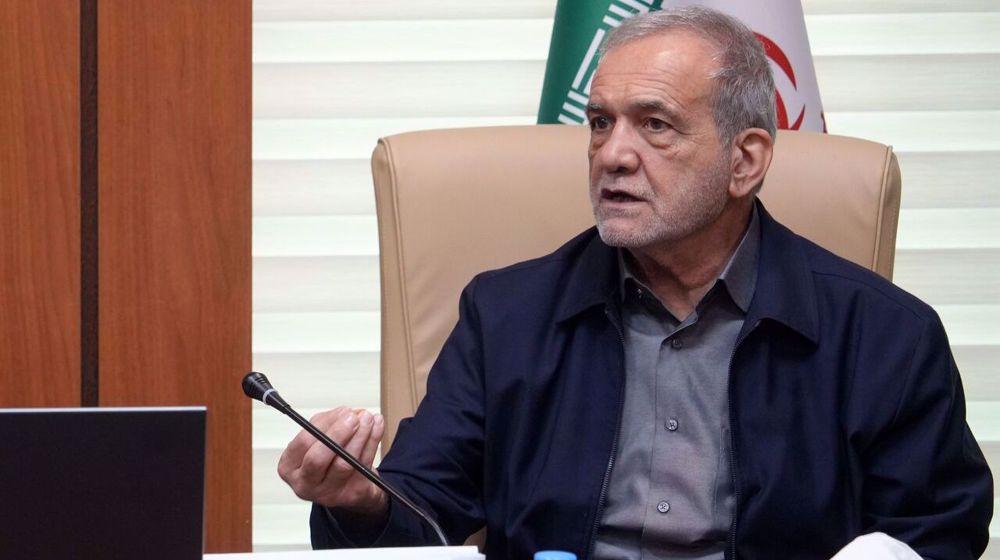
Mehr News Agency similarly described Pezeshkian’s remarks about the limits of military force and tied them to “the supremacy of divine will,” while PressTV framed the same theme as a warning to “the world’s arrogant powers.”
PressTV also stated that Iran’s Judiciary Chief made the naval blockade point, stressing that “the aggressors” would face repetition of “such humiliating defeats.”
The Times of India connected the warning to a specific escalation setting, saying the remarks came amid “escalating tensions between Tehran and Washington over maritime operations in the Strait of Hormuz,” where both sides accused each other of aggressive actions including “naval interceptions and vessel seizures.”
In the same report, the judiciary chief’s post on X used the symbolic importance of Tabas, saying, “On the fifth of Ordibehesht, the anniversary of the humiliating defeat of the American military in Tabas, today holds a different colour and scent for the people of Islamic Iran.”
Operation Eagle Claw timeline
The Times of India provided a detailed account of what it described as Operation Eagle Claw, presenting the Tabas reference as tied to the Iran hostage crisis and the U.S. attempt to rescue Americans held after the 1979 Islamic Revolution.
It said the operation was a failed U.S. military mission carried out in April 1980 during the presidency of Jimmy Carter, and it described that the operation was launched after Iranian students stormed the U.S. Embassy in Tehran in November 1979 and took dozens of Americans hostage.
The Times of India said Carter approved a complex rescue plan involving multiple branches of the U.S. military, designed as a multi-phase operation over two nights, involving Air Force C-130 transport aircraft and Navy RH-53D helicopters.
It described the first night plan as transport aircraft carrying Delta Force commandos landing at a remote desert site known as Desert One, about 200 miles southeast of Tehran, and rendezvousing with helicopters launched from the USS Nimitz.
The report said that after refuelling, troops would be moved closer to Tehran and go into hiding before launching an assault on the embassy the following night, including storming the embassy, rescuing the hostages, and evacuating them through a secured airfield with support of additional U.S. forces.
The Times of India said the mission began to unravel early when “the helicopters encountered a severe dust storm, or haboob,” causing visibility issues and mechanical failures, and it stated that with too few operational helicopters remaining, the mission was aborted.
Iran’s foreign ministry framing
The Jماران news outlet (پایگاه خبری جماران) presented Iran’s message to Washington as a formal reminder tied to the anniversary and to what it called “more than four decades of hostility.”
It said Iran reminded the United States of its humiliating defeat in Operation Eagle Claw in Tabas Desert in 1980, advising Washington to learn lessons from its historic fiasco and “more than four decades of hostility toward the resistant Iranian nation.”

In a statement released on the “43rd anniversary of the failed US military operation,” Iran’s Foreign Ministry said the country has “growing authority” and keeps rendering American sanctions and threats ineffective.
The outlet quoted the Foreign Ministry saying, “April 25, 1980 is reminiscent of the aggressive attack of the special combat forces of the American regime on the territorial integrity of the Islamic Republic of Iran and their illegal entry into Tabas Desert,” and it added that the statement said the “aggressive action and violation of the international regulations” was “fortunately met with an exemplary failure in the light of divine grace.”
It also quoted the Foreign Ministry urging the government in Washington “to reflect on and learn lessons from the results of this action and more than four decades of hostile approaches and measures against the resistant and proud nation of Iran.”
The same report said that on April 24-25, 1980, the United States Armed Forces launched Operation Eagle Claw “under the direct order of then-president Jimmy Carter,” attempting to release “its 52 embassy staff held in Tehran after the 1979 Islamic Revolution.”
Competing accounts of “another Tabas”
While multiple outlets anchored their narratives in the Tabas anniversary, they differed in how they connected it to recent events and in the operational details they chose to emphasize.
“On the 46th anniversary of one of the most humiliating defeats in US military history, Iran's judiciary chief Gholam-Hossein Mohseni-Eje'i on Saturday warned the United States that incidents similar to “Isfahan and Tabas” could be repeated if tensions escalate in the Persian Gulf”
Mehr News Agency said Pezeshkian alluded to “recent developments inside the country,” claiming that “this year, divine assistance brought about another Tabas in southern Isfahan,” and it added that “The US Delta Force have been defeated twice in Iran one in 1980 in Operation Eagle Claw.”
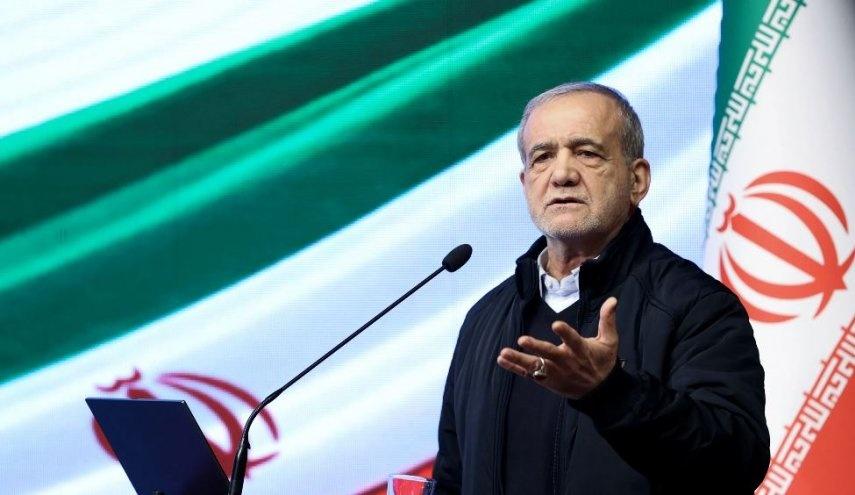
PressTV likewise framed the anniversary as part of a broader pattern, stating that Pezeshkian warned “the aggressors” to learn from history, or they would be forced to witness repetition of “such humiliating defeats.”
PressTV then went further by describing what it called a U.S. operation in early April 2026, saying it “resulted in a crushing defeat” as “American commando units were swiftly intercepted and neutralized,” and it claimed Iran’s armed forces destroyed “two US C-130 transport planes and two Black Hawk helicopters near an abandoned airport in southern Isfahan.”
It further asserted that “at least five US military personnel were killed,” and that others fled leaving behind “sensitive equipment and documentation.”
The Times of India, by contrast, focused on the judiciary chief’s warning about naval blockade capability and on the historical Operation Eagle Claw plan, describing the mission’s multi-phase structure and the “haboob” dust storm that caused mechanical failures.
More on Iran

King Charles III and Queen Camilla Begin Four-Day US State Visit With Trump Tea
10 sources compared

Oil Prices Rise as US-Iran Peace Talks Stall and Strait of Hormuz Remains Constrained
14 sources compared
Abbas Araghchi Arrives in Russia for Talks With Vladimir Putin to End U.S.-Israel War on Iran
33 sources compared

Abbas Araghchi Meets Vladimir Putin in Russia as US-Iran Talks Stall
20 sources compared