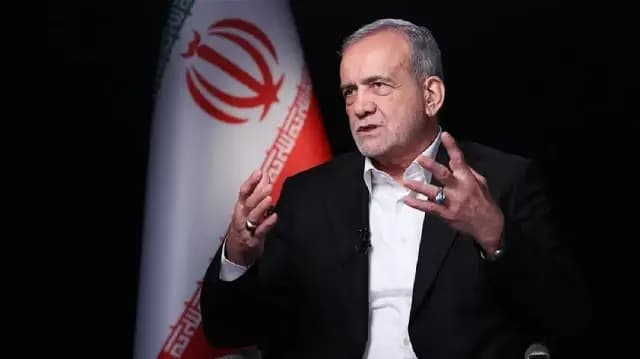
Iran's President Pezeshkian Says Iran Will Not Surrender in War with US and Israel.
Key Takeaways
- Masoud Pezeshkian says Iran will not surrender to bullies.
- Pezeshkian asserts Iran defends against invasion as lawful right and did not start war.
- Macron talks cited; Iran calls for condemnation of US-Israeli strikes and adherence to international law.
Iran's Defiant Position
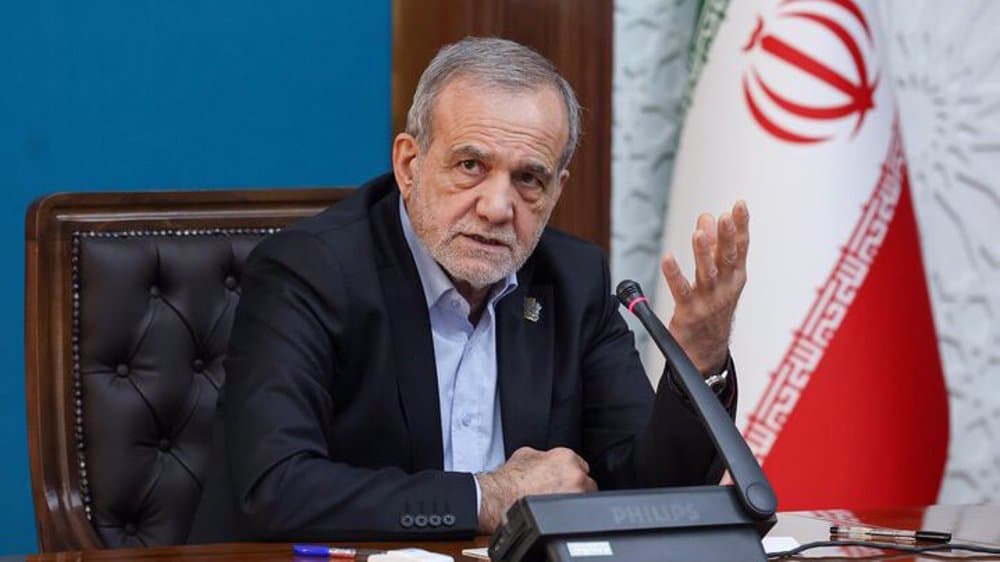
Iranian President Masoud Pezeshkian has forcefully articulated Iran's unwavering stance in the ongoing conflict with the United States and Israel.
“Iran has continuously insisted that its retaliatory actions, which only target Israeli and American military installations while avoiding damage to civilian infrastructure in nearby nations, are lawful self-defense under international law”
He asserted that his country will not surrender to aggression and will continue to defend its territorial integrity and national security.
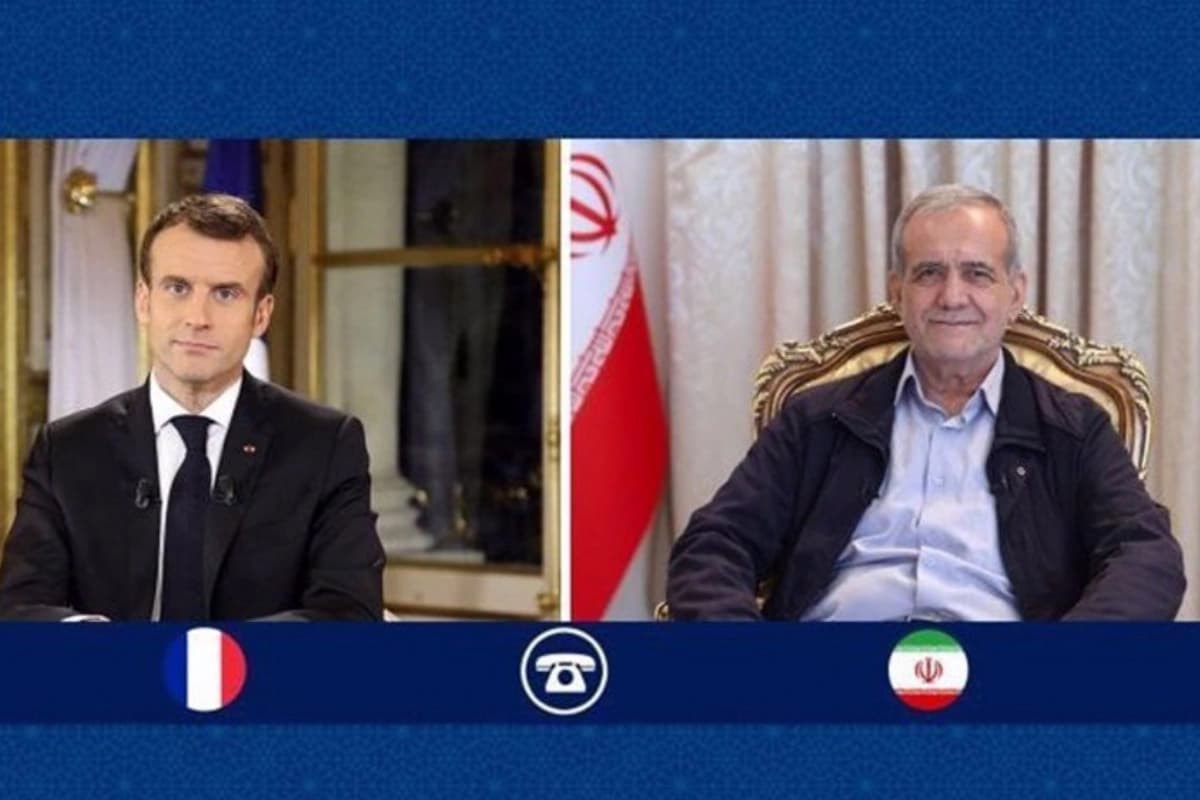
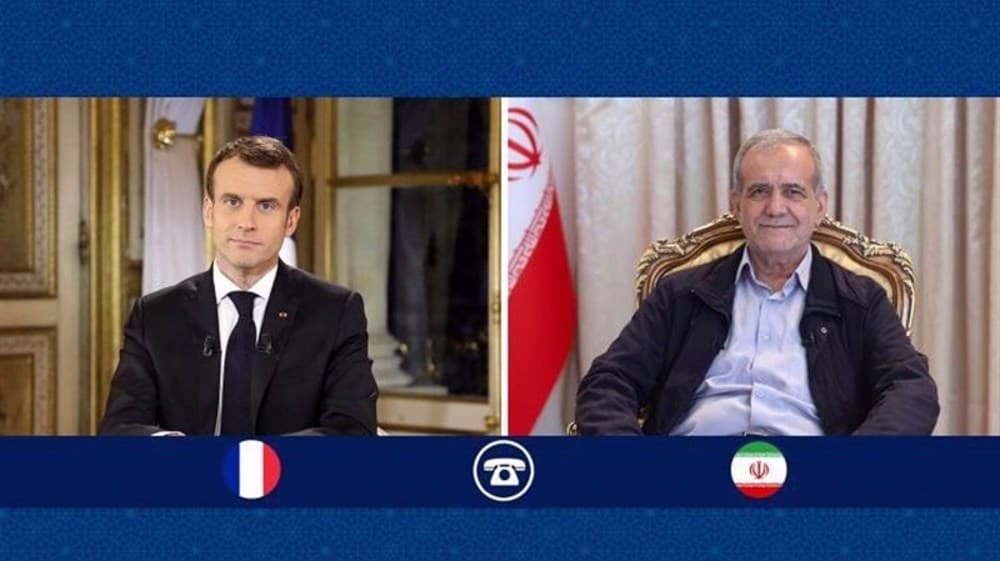
During a telephone conversation with French President Emmanuel Macron, Pezeshkian emphasized Iran's retaliatory actions specifically target Israeli and American military installations.
These operations deliberately avoid damage to civilian infrastructure in neighboring nations, framing them as lawful self-defense under international law.
The Iranian president issued stern warnings that any nation permitting strikes on Iran by granting US military access to its territory would be considered complicit in aggression.
Pezeshkian's communication with Macron represents Iran's continued diplomatic efforts to explain its position while maintaining firm resistance to external threats.
Denial of War Initiation
Pezeshkian categorically denied that Iran initiated the current military confrontation with the US and Israel.
Instead, he positioned Tehran as responding to ongoing illegal aggression from these nations.
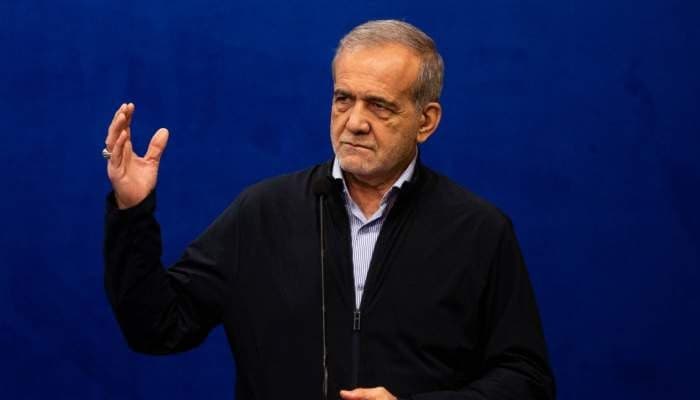
In his discussion with Macron, the Iranian president explicitly stated that his country bears no responsibility for igniting what he described as an 'atrocious war' and 'savage war.'
He emphasized that Iran's defensive actions represent a natural right that the nation has mastered well.
Pezeshkian detailed that recent attacks on two Iranian islands, Kharg Island and Abu Musa Island, were launched from the territory of multiple Persian Gulf nations.
He characterized Zionist regime's hostile acts, atrocities in Gaza and Lebanon, and US-imposed wars as the primary sources of regional instability.
This framing portrays Iran as responding rather than initiating hostilities in the region.
Criticism of US Bases
The Iranian president specifically criticized the role of US military bases in the region.
“Iran’s President Masoud Pezeshkian has said his country “will not surrender to bullies”, urging the international community to condemn US-Israeli strikes and compel those responsible to respect international law”
He stated that their use against Iran aimed at disrupting Tehran's relations with neighbors must be halted.
Pezeshkian warned that placing land and facilities at America's disposal for brutal attacks against Iran conflicts with international law.
This violates the principle of good neighborliness, suggesting Persian Gulf nations allowing such operations are violating their legal obligations.
He argued that peace and stability cannot be achieved while 'Zionist-American aggression' against Iran continues.
Pezeshkian framed the conflict as a threat to regional security and international order.
He criticized European nations for supporting US and Israeli crimes through a 'destructive approach' to international relations.
The Iranian president called on European nations to uphold international law and the rule of law worldwide.
International Appeal
Pezeshkian issued a direct appeal to the international community to condemn the US-Israeli strikes.
He called for compelling the aggressors to respect international law, emphasizing that Iran will not bow to coercion.
The president reiterated that the Iranian people, government, and armed forces have never sought conflict or tension.
However, they possess no hesitation in confronting aggressors in decisive and legitimate defense of their territorial integrity.
Pezeshkian portrayed Iran's position as one of strength and resolve, backed by popular support.
He stated this reliance on national capabilities suggests widespread domestic consensus on the defensive nature of Iran's military actions.
This appeal represents Iran's strategy of internationalizing the conflict.
Iran positions itself as the victim of aggression and seeks diplomatic pressure on its adversaries.
War Characterization
The Iranian president described the initiation of the war by the US and Israel as a 'medieval act in the twenty-first century.'
“President Masoud Pezeshkian says Iran “will not surrender to bullies,” urging the international community to condemn the US-Israeli act of aggression and to compel the perpetrators to respect international law”
He characterized it as based on false information and driven by expansionist motives.
Pezeshkian emphasized that any talk of halting aggression would be meaningless unless concrete assurances were given.
These assurances must guarantee no further attacks would target Iranian soil, establishing a clear precondition for de-escalation.
He reaffirmed Iran's firm stance against any violation of its territory.
This suggests future Iranian responses would be directly tied to respecting this red line.
According to PressTV, the conflict began on February 28 when the US and Israeli regime launched what Iran describes as an unprovoked war.
This attack assassinated former Leader Ayatollah Seyyed Ali Khamenei along with several top military commanders.
This specific historical context forms the basis for Iran's narrative of defensive retaliation.
More on Iran

Israel strikes Iran's Pars gas field as Tehran vows revenge
14 sources compared
Trump threatens to blow up South Pars gas field if Iran attacks Qatar again
10 sources compared
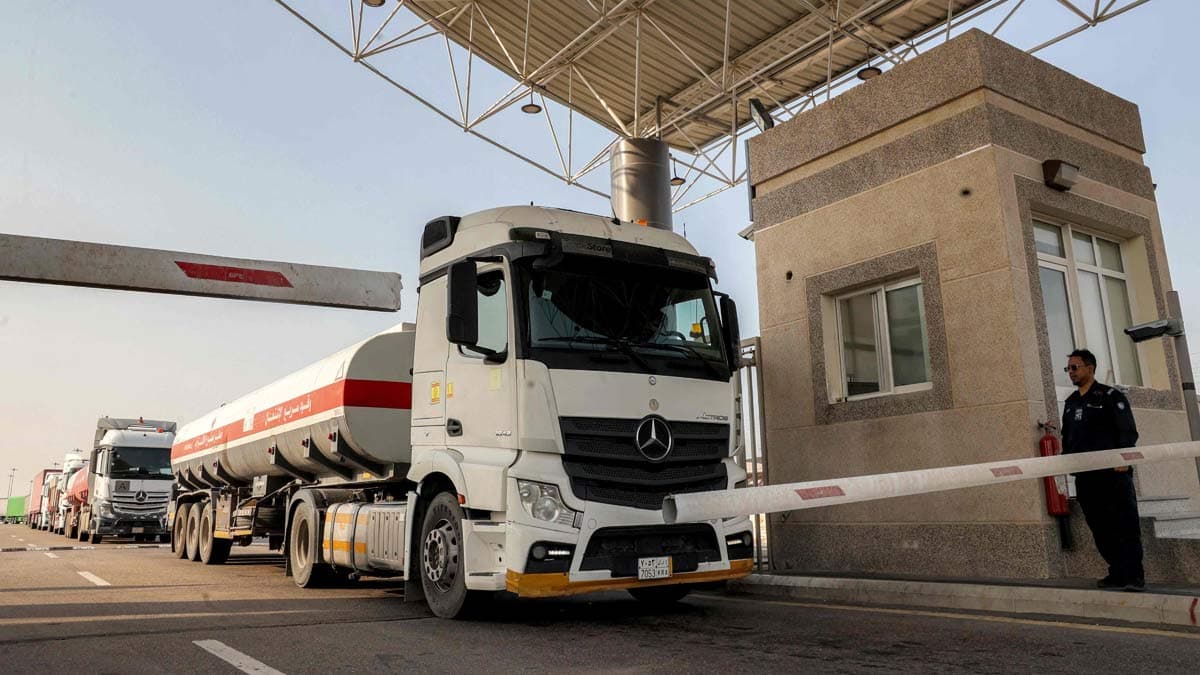
UAE Halts Habshan Gas Facility Operations After Debris From Intercepted Missiles
10 sources compared

Iran Threatens Gulf Energy Facilities After Israel Strikes South Pars Gas Field
11 sources compared