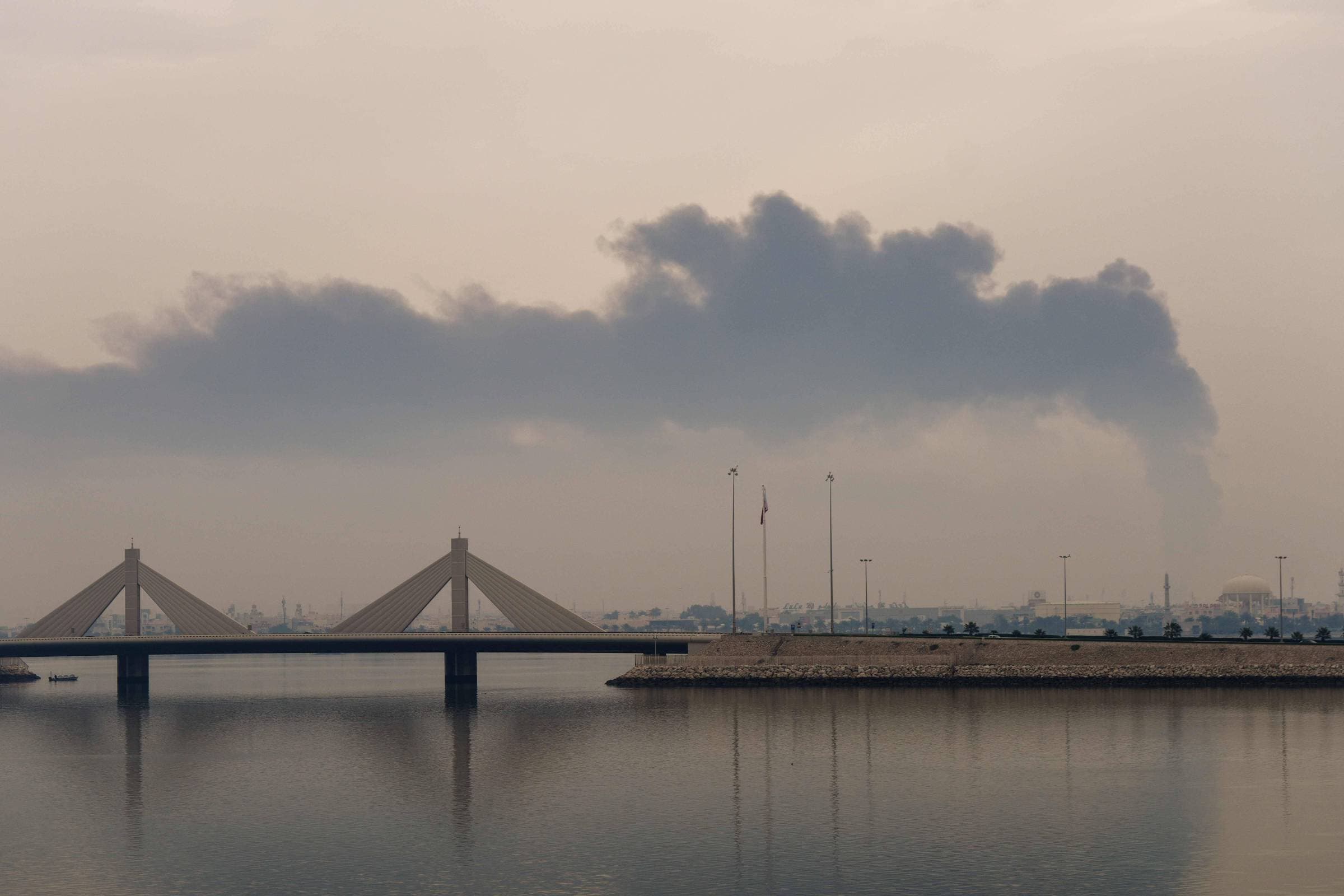
Iran's retaliation is a sign of weakness, says a professor.
Key Takeaways
- Iran's retaliation signals weakness, not strength, according to Hilal Khashan.
- The war was launched by the United States and Israel on February 28.
- Theocracy must survive, but be altered, no longer as a regional threat.
Iran retaliation as weakness
The Iranian regime shows weakness, not strength, by attacking its Persian Gulf neighbors in retaliation for the war launched by the United States and Israel on February 28, according to Hilal Khashan, head of the Department of Political Science at the American University of Beirut, in an email interview with Folha on Friday the 13th.
“The Iranian regime shows weakness, not strength, by attacking its Persian Gulf neighbors in retaliation for the war launched by the United States and Israel on February 28”
The capital remains under harsh conditions, with Israeli attacks on Hezbollah positions, Tehran's ally.
Khashan, who collaborates with Geopolitical Futures, argues that the regime's survival does not mean it will be the same as before the war, and that it will not last long because the Iranian people desire change.
He says Tehran has gained a host of enemies and could have partnerships with neutral neighbors instead.
He states that Hezbollah should not survive the war, neither as a military force nor as a political entity in Lebanon, and contends that Trump does not understand the Iranian psyche, which may push him to withdraw due to the impact on the oil market.
He notes that Trump cannot afford to keep the war going much longer, as the political price would be prohibitive.
He discusses a possible path for Iran after the war—an accommodation with the United States in the style of Venezuela by giving up its nuclear program—but cautions that Iran is fundamentally different from Venezuela as a political and cultural constant in the Middle East.
He explains Iran's complex institutions, including the Guardian Council and the Assembly of Experts, which keep the Supreme Leader untouchable and place his decrees above the formal structure.
He adds that the regime may be altered even if it survives, and raises questions about how such changes would work.
Leadership and regime resilience
On Ali Khamenei's succession, Khashan notes that the regime appears to have chosen a Supreme Leader who promised to resist Trump’s ultimatum of unconditional surrender, even though the new figure did not attend in person for his first speech.
He emphasizes that Trump does not understand the Iranian psyche, and that Iran is a challenging people who crushed the opposition even under great pressure before the war.
He explains that the Revolutionary Guards are more than a military force, controlling much of the economy and benefiting from their businesses.
He recalls Ayatollah Khomeini’s founding of a highly complex political system with overlapping prerogatives, through which the Supreme Leader emerged as the final arbiter, making him untouchable and placing his decrees above the formal structure.
He notes that the regime’s posture suggests continued resistance to unconditional surrender, while there are uncertainties about postwar reforms and the possibility of a unified opposition.
Hezbollah and Houthis dynamics
Hezbollah is described as waging a losing battle against Israel and is expected to cease to exist as a military component and as a political force in Lebanese politics after the war.
“The Iranian regime shows weakness, not strength, by attacking its Persian Gulf neighbors in retaliation for the war launched by the United States and Israel on February 28”
He notes that the Houthis have learned lessons and paid dearly for launching missiles and drones at Israel and for interfering with Red Sea navigation.
He points out that the relationship between Iran and the Houthis differs from the Iran–Hezbollah relationship; the Houthis do not follow the same Shiite jurisprudence and the alliance is practical rather than ideological.
He adds that the relationship between the Houthis and Iran is utilitarian rather than doctrinal and that Tehran’s leverage with the Houthis is not anchored in shared jurisprudence as it is with Hezbollah and other actors.
Regional implications and balance
On broader regional implications, Khashan suggests Iran's attacks on Gulf states are a strategic bet to disrupt oil markets but may sour neighbors' relations with Iran for many years.
He argues that the Iranian street cannot bring down the regime because the Revolutionary Guards control much of the economy and have a broad base of beneficiaries.
He comments on Lebanon's prospects, noting that Hezbollah is waging a lost battle against Israel and that the war's end could transform Lebanese politics and reduce Hezbollah's role.
He notes that the restraint shown by the Houthis could reflect a shift in regional support for Iran or be a card in Tehran's sleeve, but that their relationship with Iran remains different from other alliances.
The overall picture, according to Khashan, is a complex balance of power in which Iran seeks to press Trump while managing internal resilience and external alliances.
More on Iran

Israel strikes Iran's Pars gas field as Tehran vows revenge
14 sources compared
Trump threatens to blow up South Pars gas field if Iran attacks Qatar again
10 sources compared
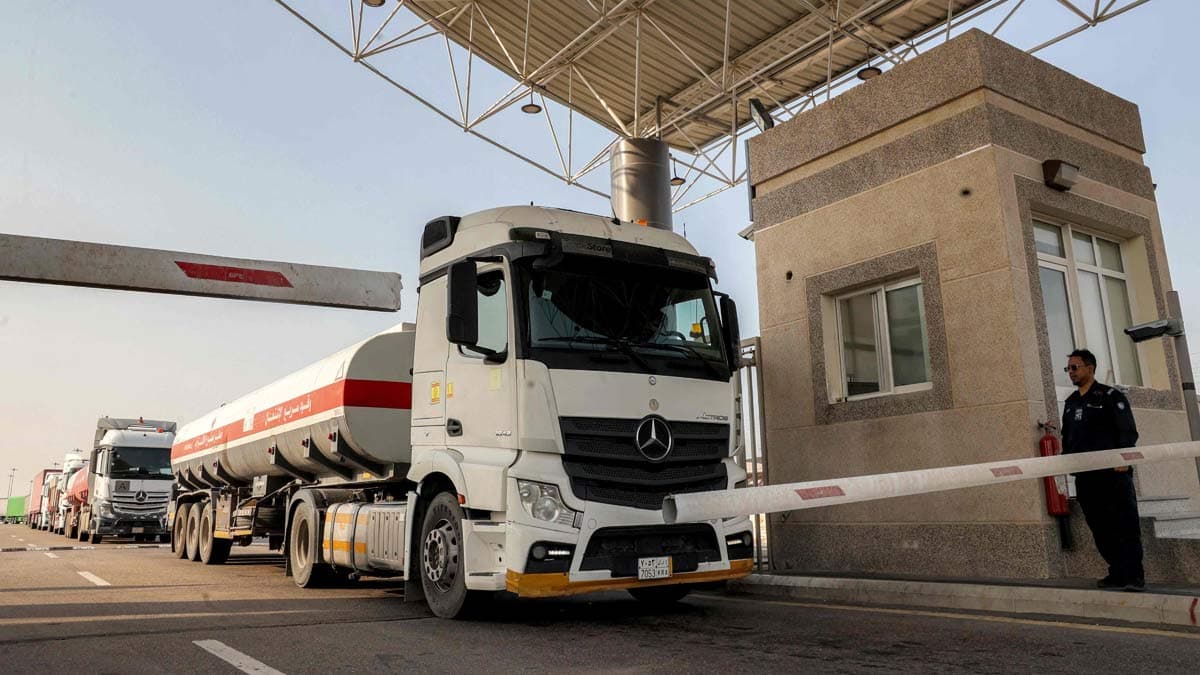
UAE Halts Habshan Gas Facility Operations After Debris From Intercepted Missiles
10 sources compared

Iran Threatens Gulf Energy Facilities After Israel Strikes South Pars Gas Field
11 sources compared