Iran30 May, 20263 min read
Iraq Launches Three-Phase Plan to Disarm and Integrate Iran-Backed Militias
This article is an automated aggregation of coverage from news outlets. Our editorials offer in-depth analysis curated by the NewsCord team.
Ali al-Zaidi convenes expanded security meeting with Iran-backed militia leaders. Iran-backed militias agree to surrender weapons to the Iraqi state.

Arms control push
Iraq is moving forward with efforts to consolidate arms under government control through a three-phase plan to disarm and integrate Iran-backed militias, with Iraqi Prime Minister Ali al-Zaidi set to convene an expanded meeting with senior security officials and militia leaders. A government source told Shafaq News Agency that the process will be implemented in three phases, starting with a comprehensive inventory of facilities, bases, and assets belonging to each faction. The second phase will focus on evaluating and handing over weapons according to an agreed timetable, while the final phase will oversee the integration of faction members into Iraq’s official security institutions or the Popular Mobilization Forces (PMF).
The source said joint committees comprising representatives from the factions, government ministries, and military and security agencies will supervise the integration process under the direct oversight of the commander-in-chief of the armed forces, and that discussions are expected to include guarantees sought by some factions, including assurances that participants will not face legal prosecution as part of the transition process. The disarmament initiative follows Muqtada al-Sadr’s Wednesday declaration that Saraya al-Salam (Peace Brigades) would sever its organizational ties to his movement and be incorporated into state institutions, which the newly formed Iraqi government headed by Prime Minister Ali Faleh al-Zaidi welcomed.
Sadr’s separation
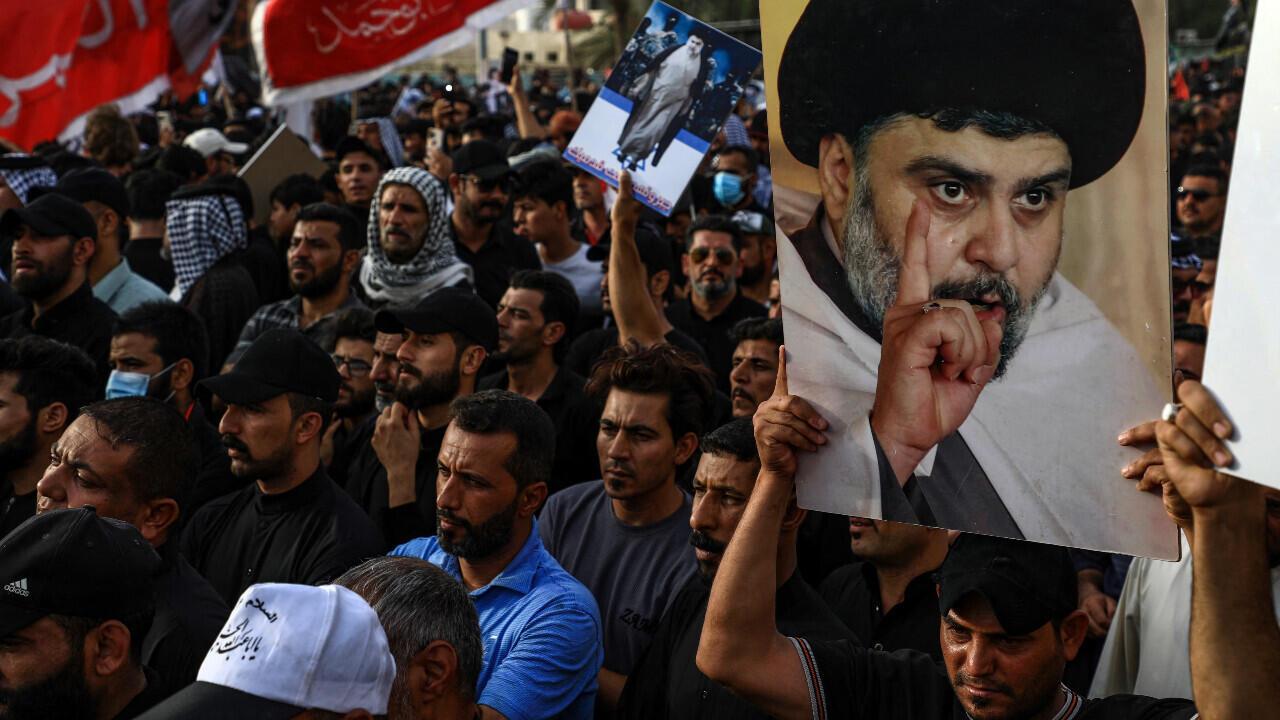
Moqtada Sadr aligned his armed faction with the Iraqi state by announcing the “complete separation” of Saraya al-Salam from his political organization and its “full integration into the State.” L'Orient Today said Sadr released the statement on Wednesday, May 27, and framed the move as coming amid repeated calls from the head of government to disarm Shiite factions and place their weapons under state authority. The same report linked the decision to mounting U.S. pressure, describing how Washington urges Baghdad to take a tougher stance against pro-Iranian militias while Prime Minister Ali al-Zaidi welcomed the announcement.
In parallel, France 24 described Iraq’s political impasse as a standoff between Moqtada al-Sadr and the Cadre de coordination, which includes Hadi al-Ameri and Nouri al-Maliki, with Bagdad “prise en étau” between rival gatherings. France 24 also said the Sadrist sit-in near the Parliament has lasted “depuis bientôt deux semaines,” while the rivals of Moqtada al-Sadr called for “former un gouvernement” before any decision.
Militias and state challenge
The arms-integration effort is presented as a response to the longstanding issue of armed groups operating outside exclusive state control, with Basnews describing how many Iraqi armed factions emerged after the 2003 U.S.-led invasion and expanded after the rise of the Islamic State (ISIS) in 2014. Basnews said Saraya al-Salam was formed in 2014 following al-Sadr’s call to protect holy sites, and that numerous other groups were incorporated into the PMF, which later became a state-recognized umbrella organization for armed factions. Le Monde described the continuing dominance of Shiite factions at the heart of Iraqi power, saying they “pose a challenge to the state,” and it cited Taleb Al-Janabi in an improvised camp in the Anbar desert describing changes at Jurf Al-Sakhr.
Le Monde reported that Taleb Al-Janabi said “The Shiite militias have destroyed the houses, then the farms and agricultural operations,” and it added that he speculated that security vehicles around schools “are believed to serve as prisons.” In the same Le Monde account, Mohammed Mohie, the spokesman for the Hezbollah Brigades, called anything said about Jurf Al-Sakhr “propaganda,” while the article noted that Prime Minister Mustafa Al-Kadhimi “cannot set foot there” according to Taleb Al-Janabi.