Iran30 May, 20262 min read
Qatar Rejects Permanent Strait Of Hormuz Toll, Says Temporary Fee Negotiable At Shangri-La Dialogue
This article is an automated aggregation of coverage from news outlets. Our editorials offer in-depth analysis curated by the NewsCord team.
Qatar opposes permanent tolls for transit through the Strait of Hormuz. Qatar says a temporary transit fee is negotiable.
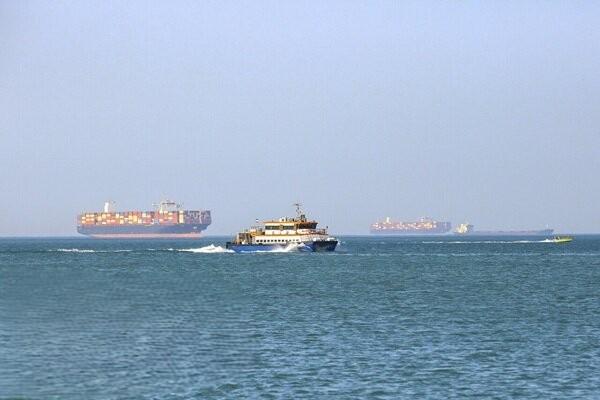
Qatar rejects permanent toll
Qatar’s Deputy Prime Minister Sheikh Saoud bin Abdulrahman bin Hassan bin Ali Al Thani told the Shangri-La Dialogue that Doha would oppose a permanent toll for passage through the Strait of Hormuz. He said Qatar would find a temporary fee negotiable if it was used to help reopen the waterway, including by removing sea mines, and he framed the issue as one that would affect consumers.
The remarks came as Iran’s control of the Strait of Hormuz was described as “non-negotiable” by Ali Reza Salimi, a member of the Iranian Parliament's Presidium, who said a new legal regime for the strait would be imposed. In the same Iranian account, Salimi added that “the conditions of passage as well as the transit fees in the Strait of Hormuz will be determined by Iran,” and that the strait “cannot be changed by tweets.”

Negotiation and mine-clearing
Multiple outlets tied Qatar’s position to a specific purpose for any short-term charge, with ThePrint saying the comments were in response to talks between Iran and Oman about a permanent toll system. At the Shangri-La Dialogue, Sheikh Saoud said, “Qatar and also the partners in the Gulf stated very clearly that charging fees will always impact the consumer, so we are against this,” and he added that temporary use for mine-clearing was “something that is negotiable.”
The Straits Times likewise reported that Qatar opposes permanent legal fees but that “short-term charges used for mine clearing or similar purposes can be considered,” while describing the comments as made on May 30 at an Asian defence conference in Singapore. In the Iranian account, Ali Reza Salimi asserted that “the conditions of passage as well as the transit fees in the Strait of Hormuz will be determined by Iran,” reinforcing that any fee regime would be set by Tehran rather than by an external timetable.
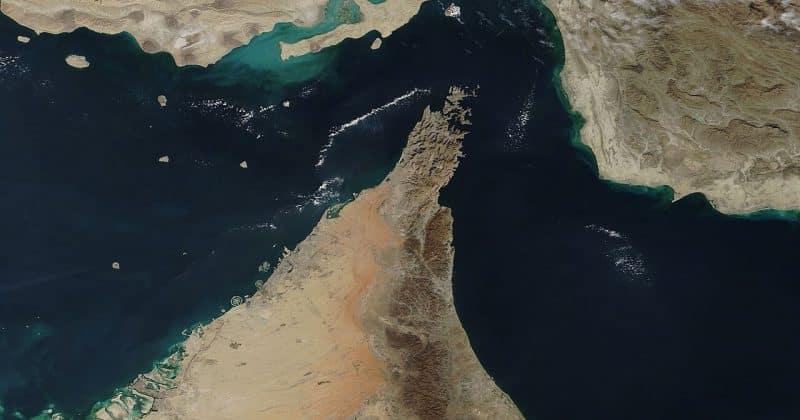
What’s at stake for talks
The Iranian account said U.S. Secretary of State Marco Rubio warned that if Iran proceeds with its plan to impose fees on ships passing through the Strait of Hormuz, reaching an agreement would be impossible.
Rubio was quoted saying, “We want this passage to remain open and free. The Strait of Hormuz is an international waterway,” linking the fee dispute directly to the prospects for a deal.
That same account described the ongoing war as a major blow to the global economy, noting that “about a fifth of global oil and LNG exports passed through the Strait of Hormuz” before the outbreak of the war.
It also stated that the new proposal Iran sent to the United States includes demands such as “control of the Strait of Hormuz,” alongside “war reparations,” “lifting sanctions,” “releasing frozen assets,” and “the withdrawal of American forces from the region.”