Gaza Genocide04 December, 20252 min read
Ireland, Spain, the Netherlands and Slovenia Boycott Eurovision After EBU Clears Israel to Compete
European Broadcasting Union approved safeguards and cleared Israel to participate in Eurovision 2026. Ireland, Spain, the Netherlands and Slovenia announced boycotts and will withdraw from Eurovision 2026.

43 outlets told this the same way.
Outlets did split on Israel Marks Oct. 7 Anniversary With Strikes on Gaza, Netanyahu Faces Election After Nova Tribute →
Eurovision participation dispute
The European Broadcasting Union (EBU) decided at its Geneva assembly not to hold a separate vote to bar Israel from the Eurovision Song Contest. Instead, the EBU approved new safeguards to curb government or third-party promotion and to strengthen jury influence. The EBU also confirmed that Israel’s public broadcaster KAN is eligible to compete in Vienna in 2026.
“The EBU held a secret ballot of its 68 members and approved new ‘safeguards’ intended to strengthen trust, transparency and neutrality.”
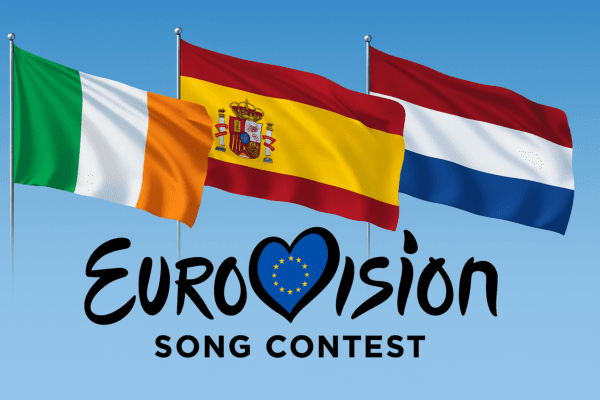
Immediately after the EBU cleared Israel to participate, several national public broadcasters - Ireland’s RTÉ, Spain’s RTVE, the Netherlands’ AVROTROS and Slovenia’s RTVSLO - announced they would withdraw or boycott the contest, citing Israel’s actions in Gaza and the humanitarian toll. The row has been described as one of Eurovision’s biggest controversies.
Israel’s president and government officials welcomed the EBU decision. Some member broadcasters, including Germany and Austria, signalled support for broad participation.
Media boycotts, Gaza crisis
Broadcasters explicitly linked their boycott announcements to the humanitarian catastrophe in Gaza and to allegations of press restrictions and targeted killings.
Several sources cited Gaza health authorities reporting more than 70,000 dead, and Slovenia’s public broadcaster referenced "the 20,000 children who died in Gaza."

Some experts and U.N.-commissioned reviewers have said Israel’s offensive amounts to genocide, a claim reported by the Associated Press, 1News and other outlets.
Israel and its officials reject such characterizations and describe the campaign as a response to the Oct. 7 Hamas attacks that killed about 1,200 people and took around 251 hostages.
EBU voting rule changes
The EBU addressed allegations that Israel's 2024 participation benefited from disproportionate promotion. It adopted rule changes intended to curb government or third-party interference and to rebalance jury and public voting. Reported measures include halving the maximum public televotes from 20 to 10 and urging viewers to spread their votes.
“Key changes include cutting the televote allowance from 20 to 10 votes per person... and reintroducing national juries in the semi-finals with results split 50/50 between jury and public.”
The EBU also expanded professional juries in the semi-finals so jury and public votes are roughly equal. The organisation said these steps protect contest integrity after accusations of paid advertising and organised campaigns.
European reactions to EBU ruling
Reactions split sharply across Europe. Israel's officials and KAN called exclusion attempts a "cultural boycott" and welcomed the EBU ruling. Boycotting broadcasters framed their decisions as moral stands against Israel's military actions in Gaza and restrictions on journalists.
Governments and broadcasters are divided, with Germany and Austria signalling they would not back exclusion and the BBC and other public broadcasters defending the EBU's collective decision. Several EU broadcasters warned the boycott could damage viewership, sponsorship, and the contest's global reach.

Eurovision neutrality under scrutiny
The fallout raises a direct question about Eurovision’s claim to political neutrality and the contest’s future. Some sources warn that a boycott by EU member states would be unprecedented and could dent audience figures and sponsorship. Others argue that neutrality cannot mean silence in the face of what they describe as systematic killing in Gaza.
“Broadcaster pullouts, including major players such as Spain (one of the ‘Big Five’) and Ireland, could hurt viewership and revenue at a time of funding pressure.”
Coverage invokes precedent—Russia’s 2022 exclusion after the invasion of Ukraine—to highlight perceived inconsistency in how the EBU applies rules. Experts predict 2026 will be one of Eurovision’s most politicised editions yet, with participation confirmations due by mid-December.