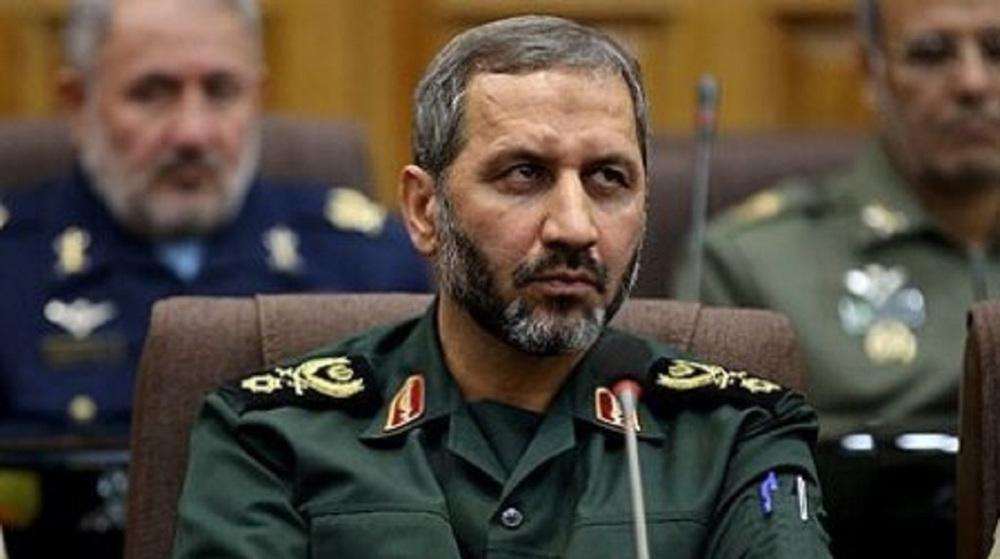
IRGC Aerospace Commander Seyyed Majid Mousavi Warns Iran Will Strike If Enemy Oversteps Ceasefire
Key Takeaways
- Tehran undecided on participating in Islamabad ceasefire talks.
- Last Chance round in Islamabad looming as talks struggle to progress.
- IRGC's Mousavi warns of strikes; Tehran accuses Washington of breaking the ceasefire.
Ceasefire, threats, and drones
Iran’s Islamic Revolution Guards Corps (IRGC) aerospace commander warned that after a ceasefire, the IRGC would strike “wherever you direct us” if the “enemy oversteps and commits any act of aggression against the Islamic Republic of Iran.”
“If you have trouble watching the video, click the source link to watch on the official site”
Brigadier General Seyyed Majid Mousavi delivered the message to “the people of Iran who have filled the streets and city squares for over 50 days in support of the armed forces during the third imposed war,” and he framed the public mobilization as vigilance during “the period of military silence (ceasefire).”

In the message played “in all city squares,” Mousavi said, “Your children stood by the missile launchers for forty nights and days, exposing the arrogance of the global powers,” and he added, “And during the period of military silence (ceasefire), they remained vigilant, hands on the trigger, ready to defend this ancient land and its millennia-old civilization.”
He also issued a warning to “regional countries” about collaborating with the enemy, saying, “Let the southern neighbors know: if their land and resources are used by America to attack the Iranian nation, they must bid farewell to oil production in the West Asia region.”
The PressTV account ties the ceasefire’s end to a stalemate over “the next round of talks,” noting that “the two-week ceasefire is coming to an end on Tuesday night amid a stalemate” and that “US President Donald Trump unilaterally announcing its extension.”
PressTV says Iran “has warned that the illegal naval blockade must be lifted immediately by the US,” while also asserting that “the American side has continuously breached the ceasefire.”
The same report describes the war’s start as “launched by the US-Israeli coalition on February” and says it “came to a halt 40 days later after the US agreed to Iran’s 10-point proposal,” which was presented as the basis for a permanent end to the war.
Islamabad talks in doubt
As Iran and the United States approach a “Last Chance round” of negotiations in Islamabad, Tehran’s participation remains uncertain, and the accounts tie that uncertainty to naval escalation and alleged truce violations.
The Arabic-language report from اليـوم السابع says “Time is running out for mediation efforts to ensure Iran’s participation in the Last Chance round of talks scheduled to be held tomorrow, Tuesday, in Islamabad,” while Tehran stressed that “its decision to participate in the second round of negotiations has not yet been settled.”
It quotes Iranian government spokesperson Fatemeh Mohajerani saying, “our diplomacy is an extension of the battlefield,” and it adds that Iranian Foreign Minister Abbas Araghchi discussed “ceasefire issues and regional developments” with the Pakistani foreign minister “without confirming participation in the talks scheduled for tomorrow.”
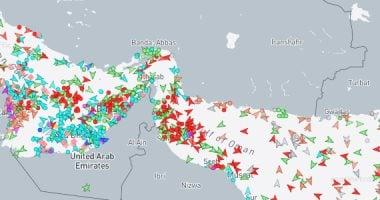
The same report describes “Suspicion surrounds Tehran’s participation after a naval escalation in the Gulf of Oman hours before the scheduled round in Islamabad,” and it says U.S. forces “attacked a vessel flying the Iranian flag and detained it.”
In that account, Tehran accused Washington “of breaking the truce and of not being serious about negotiations and of contradicting its statements about readiness to engage in the talks.”
The report also says Pakistani officials intensified contacts with Washington and Tehran “to resume the talks today, Tuesday, as planned,” and it cites a Reuters reference to a Pakistani security source saying Pakistan’s army chief Asim Munir spoke with U.S. President Donald Trump and told him that “the blockade of the Hormuz Strait poses an obstacle to the talks.”
It further states that the Kremlin spokesman said Russia “hopes for the continuation of the negotiations on the war in the Middle East” and “is not a mediator in talks related to Iran, but is ready to help if needed.”
The report’s negotiation track is framed through Iranian statements, including Iranian Foreign Ministry spokesperson Ismail Baqayi saying, “we submitted a 10-point proposal to Pakistan,” and that “Tehran never trusts the American side, which has long betrayed diplomacy.”
CENTCOM, interception, and retaliation
Alongside the diplomatic uncertainty in Islamabad, the sources describe a sequence of U.S. naval actions that Iran portrays as violations of the ceasefire and that Iran’s military leadership says will be met with a response.
“Tehran government: Iranian diplomacy is an extension of the battlefield”
The اليـوم السابع report says “U.S. Central Command: We prevented 27 ships from entering or leaving Iran’s ports,” and it places that claim in the context of “Naval escalation” dominating the fate of the talks.
It also says U.S. forces “attacked a vessel flying the Iranian flag and detained it,” prompting Tehran to accuse Washington “of breaking the truce.”
In a separate account, a5r5br.net says that on “the twelfth day of the truce” the “mystery remains at the forefront” because “Tehran has not yet decided whether to participate in the negotiations,” and it attributes the accusation to Iranian Foreign Ministry spokesman Ismail Bagheri.
In that version, Bagheri “accused the United States of violating the truce between the two sides since the start of the ceasefire implementation,” and it says Tehran “informed the Pakistani mediator of this.”
The same a5r5br.net report says CENTCOM announced “in the early hours of Monday” that its forces in the Arabian Sea intercepted “a cargo ship flying the Iranian flag” bound for “Bandar Abbas port,” and it adds that “an American destroyer disabled the ship's propulsion system by targeting its engine room with shells.”
After the attack, the report says the Khatam al-Anbiya Headquarters of the Islamic Revolutionary Guard Corps pledged that its forces “would respond firmly to the American forces that attacked the ship,” while also noting “constraints on its response due to crew members and their families being aboard.”
It states that the headquarters said it “would respond to the American attack on the Iranian ship after ensuring the safety of its crew and their families.”
Finally, it says “The New York Times, citing a US military official: The crew of the detained Iranian vessel will return to Iran soon,” adding a timeline for the detained crew’s fate.
Iran’s negotiating posture
Iran’s negotiating posture in the lead-up to Islamabad is presented through multiple Iranian officials’ statements, with emphasis on sanctions relief, distrust of the United States, and refusal to place defensive capabilities on the table.
The اليـوم السابع report quotes Iranian Foreign Ministry spokesperson Ismail Baqayi saying, “we submitted a 10-point proposal to Pakistan,” and it adds that “indicators confirm a lack of seriousness on the American side to proceed on the diplomatic track.”
In that same account, Baqayi says “the other side changes its positions and insists on continuing the previous faulty path,” and he states, “will not receive a new response from us.”
The report also quotes Baqayi saying, “our defensive capabilities are not on the table for negotiation at all and we do not negotiate about them,” and it says Tehran will “take the appropriate, carefully considered decision on the negotiations, taking our interests into account.”
It further states that “Tehran never trusts the American side, which has long betrayed diplomacy,” and it repeats that the decision-making is framed around Iranian interests rather than concessions.
The report also includes a statement from “the head of Iran’s judiciary,” saying, “We will not retreat one step from our demands, and the enemy has surrendered and is demanding to negotiate with us.”
It adds that “a senior Iranian official” told Reuters that “differences over the program remain and the gaps have not narrowed,” and that “continued U.S. sanctions on the Hormuz Strait undermine the Iran-U.S. peace talks.”
In the same narrative, the report says the Iranian deputy foreign minister asserted “that diplomacy is the best solution to address the hard issues,” while Tehran’s spokesperson Fatemeh Mohajerani described diplomacy as “an extension of the battlefield.”
Security and diplomatic stakes
The sources also describe how Pakistan is preparing for the Islamabad talks with heightened security measures, while Iranian accounts connect the diplomatic process to ongoing military and sanctions pressures.
“If the enemy oversteps and commits any act of aggression against the Islamic Republic of Iran after the ceasefire, the Islamic Revolution Guards Corps (IRGC) will target wherever the people want them to, the IRGC aerospace commander said on Tuesday”
The اليـوم السابع report says “Pakistan welcomes the delegations with tightened security measures,” and it specifies that “armed guards” were deployed along with “security checkpoints and berms near the Marriott and Serena hotels,” which it describes as among the most fortified in the capital and expected to host foreign delegations.
It adds that “security forces have also been deployed at key intersections,” and that “Traffic restrictions were imposed,” including “the passage of all heavy vehicles toward the capital was blocked” and “strict instructions to truck drivers to avoid traveling toward Islamabad during the talks.”
The report says local authorities issued appeals via social media asking citizens to “cooperate seriously with security authorities to facilitate the movements of foreign delegations and ensure the area’s safety,” and it notes that “alternative routes were designated for residents of parts of the capital.”
In parallel, the PressTV account frames the ceasefire’s end and the next talks as part of a broader confrontation, saying the “two-week ceasefire is coming to an end on Tuesday night” and that Iran has warned the “illegal naval blockade must be lifted immediately by the US.”
The a5r5br.net account adds that the ceasefire deadline is approaching “next Wednesday,” and it lays out three scenarios “foresee” by “analysts,” including “continuation of the current situation with an extension of the ceasefire” and “no extension is announced, opening the possibility of intermittent military strikes.”
It also references damage in Iran’s capital from “American-Israeli attacks,” describing that ambassadors and heads of diplomatic missions visited civilian areas damaged by the attacks and “received detailed information from Iranian officials about the effects of the attacks and the extent of the damage.”
Finally, the sources tie the stakes to the naval blockade and sanctions environment, with the U.S. claim that it “prevented 27 ships from entering or leaving Iran’s ports” and Iranian officials insisting that sanctions and blockade conditions undermine the peace talks.
More on Iran

Donald Trump Extends Iran Ceasefire Until Peace Talks End, Keeps Blockade of Iranian Ports
10 sources compared

Donald Trump Indefinitely Extends Ceasefire With Iran While U.S. Blocks Iranian Ports
15 sources compared
Trump Extends Iran Ceasefire Indefinitely, Orders U.S. Military To Continue Blockade
11 sources compared
Donald Trump Extends U.S. Ceasefire With Iran, Orders Naval Blockade to Continue
15 sources compared