
IRGC Aerospace Force Commander Seyed Majid Mousavi Says Iran Replenishes Missile And Drone Stockpiles Faster
Key Takeaways
- IRGC says replenishment of missile and drone stockpiles accelerated during ceasefire, surpassing pre-war levels.
- Video footage from Mousavi shows replenishment and overhaul of missile and drone stockpiles.
- Replenishment pace indicates increased operational readiness during the ceasefire, per multiple outlets.
Ceasefire claims and missile rebuild
Iran’s Islamic Revolutionary Guard Corps (IRGC) Aerospace Force commander Seyed Majid Mousavi asserted during a regional ceasefire that Iran is replenishing missile and drone stockpiles faster than before the war, and he posted video footage showing the process of refurbishing and replenishing missile and drone reserves.
“Commander of the Islamic Revolution Guards Corps (IRGC) Aerospace Force Brigadier General Majid Mousavi asserted on Sunday that “the enemy, unlike Iran, was unable to rebuild its ammunition during the ceasefire”
In the account carried by PressTV, Mousavi said that since the ceasefire began on April 11, Iran’s “speed in updating and reloading missile and drone launchers have surpassed even its pre-war pace,” while also saying, “We are aware that the enemy is incapable of creating such conditions for themselves during the ceasefire.”
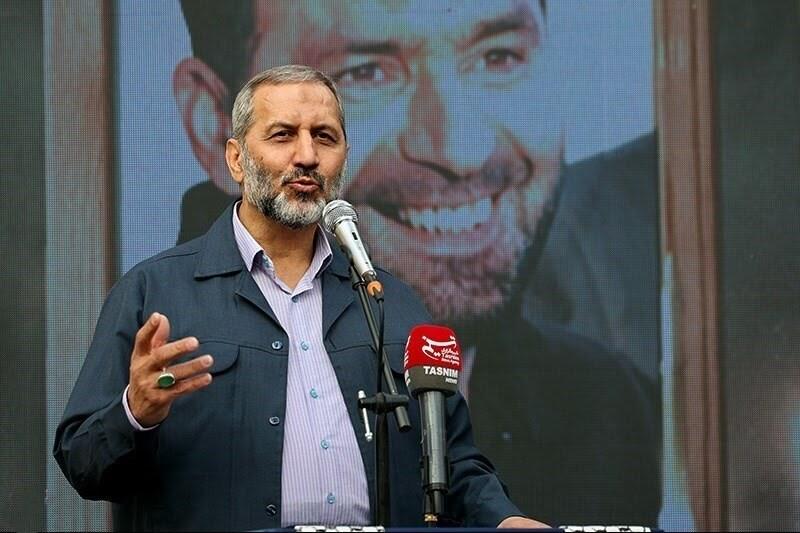
Al-Manar TV Lebanon similarly quoted Mousavi saying, “During the ceasefire period, our speed in updating and refilling missile and drone launch platforms is even greater than before the war,” and it added that he claimed the “momentum of replenishing missile and drone launch platforms has even exceeded pre-war levels.”
WANA News Agency described “newly surfaced footage revealing the overhaul and reconstruction of its missile and drone stockpiles,” and it said Mousavi stated that “the pace of upgrading and replenishing missile and drone launch systems has not only continued but exceeded pre-war levels.”
Tasnim also carried Mousavi’s claim that “During the ceasefire period, our speed in updating and refilling missile and drone launch platforms is higher than before the war,” and it repeated his assertion that the enemy is forced to bring ammunition “in a drip-feed manner.”
Across the outlets, Mousavi framed the ceasefire period not as a pause in capability-building but as a time when Iran’s operational readiness increased, with the commander emphasizing that his forces were refurbishing and restoring launch platforms and weapons reserves.
Hormuz, blockade, and the war narrative
Alongside the claims about replenishment, the IRGC commander’s remarks were tied to a broader narrative about the Strait of Hormuz, naval pressure, and the continuation of the conflict’s logic even during a ceasefire.
PressTV reported that Mousavi mentioned the Strait of Hormuz, which the IRGC declared closed again on Saturday due to US violations of a ceasefire, and it said the IRGC reiterated that a continued naval blockade on Iranian ports amounts to piracy.
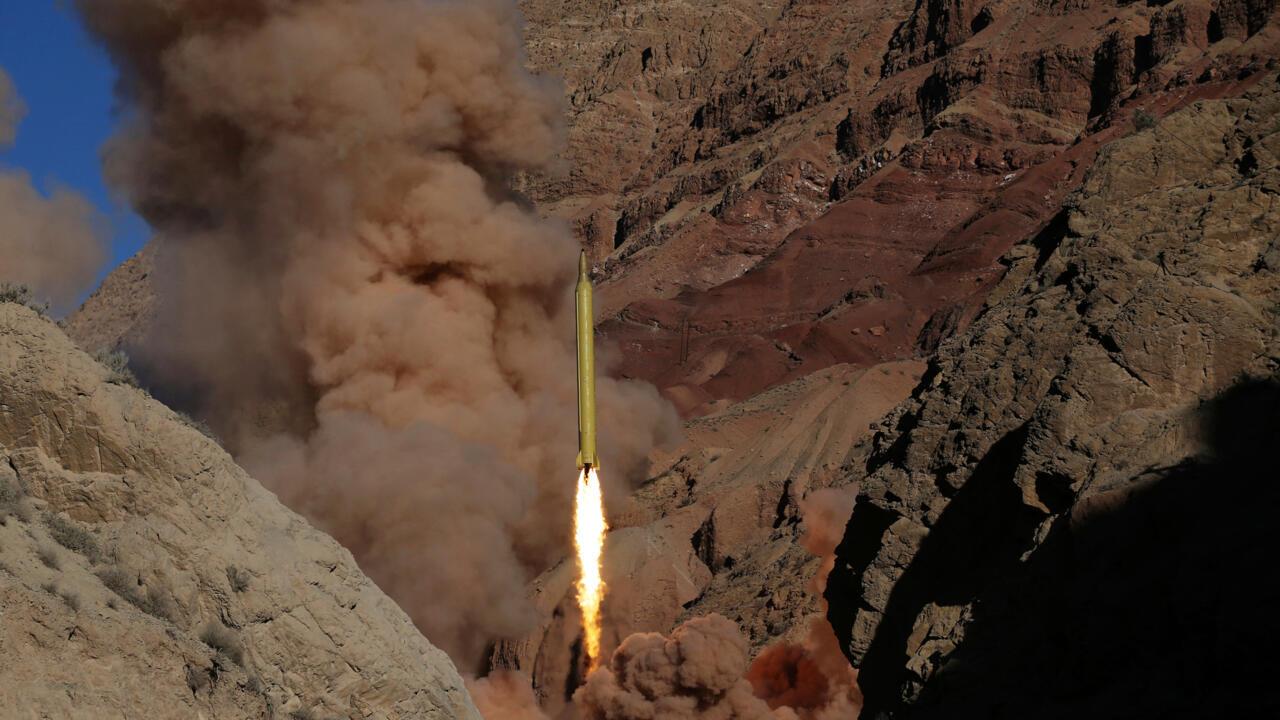
The same PressTV account also stated that days after the US and Israel launched their military aggression against Iran on February 28, Tehran restricted the Strait of Hormuz to adversaries and their allies as a strategic maneuver, and it described the disruption as “the biggest-ever disruption at the Persian Gulf waterway.”
PressTV further asserted that the disruption at the waterway, described as a major transit point for about 20 percent of global oil and liquefied natural gas shipments, “has fueled inflation and slowed the global economy, with an impact expected to last for months.”
France 24 framed the situation differently, asking whether a decline in Iranian strikes after an initial surge was “a depletion of the missile stockpile, or a tactical trap and a war deception,” and it said military experts interviewed by France 24 discussed the possibility of preserving Tehran’s stockpiles for a longer confrontation.
In France 24’s account, U.S. President Donald Trump said his country had won the war but warned American forces could escalate strikes to a point where rebuilding would be “almost impossible,” and Trump told reporters in Washington, “They’ve nearly reached the end of the road.”
The juxtaposition across the sources shows Iran’s leadership and IRGC commanders describing replenishment and pressure around Hormuz, while France 24’s framing highlights uncertainty about whether any decline in attacks reflects depletion or strategy.
Statements from IRGC and Iran
Iran’s messaging in the sources extends beyond Mousavi’s replenishment claims to other IRGC-linked figures and Iran’s political leadership, with each statement reinforcing a posture of readiness and legal resistance.
“A top Iranian military commander says the country’s capacity to replenish missile and drone stockpiles during the two-week ceasefire has outpaced pre-war levels”
Seoul Economic Daily reported that Mousavi said in a video message that “the pace at which missile and drone launchers were modernized and replenished during the pause in combat was much faster than before the war,” and it quoted him adding, “The enemy (the United States and Israel) cannot create such conditions on its own and has no choice but to airlift supplies one by one from the other side of the globe.”
The same outlet said Mousavi claimed, “They were defeated in this phase of the war as well, losing the strait, Lebanon and the entire region,” and it described the remarks as coming shortly after Iran responded with a counter-operation to the U.S. blockade of the Strait of Hormuz.
Seoul Economic Daily also included a statement from Mohammad Reza Naqdi, a senior adviser to the IRGC commander, who dismissed U.S. and Israeli claims that Iran’s military capabilities had been destroyed and said, “If hostilities resume, we can launch the latest missiles and drones manufactured this month.”
It then quoted Iranian President Masoud Pezeshkian saying, “The United States says Iran should not exercise its nuclear rights, but a country's legal rights cannot be stripped away,” and it added Pezeshkian’s line, “Iran is acting not to expand the war but in self-defense.”
France 24 included Pezeshkian’s broader posture as well, reporting that Iran confirmed it intends to deliver a long-lasting economic shock, with Ibrahim Dhufaqari, the spokesman for the Khatam al-Anbiya Military Headquarters in Tehran, saying, “Prepare for the price of a barrel of oil to reach $200, because the price of oil depends on regional security whose stability you have destabilized.”
France 24 also reported that Iran confirmed it has raised the destructive power of its missiles, according to the commander of the IRGC Air Force, noting an increase in launch strength and tempo and a widening of its reach, and it quoted Majid Moussavi announcing the introduction of missiles with warheads exceeding a ton into the battlefield.
Competing interpretations of attack trends
France 24’s report highlights how the same period can be read in competing ways, particularly when it comes to whether a decline in Iranian strikes reflects depletion or a tactical decision to preserve stockpiles.
It described the decline in the number of Iranian strikes, whether by missiles or drones, that target American interests and bases in the region and Israeli targets after an initial surge, and it said the decline “may be aimed at preserving Tehran’s stockpiles in anticipation of a confrontation that could endure.”
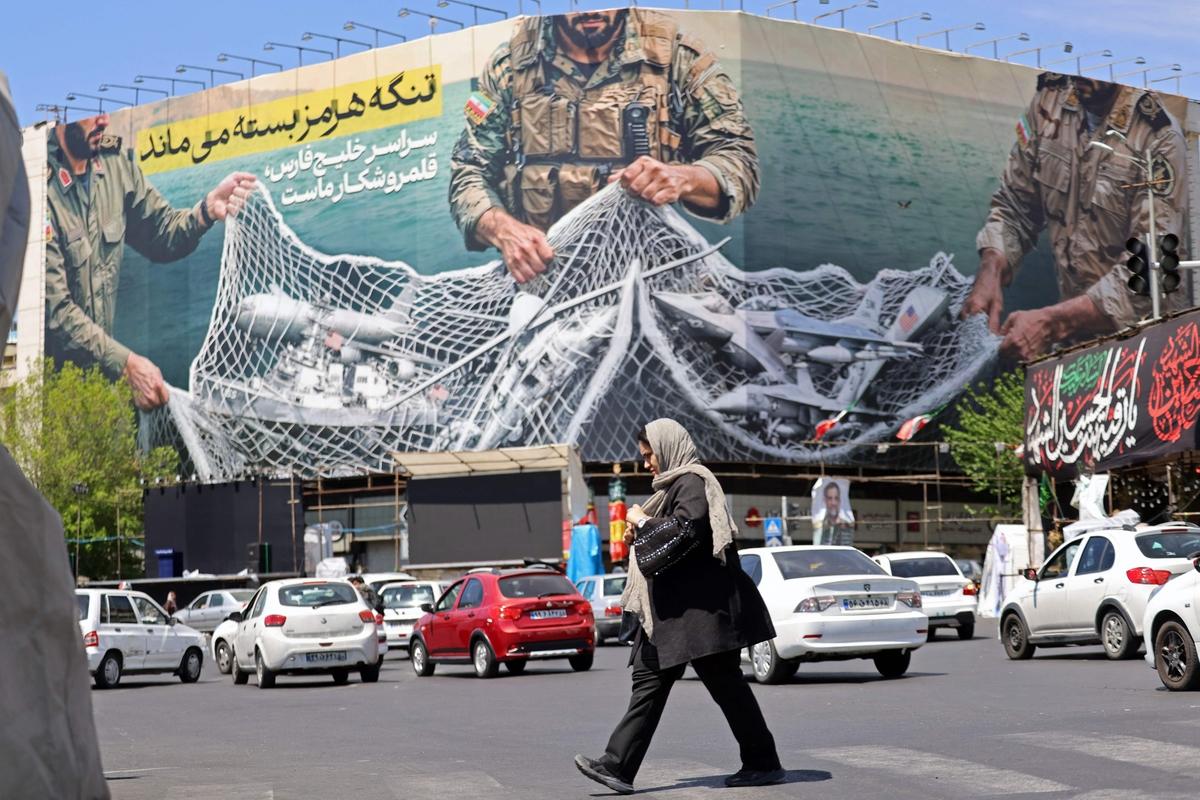
At the same time, France 24 said the decline could also be “a calculated tactic and a war deception,” according to military experts interviewed by the outlet.
In that same narrative, France 24 reported that U.S. President Donald Trump said on Wednesday during a campaign rally in Kentucky that his country had won the war but did not want to be forced to resume the attack every two years, and it quoted Trump warning that American forces were capable of escalating the strikes to the point that rebuilding the country would be “almost impossible.”
France 24 also said Trump considered that Iran was on the verge of defeat but warned, “They’ve nearly reached the end of the road,” and it noted that Trump had previously announced that his country had severely damaged Iran’s military capabilities and expected the conflict to end soon without specifying the form of victory.
By contrast, Iran’s own messaging in the other sources emphasized continued replenishment and readiness, with Mousavi insisting that “our speed in updating and refilling missile and drone launch platforms is even greater than before the war” during the ceasefire period.
PressTV added that Mousavi said the United States has had to “to bring in ammunition from the other side of the world in a trickle” since the ceasefire began on April 11.
The contrast between France 24’s uncertainty about whether strikes are declining due to depletion and Iran’s insistence on replenishment and capability-building frames the ceasefire as a contested period rather than a clear reduction in threat.
Numbers, targets, and escalation risk
France 24 also provided a detailed numerical accounting of missile and drone activity across multiple countries, while tying those figures to the question of Iran’s missile capability and the risk of continued escalation.
“The IRGC Aerospace Force commander stated in a post with footage of maintenance and reconstruction of missile and drone stockpiles that during the ceasefire period, the momentum of replenishing missile and drone launch platforms has even exceeded pre-war levels”
It said that “Iran launched hundreds of ballistic missiles and drones at the lands of several Gulf states since the war began,” citing “the defense ministries of those countries up to March 10,” and it then listed counts for the United Arab Emirates, Qatar, Bahrain, Kuwait, and Saudi Arabia.
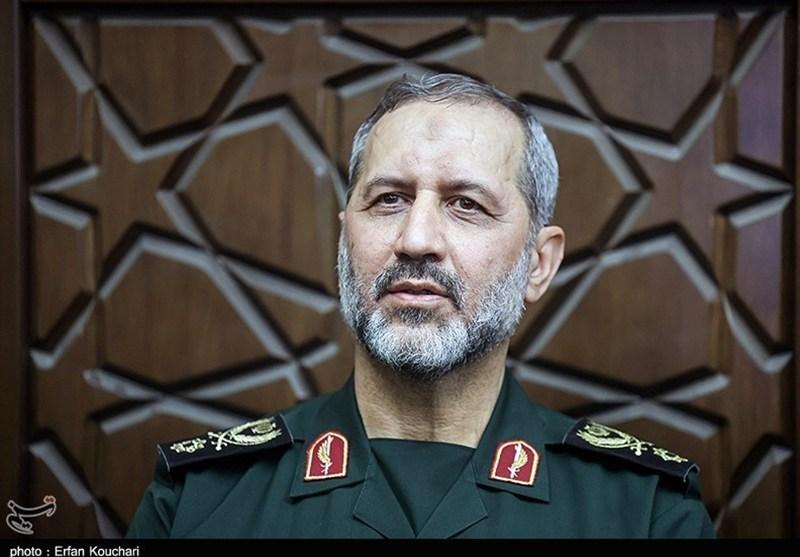
For the United Arab Emirates, France 24 said “a total of 253 ballistic missiles were recorded; 233 were intercepted, 18 fell into the sea, and two on land,” and it added that it recorded “1,440 drones, 1,359 of which were intercepted.”
For Qatar, it said “127 ballistic missiles were recorded with 118 intercepted,” and “63 drones were recorded with 47 intercepted,” and it noted “Two Su-24 fighter-bombers were detected and intercepted.”
For Bahrain, France 24 said “105 missiles were destroyed along with 176 drones,” and for Kuwait it said “120 ballistic missiles with 17 intercepted between March 6 and 9,” plus “208 drones with 22 intercepted.”
It also said that in Saudi Arabia, “122 drones were destroyed or intercepted, along with seven cruise missiles and ten ballistic missiles,” and it added that Al Jazeera noted Oman shot down “three drones over the Dhofar province near the Salalah port.”
France 24 then shifted to Israel, stating that “Iran had launched at least 200 ballistic missiles and an undetermined number of drones by March 8,” according to the Israeli think tank INSS, which noted that Iran used heavy warheads weighing between 400 and 500 kilograms and missiles equipped with cluster munitions.
In parallel, PressTV described Iran’s posture toward ports in the Persian Gulf and the Arabian Sea, reporting that the Iranian army said early this week that if the security of Iran’s “ports in the waters of the Persian Gulf and the Arabian Sea is threatened, no port in the Persian Gulf and the Arabian Sea will be safe.”
The combination of numerical strike accounting and explicit threats about port security underscores that, in the sources, the ceasefire period does not eliminate escalation risk but instead coexists with continued military readiness claims and warnings.
More on Iran

Donald Trump Threatens Iran Infrastructure Strike Over Strait Of Hormuz Ceasefire Violations
23 sources compared

Trump Threatens Strikes as Iran Fires on Ships in Strait of Hormuz
11 sources compared
Donald Trump Sends U.S. Delegation to Pakistan for Iran Talks, Threatens Power Plants and Bridges
47 sources compared

Iran Rejects Trump Claims It Will Transfer Enriched Uranium to the United States
21 sources compared