Full Analysis Summary
IRGC readiness claims
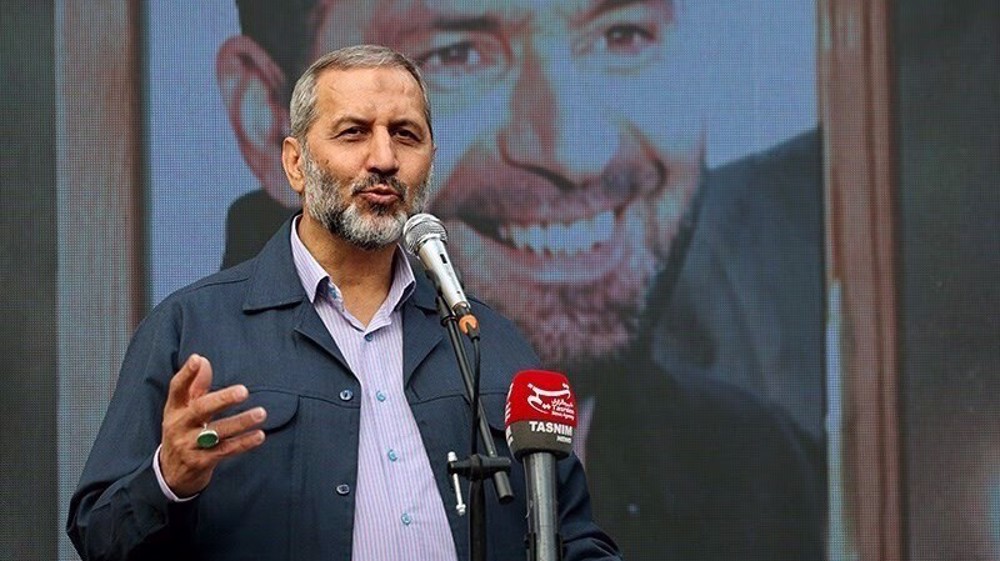
Iran's Islamic Revolutionary Guard Corps (IRGC) Aerospace Force said it has reached the 'pinnacle' of defensive readiness, according to commander Brig. Gen. Majid Mousavi.
Mousavi said domestic aerospace production has significantly increased and that vulnerabilities identified during the 12-day US-Israeli war in June 2025 have been corrected.
The statement framed this readiness as preparation to 'crush any aggression.'
PressTV reported the remarks amid recent attacks and unrest and linked them to Tehran's earlier ballistic missile salvos at Israeli military sites and at al-Udeid air base in Qatar during the June conflict.
The IRGC comments were presented alongside Tehran's warnings that it would target US and Israeli interests in West Asia if attacked again.
Coverage Differences
Tone and emphasis
PressTV (West Asian) frames the IRGC statement as a confident, hardline readiness declaration by Iran’s military leadership and connects it to recent missile strikes and internal unrest; Brussels Morning (Other) does not report this rhetoric and instead emphasizes legal constraints, cyber/electronic domains, and the need for communication when evaluating military developments. In other words, PressTV foregrounds Iran’s military posture and retaliatory framing, while Brussels Morning foregrounds legal and strategic considerations without relaying Iran’s boast. PressTV therefore reports the commander’s quotes and links to recent events, whereas Brussels Morning focuses on broader themes of international law and non-kinetic capabilities.
External threat narrative
PressTV places the IRGC's claim amid heightened political provocations and domestic unrest.
It notes U.S. President Donald Trump's public rhetoric urging rioters to storm Iranian state institutions and his assertion that U.S. support was 'on its way'.
PressTV describes Jan. 8-9 foreign-backed attacks and riots that Iran's Chief of Staff characterized as a continuation of the earlier war.
This coverage underscores a narrative of external hostility and internal disruption used to justify stepped-up defense production and corrective measures in aerospace capabilities.
Coverage Differences
Narrative focus and reported quotes
PressTV (West Asian) reports and quotes specific political actors and events—naming President Donald Trump’s public call and Iran’s internal security incidents—linking these directly to Iran’s security posture. Brussels Morning (Other) does not relay those specific political provocations or quotes in its short snippet; instead it abstracts to legal principles and cyber/electronic concerns. Thus PressTV offers direct attribution of provocations and uses quoted claims; Brussels Morning omits such episodic, personalized detail.
Law and non-kinetic tools
Brussels Morning offers a different vantage, framing developments in terms of international law and the expanding role of non-kinetic tools; it stresses concepts such as self-defense, proportionality and sovereignty as central to evaluating responses to Iran’s military buildup, and highlights cyber and electronic warfare as growing, less visible layers that complicate regional defense planning.
The piece signals an emphasis on legal constraints and evolving domains of conflict rather than on overt military boasting or retaliatory rhetoric.
Coverage Differences
Omission and emphasis
Brussels Morning (Other) emphasizes legal frameworks and the strategic significance of cyber/electronic warfare, an angle not present in PressTV’s snippet. PressTV (West Asian) emphasizes Iran’s defensive readiness and direct linkage to missile strikes and internal unrest; Brussels Morning omits those specific Iranian claims and instead expands on non‑kinetic capabilities and the need to maintain communication. This difference shows Brussels Morning’s focus on law/strategy over state-level declarations.
Media framing comparison
These two sources reflect different narrative roles.
PressTV reports state-aligned military assertions, quotes Iranian commanders, and links readiness to recent kinetic actions and domestic unrest.
Brussels Morning situates the issue in normative and strategic terms, emphasizing international law, proportionality, and the rising prominence of cyber and electronic warfare, while not relaying Iran's quoted threats.
The contrast highlights how source type influences coverage.
A West Asian outlet foregrounds national defense posture and retaliatory framing, whereas an Other-type outlet foregrounds legal frameworks and non‑kinetic domains, producing different emphases and levels of immediacy in reporting.
Coverage Differences
Source-driven framing
PressTV (West Asian) foregrounds Iranian leadership quotes and connects military readiness to concrete past actions and internal incidents; Brussels Morning (Other) focuses on principles and the evolving character of conflict (cyber/electronic), avoiding explicit repetition of Iran’s threatening language. The result is a divergence in tone—assertive and state‑defensive versus analytical and legally framed—rooted in each outlet’s editorial priorities and the facts they choose to report or omit.
Source limitations
The synthesis above is based solely on two provided snippets: PressTV (West Asian) and Brussels Morning (Other).
Because only these two sources were supplied, comparisons and the article's framing are constrained to their content.
I cannot draw on Western mainstream or alternative outlets, official US or Israeli statements beyond what PressTV reports, or independent expert analysis not present in the snippets.
This limitation creates unavoidable gaps in the account.
Consequently, some contrasts—such as casualty figures, independent verification of attacks, and technical assessments of aerospace improvements—remain unresolved or unreported in the available material.
Coverage Differences
Missing sources and information
The obligation to compare multiple source types is constrained here: only PressTV (West Asian) and Brussels Morning (Other) were provided. As a result, several expected perspectives (Western Mainstream, Western Alternative, official US/Israeli statements, independent experts) are absent, creating ambiguity about independent verification and broader international responses. I report this explicitly rather than assuming facts not present in the snippets.