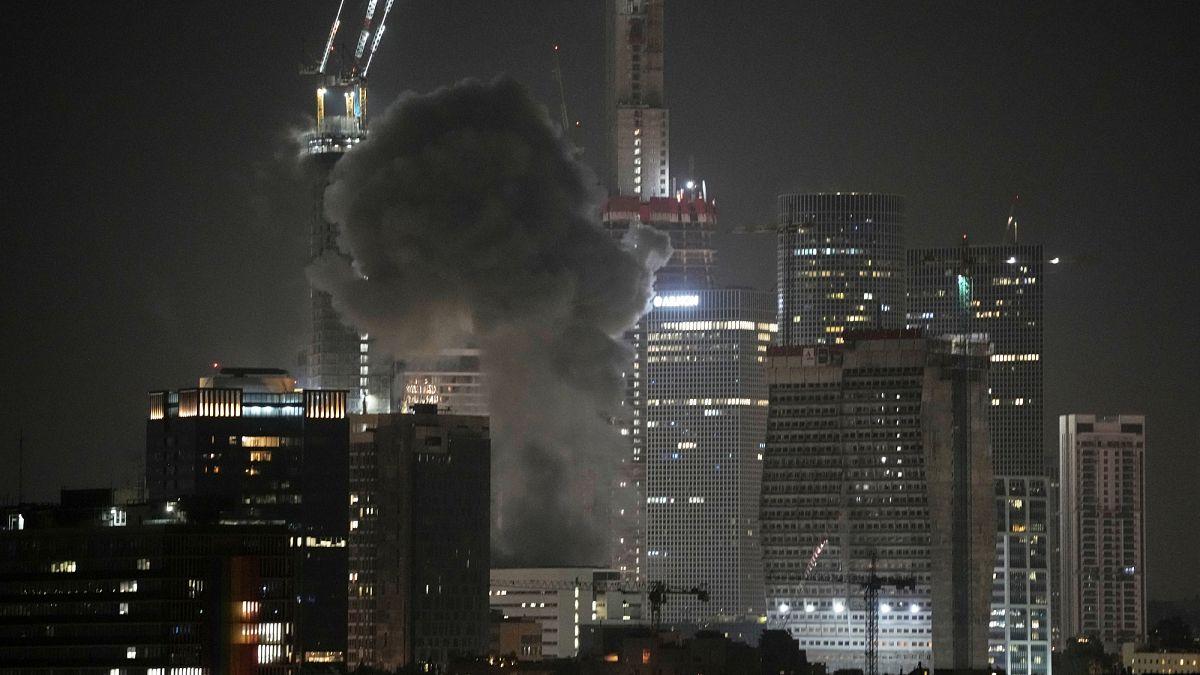
IRGC Aerospace Launches 65th Wave Of Va’d-e Sadegh 4, Striking Haifa And Ashdod Refineries
Key Takeaways
- IRGC Aerospace warns enemies of a new level of retaliation.
- Va’d-e Sadegh waves use missiles and drones in escalation.
- IRGC framing of actions as strategic deterrence against aggression.
Missiles and new waves
Iran’s IRGC Aerospace Force announced the start of the “65th Wave” of the Va’d-e Sadegh 4 operation, saying precision-guided missiles struck the Haifa and Ashdod refineries and other security targets and military-support centers in the region.
The same NurNews account said the wave deployed the Nasrallah system for the first time and that medium-range missiles Qiyam and Zulfiqar hit American targets and interests at the Al-Kharj base, the Sheikh Isa base, and the Al-Dhafrah base.

NurNews also said danger sirens in the occupied Al-Jazira (Al-Jazeera) strip did not fall silent because of Iran’s repeated rocket fire, and it cited Israeli monitoring that sounded alert sirens in the city of Ashdod and its port.
In a separate report, Tabnak described the “ninth wave” of the missile-drone combined operation, Vade Sadegh 3, and said the IRGC Aerospace’s drone campaign with 545 offensive drones hit various targets across the occupied lands in the past 72 hours.
Tabnak added that Sardar Ali Mohammad Naeini said the operation “will continue uninterrupted until dawn,” framing the strikes as a combined offensive that uses “all components of power.”
Voices and warnings
Tabnak quoted IRGC Aerospace spokesman Sardar Ali Mohammad Naeini saying the ninth wave would continue “uninterrupted until dawn,” and it also quoted him stressing that the offensive is “certainly hybrid.”
In the same Tabnak report, Ali Naderi, the deputy for public relations of the Aerospace Force of the Islamic Revolution Guards Corps, told IRIB’s Channel 3 that “Our fingers are on the trigger.”

Iran International reported that Western intelligence agencies detected unusual movements by the IRGC Aerospace Force, including relocations and coordinations beyond normal patterns involving the IRGC’s drone, missile, and air defense units.
Iran International said a source familiar with the matter told the outlet on Saturday, 29 Azar, that intelligence services were tracking command-and-control signals and the deployment and logistical relocations related to the IRGC’s Aerospace Force.
The Iran International report also cited Behrouz Kamalvandi, the spokesperson for the Atomic Energy Organization of the Islamic Republic, saying building a atomic bomb is the “easiest job” for the regime.
Escalation and international stakes
In a separate account of the broader Iran-Israel conflict cycle, یورونیوز said Israel launched a series of preemptive attacks against Iran on Friday, June 13, and that Iran reported several residential homes were targeted and civilians, including women and children, were killed.
“Ali Naderi, the deputy for public relations of the Aerospace Force of the Islamic Revolution Guards Corps (IRGC), made the remarks in a television program on the IRIB’s Channel 3, according to Press TV”
The same یورونیوز report said Israel’s defense minister Yisrael Katz warned that after Israel’s preemptive strike, “it is expected that in the near future there will be a missile and drone attack against Israel and the civilian population.”
It also quoted UN Secretary-General Antonio Guterres on X writing: “The bombardment of Iran’s nuclear facilities by Israel, Iran’s missile strikes on Tel Aviv, enough is enough.”
China’s representative to the United Nations, Fu Cong, told the Security Council session that “Israel’s actions in violating the sovereignty, security and territorial integrity of Iran” were to be condemned and urged Israel to halt military adventurism.
Meanwhile, یورونیوز reported that an Iranian senior official told CNN that “Any country that attempts to defend Israel against Iran’s actions should know that its bases and positions in the region will become new targets for us.”
More on Iran

Iranians Reconnect After 88-Day Internet Shutdown as Masoud Pezeshkian Orders Access Restored
17 sources compared

CSIS Says U.S. Needs At Least Three Years To Rebuild Tomahawk Stockpiles After Iran War
16 sources compared

Iran Accuses U.S. of Ceasefire Violation After Self-Defense Strikes
23 sources compared
Ali Akbar Velayati Says Strait of Hormuz Is Iran’s Real Guarantor of Nuclear Deal
15 sources compared