Iran28 February, 20262 min read
IRGC Claims It Destroyed US Missile-Tracking Radar in Qatar
This article is an automated aggregation of coverage from news outlets. Our editorials offer in-depth analysis curated by the NewsCord team.
IRGC said it destroyed a US FP-132 long-range radar system in Qatar The FP-132 radar had an estimated 5,000-kilometre detection range
5 outlets told this the same way.
Outlets did split on Iran Reviews US Negotiation Proposals As Pakistan And Qatar Mediate Strait Of Hormuz Dispute →
IRGC strikes and target list
Iran’s Islamic Revolutionary Guard Corps (IRGC) said it destroyed a US missile‑tracking radar in Qatar amid an expanding round of strikes across the Gulf. The Express Tribune reported that Iranian official sources published a regional list naming military and strategic targets in multiple U.S.-allied countries.
“Iranian official sources published a list of military and strategic targets across the Middle East, naming sites in multiple U.S.-allied countries.”
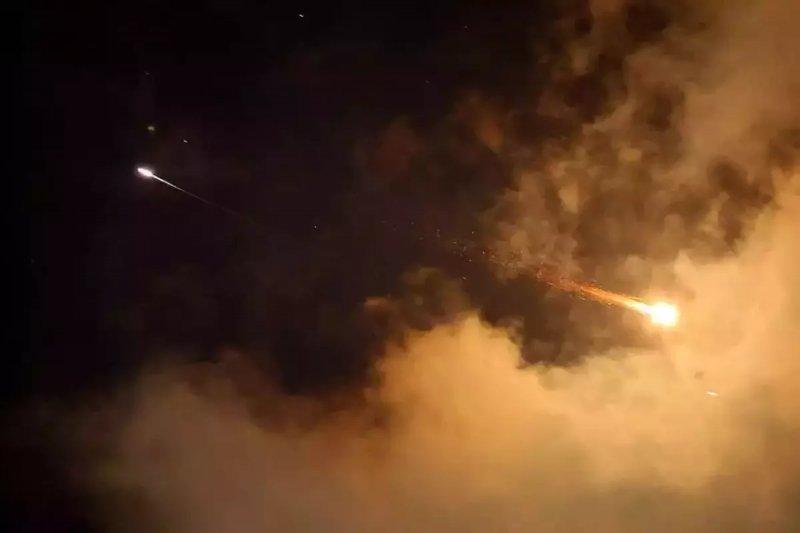
Business Upturn said a reported strike destroyed a US radar in Qatar amid ongoing missile exchanges between Iran and targets hosting US forces in Qatar, Kuwait, Bahrain, the UAE and Jordan. Shafaq News noted that no immediate confirmation came from US or Qatari officials about the radar claim, a point that contrasts with the IRGC and Business Upturn reports.

Reported Iranian target list
The list of named targets that Iranian sources circulated was extensive and specific, naming naval, air and logistics sites across the region.
The Express Tribune gave a detailed catalogue including "Bahrain’s Al-Juffair (U.S. Fifth Fleet HQ); Qatar’s Al Udeid (FP-132 radar); Kuwait’s Camp Arifjan, Ahmad al-Jaber and Mubarak air bases; the UAE’s Al Dhafra, Jebel Ali port and Fujairah air base; Saudi Arabia’s Prince Sultan, Tabuk and Khamis Mushait bases; Jordan’s Muwaffaq al-Salti air base; and a U.S. base in Erbil, Iraq."
Shafaq News reported that Iran’s semi-official Tasnim agency quoted a military official saying Tehran had so far targeted 14 US military bases in the region.
Business Upturn said the strikes involved "ongoing missile exchanges between Iran and targets hosting US forces across the Gulf."
Iran military and diplomacy
The Express Tribune quoted the IRGC saying "missile and drone operations are continuing, further phases of the operation are underway, and other U.S. government interests in the region are within the operational scope." Business Upturn said "Capitals have reported intercepts and detonations as air-defence systems stay on high alert." Shafaq News recorded that Iran's foreign minister told NBC News that Tehran would consider de-escalation if the aggression stops, indicating a conditional diplomatic opening amid the kinetic exchanges.
“The IRGC said missile and drone operations are continuing, further phases of the operation are underway, and other U.S. government interests in the region are within the operational scope.”
Regional strikes overview
Reporting placed the Qatar radar claim within a broader sequence of strikes and counterstrikes that sources link back to earlier US-Israeli action against Iranian targets. Business Upturn said "The exchanges follow coordinated US-Israeli strikes on Iranian military, missile and nuclear-linked sites earlier Saturday, which leaders called necessary to counter Tehran."
Shafaq News likewise noted Israel's separate action: "Israel's military said on Saturday its air force carried out a broad wave of strikes aimed at dismantling key components of Iran's strategic air-defense systems." The Express Tribune's catalogue of regional targets framed the potential geographic reach of any further escalation.

Regional volatility and uncertainty
Analysts and officials cited in the coverage warned the situation made the region highly volatile and left many outcomes uncertain. Business Upturn warned "Iran’s retaliatory actions signal a rapid expansion of hostilities beyond the two countries’ borders and leave the region highly volatile with further developments expected." The Express Tribune’s target list underscores the number of U.S.-allied facilities in scope, while Shafaq News highlighted both the claim of strikes on "14 US military bases" and the absence of immediate external confirmation, showing clear uncertainties in attribution and impact as events unfolded.
“Iran’s retaliatory actions signal a rapid expansion of hostilities beyond the two countries’ borders and leave the region highly volatile with further developments expected.”