Full Analysis Summary
IRGC deterrent message
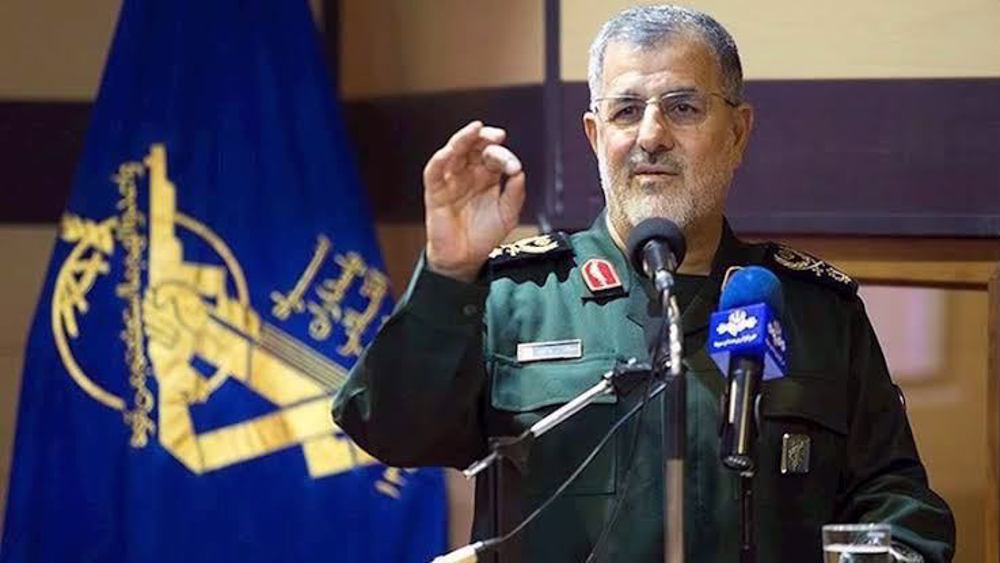
IRGC Chief Major General Mohammad Pakpour publicly warned that Iran's Revolutionary Guards have "their hands on the trigger."
He said any enemy miscalculation, particularly by the United States or "the Zionist regime," would bring a "more painful and regret-inducing" response.
Pakpour asserted that the IRGC has strengthened Iran's defenses against what he called American-Zionist hostility.
PressTV presents the remarks as a forceful deterrent message tied to Iran's broader framing of external threats and regional posture following domestic unrest.
Coverage Differences
Tone and emphasis (single-source limitation)
Only PressTV is available among the provided articles; it emphasizes Iran’s defensive readiness and frames the US and Israel as hostile actors. Because no Western mainstream or alternative sources were provided, I cannot contrast how those outlets might frame Pakpour’s remarks (e.g., as escalation, deterrence, or routine rhetoric). PressTV’s own framing stresses strengthened defenses and a stern warning to perceived aggressors.
Reported attribution vs. original voice
PressTV reports Pakpour’s statements as the IRGC’s position. It also reports claims by Iranian officials (for example, that riots were incited by foreign actors) and attributes an opinion to Foreign Minister Abbas Araghchi that appeared in The Wall Street Journal; those latter items are reports of other actors’ claims rather than PressTV’s independent sourcing.
PressTV: Iran unrest
PressTV situates Pakpour’s warning in the immediate context of late-December economic protests in Iran.
Tehran describes those protests as having been "hijacked" by rioters and foreign operatives.
The article reports Iranian official claims that the disturbances caused significant loss of life, citing Iran’s Security Council as saying 3,117 people died, including 2,427 described as 'martyred' in a 'full-scale atrocity' and 690 killed during the riots.
PressTV uses these figures to underscore Tehran’s depiction of domestic instability and external interference.
Coverage Differences
Narrative emphasis
PressTV foregrounds Iranian official casualty figures and labels (e.g., “martyred”) to portray the unrest as severe and as part of a hostile campaign against Iran. Without other sources it is unclear how independent observers, international organizations, or foreign media would corroborate or contest these numbers, or how they would characterize causes and responsibilities.
Source attribution vs. independent verification
PressTV attributes casualty totals to Iran’s Security Council; the article does not provide independent or international verification of those numbers, nor does it include contrasting casualty estimates. That leaves open ambiguity about the accuracy or international acceptance of the figures.
Tehran's narrative on protests
Beyond the IRGC's warning, PressTV reports Tehran's broader argument that external actors played a role in the unrest; it cites Foreign Minister Abbas Araghchi's Wall Street Journal piece accusing then-U.S. President Donald Trump of rhetoric that incentivized 'maximum bloodshed' and suggesting an aim to drag the U.S. into a war for Israel.
This frames Iranian leaders' public narrative that domestic protests were exploited as part of a hostile campaign rather than purely spontaneous economic grievances.
Coverage Differences
Reported claim vs. outlet perspective
PressTV reports Abbas Araghchi’s claim as a key piece of Iran’s narrative; because the article quotes Araghchi’s WSJ piece via PressTV rather than providing WSJ’s independent text, it is reporting an Iranian official’s interpretation (a cited claim) rather than presenting diverse journalistic evaluation. The absence of other outlets prevents cross-checking of the WSJ context or any rebuttal quoted from U.S. officials in the provided materials.
Missing counter-perspectives
PressTV does not include statements from U.S. or Israeli officials responding to Iran’s accusations in the provided snippet, nor does it quote independent analysts; that omission limits the article’s presentation to Iran’s viewpoint and reported claims without visible external challenge in the available text.
State-aligned media framing
The article's language and its choice of cited Iranian sources (an IRGC commander, Iran’s Security Council, and Foreign Minister Araghchi) reflect a tone aligned with official Tehran perspectives.
It emphasizes themes of martyrdom, alleged external plots, and heightened military readiness.
PressTV therefore presents the warning as part of state messaging that links internal unrest to foreign hostility.
This framing serves to legitimize stepped-up defenses and rhetorical deterrence.
Coverage Differences
Tone and narrative alignment
PressTV’s tone mirrors official Iranian language—terms like “martyred,” references to “American‑Zionist hostility,” and emphasis on strengthened defenses—showing alignment with Tehran’s framing. Because only this outlet is available here, a direct cross‑source contrast to Western mainstream or alternative outlets is not possible; in many other contexts, Western outlets might emphasize escalation risk, calls for restraint, or independent casualty verification instead.
Potential omission of independent context
The article does not provide independent casualty verification, external expert commentary, or direct responses from the U.S. or Israel in the provided text, which is a notable omission that shapes the reader’s understanding toward Iran’s official perspective.
Single-source reporting limits
With only a single source provided, there are clear limits to cross-source comparison.
PressTV’s reporting presents a coherent account of Iranian official statements but does not allow verification or contrast with U.S., Israeli, or independent international perspectives.
Thus, although the article records a stern IRGC warning and Tehran’s claims about the protests and casualties, the overall assessment is constrained by the absence of other sources in the material you provided.
Coverage Differences
Missing cross-source comparison
I cannot present differences across West Asian, Western mainstream, and Western alternative outlets because only PressTV (West Asian) was provided. This single‑source set means any claims about contradictions, alternative framings, or independent verification remain ambiguous and unverified in this response.