IRGC Launches New Missile Strikes on Israel and US Bases in Saudi Arabia
Key Takeaways
- IRGC claims wave of missiles targeting Israeli sites and Prince Sultan Air Base, Saudi Arabia.
- Dozens injured in Dimona and Arad after Iranian strikes near Israel's nuclear facility.
- Strikes constitute Iran's retaliation under the True Promise 4 operation.
Strike Operations Overview
Iran's Islamic Revolutionary Guard Corps (IRGC) launched a new wave of missile and drone attacks targeting Israeli military positions and US military installations across the region.
“were well on their way to achieving the war's goals and implored the international community for more support”
Iranian sources described this as the 74th or 75th wave of their ongoing retaliatory operation 'True Promise 4.'

The strikes specifically targeted military bases and security centers in Israeli cities including Tel Aviv, Petah Tikva, Holon, and Ramat Gan.
Iran used advanced ballistic missiles such as Qadr, Kheibar Shekan, and Khorramshahr-4 in these attacks.
Additionally, the IRGC struck Prince Sultan Air Base in Saudi Arabia, the US Fifth Fleet in Bahrain, and positions in Iraq's Kurdistan Region.
The operation involved both ballistic missiles and offensive unmanned aerial vehicles.
Iran claimed the strikes were based on 'preliminary intelligence received by special forces' and 'accurate reconnaissance' by their intelligence units.
Iranian Justification
Iranian officials justified the missile strikes as a direct response to continued aggression by Israel and the United States.
They specifically cited attacks on Iranian nuclear infrastructure and the assassination of senior Iranian officials.
The IRGC stated the operation was conducted 'in honour of martyred commanders' and emphasized defending Iranian sovereignty.
Iranian military commanders issued stern warnings to Zionist and American forces about constant surveillance.
They warned that attempts to conceal military assets in civilian areas would not provide protection.
The Iranian Nuclear Energy Organization reported that the US and Israel attacked the Natanz nuclear facility.
Tehran claimed this attack prompted their retaliatory strikes on Dimona, near Israel's nuclear research center.
International Reactions
The missile strikes triggered significant international reactions and regional diplomatic moves.
“BREAKING Missiles targeted Israel's Dimona, town that is home to its nuclear facilityExplosions and intercepted reported east of TehranIran says it has targeted bases in Kuwait and the UAE Click to pause breaking news tickerpause-square-backgroundClose Breaking News Tickerclose Toggle Play State of emergency declared as Iranian missile hits Arad in southern Israel A state of emergency has been declared in Arad, southern Israel after an Iranian missile strike”
Saudi Arabia expelled several Iranian diplomats from its embassy in Riyadh.
The Saudi foreign ministry declared Iranian diplomats 'persona non grata' with 24 hours to leave.
Twenty-two countries including NATO members issued a joint statement about securing the Strait of Hormuz.
They condemned Iran's attacks on civilian infrastructure and commercial vessels.
UN Secretary-General Antonio Guterres urged Iran to reopen the Strait of Hormuz.
Israel Defense Forces Chief Eyal Zamir announced Iran fired long-range missiles for the first time.
Iran expanded attacks beyond the Middle East with strikes targeting Diego Garcia base.
Civilian Impact
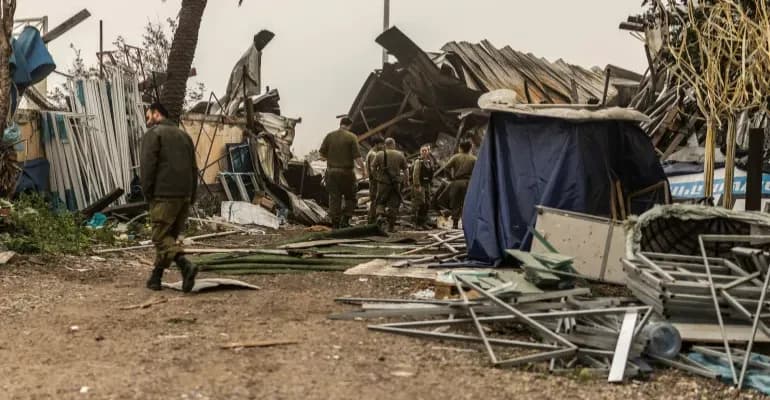
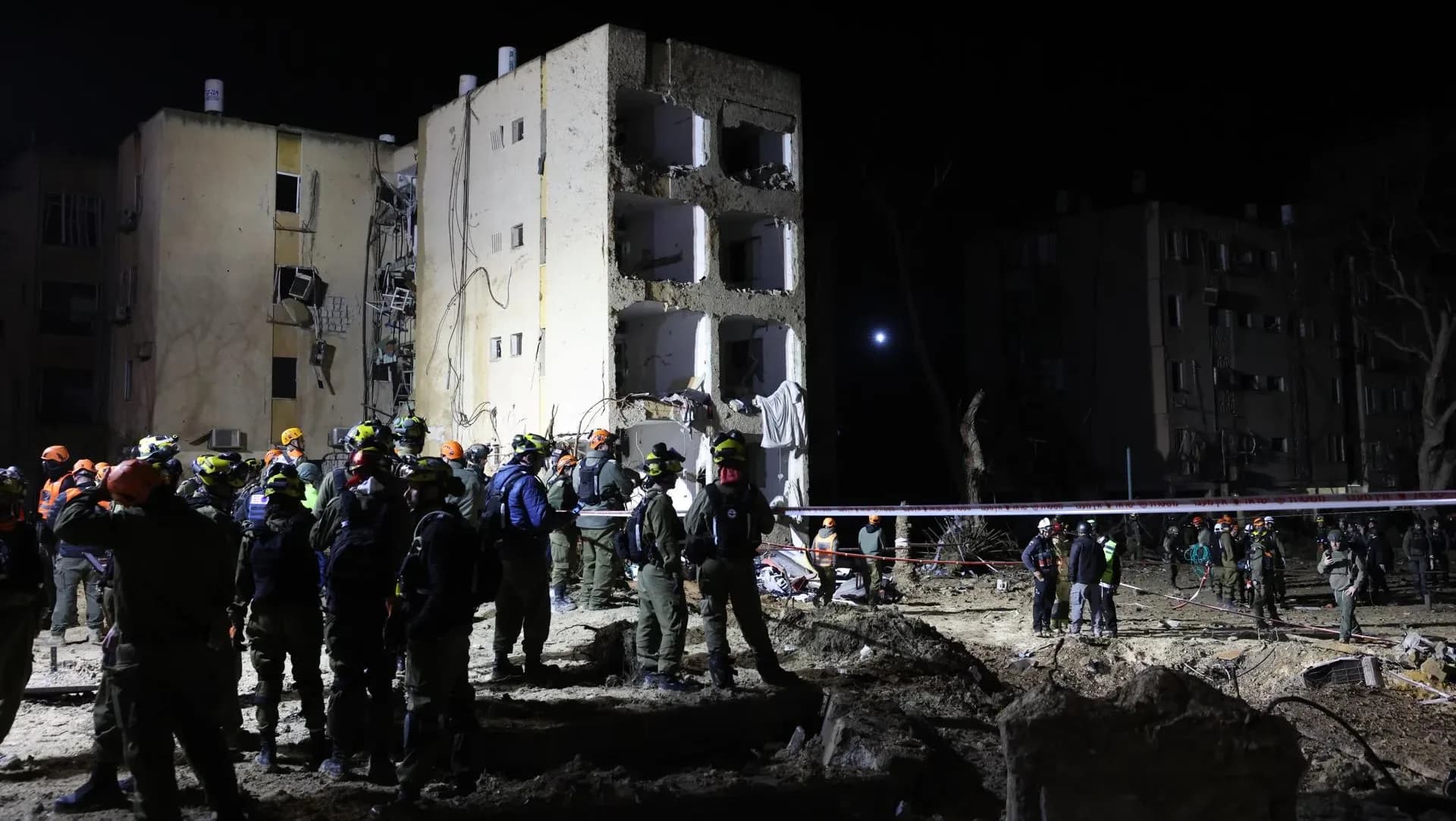
The Iranian missile strikes caused significant civilian casualties and damage in Israel.
Particularly affected were southern cities of Dimona and Arad near nuclear research facilities.

Emergency services reported treating at least 70 people for injuries in the Arad area.
At least two people were in serious condition including a 10-year-old boy with shrapnel injuries.
A woman suffered injuries from glass fragments in the attacks.
In Dimona, Iranian strikes caused injuries in residential neighborhoods.
Reports indicated at least 33 people wounded in Dimona.
Israeli emergency services described the scene as 'very difficult' with people trapped under rubble.
The strikes involved cluster-type missiles that disperse multiple warheads.
The International Atomic Energy Agency expressed concern about nuclear site risks.
Strategic Concerns
The escalating conflict raised concerns about regional stability and global energy security.
Iran effectively closed the Strait of Hormuz, a critical chokepoint for global oil supplies.

The strait handles roughly one-fifth of global oil supply, and attacks have stopped most tankers.
Major oil producers have been forced to make production cuts due to the blockade.
The blockade poses economic risks for the US and allies in Europe and Asia.
Iranian military commanders warned the conflict is entering a 'new phase'.
Parliament speaker Mohammad Bagher Ghalibaf said Israeli airspace is now 'exposed and unprotected'.
IRGC aerospace force commander declared 'missile superiority' over occupied territories.
They threatened 'new launch systems' would 'astonish the Americans and the Zionists'.
Human Rights Activists News Agency documents significant casualties on both sides.
More on Iran

President Trump delays strikes on Iran power plants for five days amid conflicting reports.
41 sources compared

Trump Extends Deadline to Reopen Strait of Hormuz, Delays Strikes on Iranian Power Plants.
27 sources compared
Trump Says Talks With Iran Ongoing; Iran Denies Negotiations.
15 sources compared

Iran Threatens to Close Strait of Hormuz, Hit Power Plants After Trump's Ultimatum
41 sources compared