
IRGC Navy Expands Iran’s Defensive Perimeter Across Strait of Hormuz From Jask to Greater Tunb
Key Takeaways
- IRGC Navy defines Hormuz as a 500-km operational crescent.
- Transit through Hormuz requires Iran's permission and threats must be neutralized.
- IRGC claims expanded defensive perimeter and exclusive control, promising safe passage under conditions.
IRGC redraws Hormuz zone
Iran’s Islamic Revolutionary Guard Corps (IRGC) Navy announced what it described as a major expansion of Iran’s defensive perimeter in the Strait of Hormuz, warning it will not tolerate any violation of the country’s territorial waters or national interests.
Rear Admiral Mohammad Akbarzadeh, the political deputy of the IRGC Navy, said on Tuesday that Iran has “fundamentally redefined” the operational boundaries of the strategic waterway.

Akbarzadeh said the strait’s scope now stretches from the coasts of Jask and Sirik to areas beyond the Greater Tunb Island, which he described as a redefined strategic zone.
He said the Strait of Hormuz has grown larger into a vast operational area, expanding from a width of 20 to 30 miles to over 200 to 300 miles, “that is, 500 kilometers,” from Jask and Sirik to beyond Qeshm Island and Greater Tunb.
The IRGC official added that Iran’s armed forces are closely monitoring all activity in the region and will not allow any kind of encroachment upon its waters and interests.
Safe corridor and threats
The IRGC said the only safe passage through the Strait of Hormuz would be a corridor designated by Iran, warning that vessels deviating from it would face a “decisive response”.
Akbarzadeh framed the message as a commitment to defending sovereignty and territorial integrity, saying, “The armed forces will defend the country’s territorial integrity and waters with all their might.”
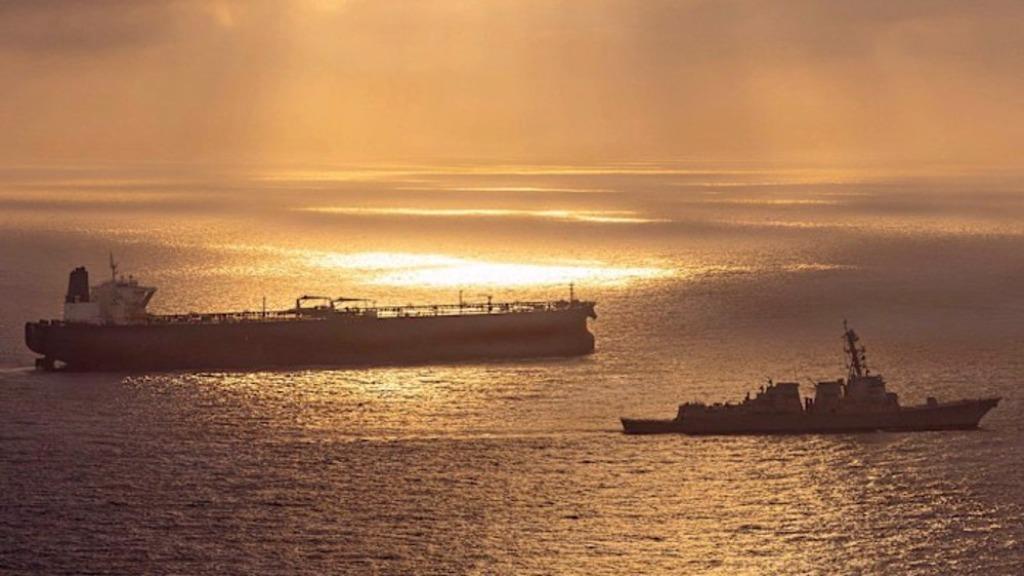
The report also said Iran imposed stricter controls over shipping in the Strait of Hormuz since early March, after Tehran described hostile US and Israeli actions in the region.
It accused the United States of attempting to impose a blockade on Iranian vessels, calling it illegal and an act of “maritime piracy”.
In the same account, the IRGC declared that Iran has effectively closed the Strait of Hormuz to hostile shipping since early March, and that Iran began enforcing much stricter controls last month after the US said it was imposing a blockade on Iranian vessels and ports.
Energy stakes and enforcement
PressTV said the shutdown of the Strait of Hormuz, described as a vital conduit for roughly one-fifth of the world’s oil and gas shipments, caused severe disruptions to global energy flows and triggered sharp price volatility.
The same report said US warships attempting to approach Iranian waters in recent weeks were repelled by direct Iranian fire.
It also tied Iran’s enforcement posture to the US claim of a blockade on Iranian vessels and ports, which Tehran condemned as illegal and an act of maritime piracy.
In parallel coverage, the IRGC Navy’s expansion narrative described a “complete crescent” operational area that stretches from Jask and Sirik to beyond Qeshm Island and Greater Tunb.
Together, the accounts place the Strait of Hormuz at the center of Iran’s stated defensive perimeter, with Iran insisting it will monitor movements and respond decisively to deviations from its designated corridor.
More on Iran

Trump Warns Ceasefire Is On Life Support As U.S. Plans Escalation In Iran War
32 sources compared
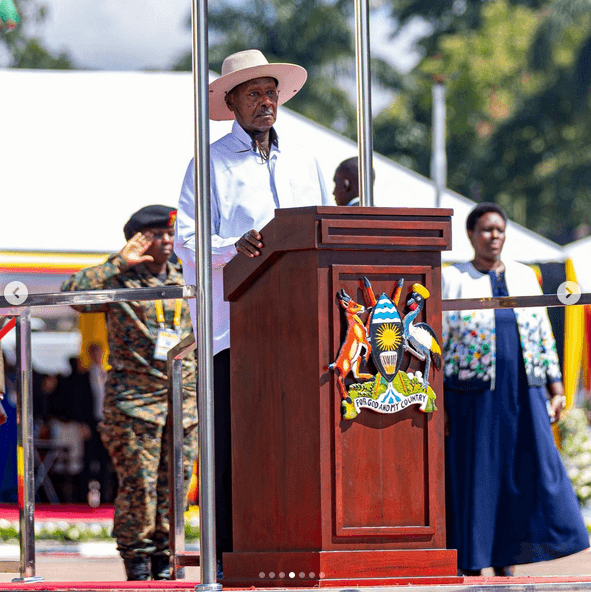
Yoweri Museveni Sworn In For Another Five-Year Term In Kampala
16 sources compared
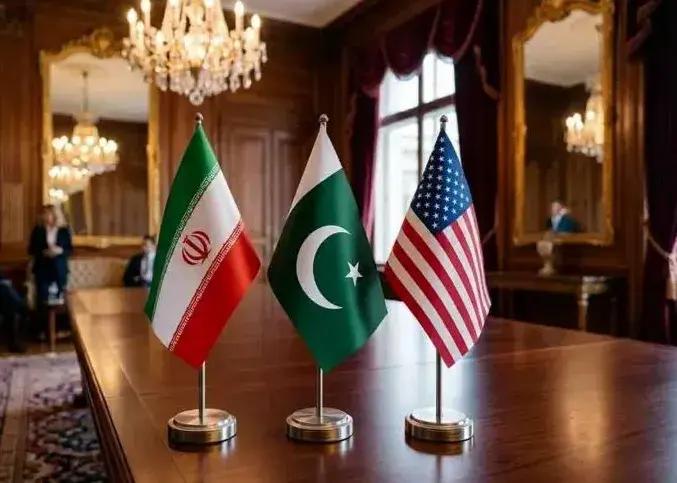
Pakistan Rejects CBS News Claim of Iranian Military Aircraft at Nur Khan Airbase
18 sources compared

Calbee Switches 14 Products To Black-And-White Packaging As Iran War Disrupts Ink Supplies
11 sources compared