
IRGC Threatens Full Scale Economic War After South Pars Attack
Key Takeaways
- Israel strikes South Pars gas field, shared with Qatar.
- Iran vows retaliation and full-scale economic war against Gulf energy facilities.
- Oil and gas prices surge after strike on South Pars.
South Pars Attack
The IRGC has issued urgent warnings of imminent strikes on major oil and gas facilities across the Gulf region following a devastating attack on Iran's South Pars gas field, declaring a 'full-scale economic war' in response to what Tehran calls American-Zionist aggression.
“Qatar, which shares the offshore field with Iran, strongly condemned the attack”
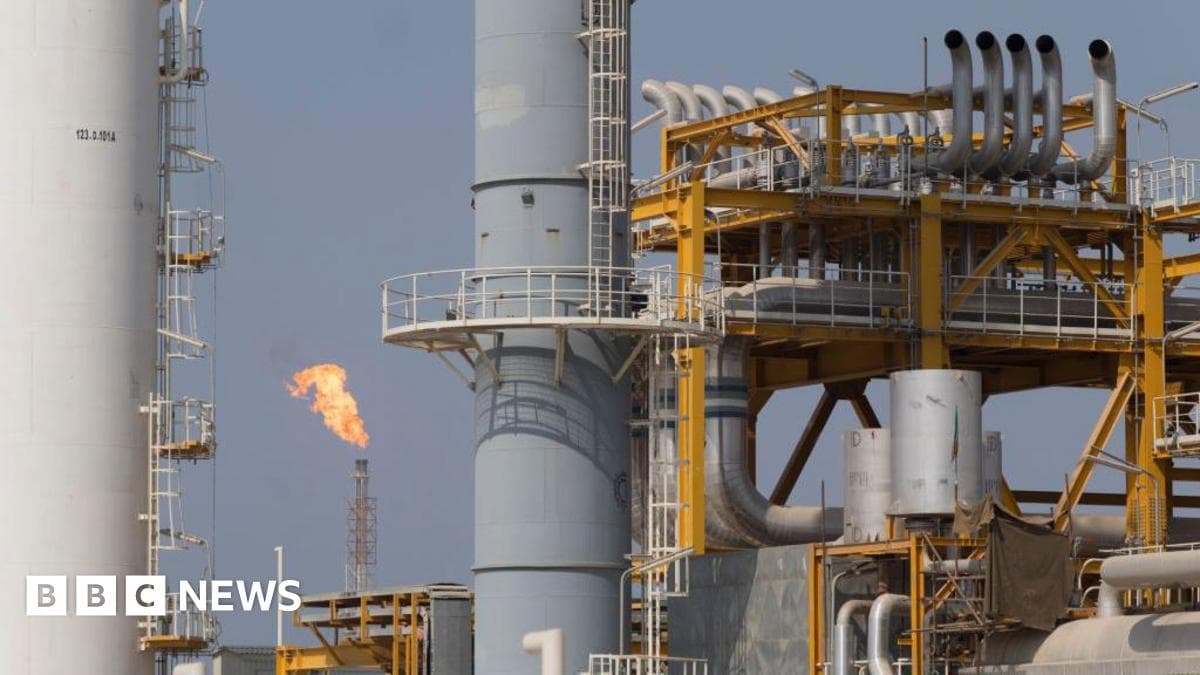
Iranian state media reported that drone strikes targeted the third and sixth phases of the South Pars gas field in Asaluyeh, halting production at two refineries with a combined capacity of approximately 100 million cubic meters per day.
The attack represents a significant escalation in the nearly three-week conflict, marking the first time fossil fuel energy production facilities have been directly targeted rather than general oil and gas industry sites.
The governor of Asaluyeh, Eskandar Pasalar, condemned the South Pars attack as 'political suicide' by the U.S. and Israel, declaring that 'the pendulum of war has swung to a full-scale economic war' and that 'energy security in the region has reached the point of zero.'
The South Pars field is the world's largest natural gas field, shared between Iran and Qatar, and contains an estimated 1,800 trillion cubic feet of usable gas - enough to supply the entire world's needs for 13 years according to Reuters reports.
IRGC Retaliation Threats
In response to the South Pars attack, the IRGC has issued direct threats to retaliate against energy infrastructure in Saudi Arabia, the United Arab Emirates, and Qatar, designating specific facilities as 'direct and legitimate targets' that could be struck within hours.
The semi-official Tasnim news agency reported that the IRGC called on civilians, residents, and employees to 'immediately leave these areas and move to a safe distance without delay,' warning that the sites could be targeted 'within the coming hours.'

Among the specific facilities listed as targets are Saudi Arabia's SAMREF refinery and Jubail petrochemical complex, the UAE's Al Hosn gas field, and Qatar's Mesaieed petrochemical complex and Ras Laffan refinery.
An IRGC spokesperson declared that 'the fuel, energy and gas infrastructures of those who attacked Iran's energy and oil facilities will be set on fire and reduced to ashes at the first opportunity,' while Iran's central military command promised a 'severe response' to the attack would come soon.
The IRGC warned that repeated warnings had previously been issued to Gulf governments, accusing them of pursuing what it described as a 'dangerous path' and stating that 'from tonight, the red lines have changed.'
Regional Reactions & Market Impact
The attack on South Pars and Iran's retaliatory threats have triggered strong condemnation from regional countries and significant disruptions to global energy markets, with oil prices surging and major shipping routes threatened.
Qatar, which shares the massive South Pars gas field with Iran, strongly condemned the attack, with Foreign Ministry spokesman Majed al-Ansari calling it a 'dangerous and irresponsible step' that 'puts global energy security at risk' as well as threatening 'the peoples of the region and its environment.'
The United Arab Emirates similarly warned that attacking Iran's energy infrastructures 'constitutes a direct threat to global energy security' and represents 'a dangerous escalation' in the current conflict.
Meanwhile, oil prices have jumped significantly, with Brent crude oil futures rising sharply to around $105 per barrel, up almost 2% in response to the South Pars attack, while Mix Vale reports that oil prices recorded a significant increase, jumping 29% to an average of US$3.84 per gallon compared to US$2.98 recorded on February 28 when the attacks began.
The Trump administration has announced the temporary suspension of the Jones Act for 60 days in an attempt to mitigate short-term disruptions in the oil market.
Broader Conflict Escalation
The South Pars attack comes amid a broader escalation of the conflict that has seen systematic targeting of high-ranking Iranian officials and increased attacks across the region, creating a complex web of retaliatory violence.
The attack on the gas field occurred just one day after Israeli forces killed Iran's Intelligence Minister Esmaeil Khatib, who became the latest in a series of high-ranking Iranian officials targeted by Israel.
Khatib's death followed the killing of Ali Larijani, the head of Iran's National Security Council and the country's de facto leader, whose funeral in Tehran drew large crowds of mourners who chanted 'Death to America' and 'Death to Israel.'
In response to these killings, Iran's paramilitary Revolutionary Guard announced it had targeted central Israel with multiple-warhead missiles, including the Khorramshahr-4 and Qadr types, which have an increased chance of evading missile defense systems.
The Israeli military reported at least two salvoes of incoming fire and confirmed that two people were killed in Ramat Gan, east of Tel Aviv. Footage filmed by The Associated Press showed at least one missile releasing cluster munitions over Israel, highlighting the increasingly destructive nature of the conflict.
Humanitarian & Energy Crisis
The conflict has created severe humanitarian and economic consequences across the region, with Iran suffering significant domestic energy disruptions and broader disruptions to global energy supplies.
“Iran's judiciary said a man has been executed on charges of spying for Israel's Mossad intelligence agency”
The South Pars field accounts for up to three-fourths of Iranian gas production, and most of the energy Iran takes from this field is used domestically for electricity generation, household heat, hot water, and cooking for most Iranians.

The attack has worsened Iran's already severe domestic energy shortages, with fires at several facilities at Asaluyeh that had to be contained by evening firefighting teams.
Meanwhile, Iran's stranglehold on the Strait of Hormuz - the shipping lane through which a fifth of the world's oil transits - has effectively halted oil exports from the Persian Gulf, creating significant bottlenecks and contributing to price volatility affecting economies globally dependent on energy supplies.
Iraq's electricity ministry reported that Iranian gas flows to Iraq have stopped completely, as Iraq currently imports more than a third of its gas and power needs from Iran.
More on Iran

Israel strikes Iran's Pars gas field as Tehran vows revenge
14 sources compared
Trump threatens to blow up South Pars gas field if Iran attacks Qatar again
10 sources compared
UAE Halts Habshan Gas Facility Operations After Debris From Intercepted Missiles
10 sources compared

Iran Threatens Gulf Energy Facilities After Israel Strikes South Pars Gas Field
11 sources compared