
IRGC Warns U.S. of Retaliation Amid Rising Tensions
Key Takeaways
- IRGC pledges symmetric, deterrent retaliation to any US threat.
- Respond proportionally to threats affecting critical infrastructure; denies targeting desalination facilities.
- IRGC warns of escalation targeting energy infrastructure and Strait of Hormuz.
IRGC Warning
The Islamic Revolutionary Guard Corps (IRGC) has issued a stark warning to the United States, declaring that it will respond symmetrically to any attack or threat targeting Iranian infrastructure.
“Iran’s Islamic Revolutionary Guard Corps (IRGC) has declared that its armed forces will respond symmetrically to any attack or threat from the United States”
The IRGC specifically addressed Trump's reported threat to target Iran's power generation facilities, stating: 'You struck our schools. We did not retaliate.'
However, the Corps issued a firm warning that if the US strikes the electricity supply chain, 'we will strike your electricity supply chain.'
The IRGC emphasized that any retaliation would specifically target power plants serving US bases, as well as economic, industrial and energy facilities linked to American interests.
The statement concluded with an assertive declaration of intent and capability: 'We are determined to respond to every threat at a level that creates deterrence, and we will carry this out,' adding that 'The United States does not know our capabilities; they will witness them on the battlefield.'
Military Escalation
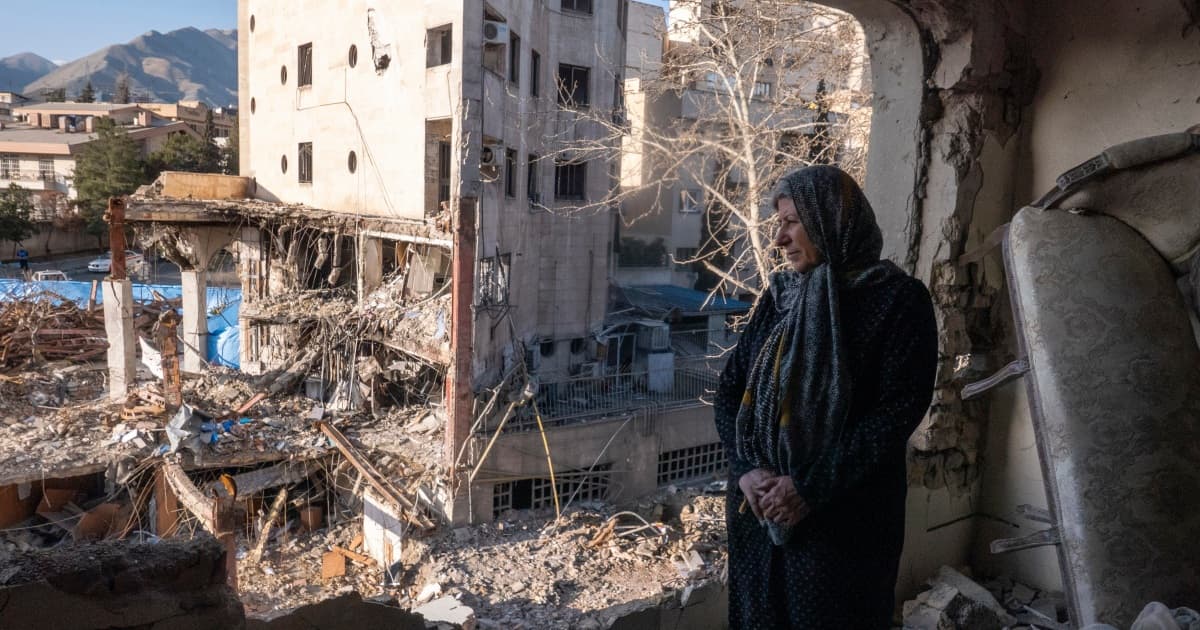
The IRGC's warning comes amid escalating tensions following a major military operation launched by the United States and Israel on February 28, which targeted major Iranian cities including Tehran.
In direct response to this operation, the IRGC conducted what it described as a large-scale counterstrike against Israel, signaling Tehran's readiness to further escalate if provoked.
The Corps stated that 'We are determined to respond to any threat at a level that creates a deterrent balance,' positioning its actions as maintaining strategic parity despite the asymmetry of power.
The IRGC has declared that its armed forces will respond symmetrically to any attack or threat from the United States, framing its military posture as both defensive and retaliatory in nature.
This ongoing retaliation operation, which the IRGC has named 'True Promise 4,' has already involved strikes against numerous strategic US and Israeli targets across the region.
Cultural Perspective
Iranian decision-making processes reflect a fundamentally different cultural and spiritual framework that Western powers often struggle to comprehend, according to analysis of the IRGC's perspective.
“Tehran has threatened to escalate strikes on energy infrastructure and target critical water desalination facilities should President Donald Trump make good on a promise to “obliterate” the country’s power plants if it does not reopen the Strait of Hormuz”
The people making decisions in Tehran are not calculating the same variables as the Pentagon, as Iranian culture assesses risk and sacrifice through a lens where spiritual meaning outweighs physical survival.
This different rationality explains why Iran continues fighting despite overwhelming military disadvantages, as the IRGC views its struggle as a 'holy mission against what it understands as the forces of oppression.'
Every martyred IRGC soldier who dies on Laylat al-Qadr has, within Shia Islamic framework, achieved something that 'no amount of money or political position can equal.'
This spiritual calculus creates a strategic environment where conventional deterrence theories may not apply, as death on what Iran considers the 'right night' represents victory rather than defeat from their perspective.
US Strategy
President Trump has simultaneously pursued contradictory military and diplomatic strategies in the escalating confrontation with Iran.
While posting on social media that the US is considering 'winding down' military operations, Trump simultaneously ordered the deployment of the 11th Marine Expeditionary Unit—at least 2,200 Marines—from San Diego.
This apparent contradiction suggests a dual-track approach of both military escalation and diplomatic signaling.
A senior Iranian official described Trump's 'wind-down' claims as 'psychological operations to control the markets,' indicating that Tehran does not take these statements at face value.
At the same time, Trump has spent weeks pressuring NATO members—Europe, Canada, Australia—to take up military support for Netanyahu and Israel, though he has received only 'polite diplomatic non-answers' rather than concrete commitments.
This suggests limited appetite among key US allies for direct involvement in the escalating regional conflict.
Capabilities Claim
The IRGC has emphasized that the United States fundamentally underestimates its military capabilities and strategic resolve, positioning itself as an adversary whose full strength remains largely unknown to Washington.
“Tel Aviv anti-war protests erupt as IRGC waves reach 72”
The Corps has stated that 'The United States does not know our capabilities; they will witness them on the battlefield,' suggesting that any actual conflict would reveal military strengths that US intelligence assessments may have failed to capture.
This claim of unknown capabilities serves both as deterrence and as justification for Iran's assertive posture in the region.
The IRGC has specifically rejected accusations that it aims to disrupt essential services in the region, instead framing its actions as legitimate responses to US aggression.
By naming its ongoing retaliation operation 'True Promise 4,' the IRGC suggests continuity in its strategic approach and a long-term commitment to resisting what it perceives as Western and Israeli military threats.
The Corps's statements consistently present Iran as both capable of significant retaliation and determined to maintain deterrence through asymmetric responses to conventional military superiority.
More on Iran

President Trump delays strikes on Iran power plants for five days amid conflicting reports.
41 sources compared

Trump Extends Deadline to Reopen Strait of Hormuz, Delays Strikes on Iranian Power Plants.
27 sources compared
Trump Says Talks With Iran Ongoing; Iran Denies Negotiations.
15 sources compared

Iran Threatens to Close Strait of Hormuz, Hit Power Plants After Trump's Ultimatum
41 sources compared