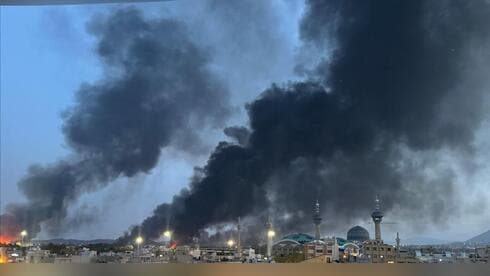
Is Iran’s ‘target bank’ running out? What the latest strikes may reveal
Key Takeaways
- Officials expect the war to last several more weeks.
- Opening strike reportedly killed Iran's security leadership, including Supreme Leader Ali Khamenei, under a minute.
- Strikes indicate main objectives may already be largely exhausted.
Initial strikes and target bank
In Israel and the United States, officials say the war is expected to continue for several more weeks.
“In Israel and the United States, officials say the war is expected to continue for several more weeks”
But the nature of the strikes suggests the main objectives may already have been largely exhausted.
The opening blow targeted Iran’s top security leadership — including Supreme Leader Ali Khamenei — in less than a minute.
The IDF then moved on to strike Iran’s air defense systems to establish aerial superiority and hit its ballistic missile array, which had attempted to target Israel’s civilian rear.
Alongside these efforts, the IDF continued striking additional targets listed in its target bank, which was continuously updated as the war progressed.
But nearly three weeks into the conflict, it appears the early-day strikes were aimed at the most important targets in that bank, and as days passed the importance of the targets declined while disagreements about them increased.
War aims and US actions
It remains clear these targets are highly significant in the broader campaign and are intended to help Israel achieve the war’s objectives.
One example was the destruction of an Iranian center used to develop satellite attack capabilities in space, which the IDF said posed a threat to Israel’s satellites and to the space assets of other countries.
The United States has increased the pace of its strikes against the Iranian navy and is now focused on preventing Iran from blocking the Strait of Hormuz.
The understanding in Washington is that if Tehran succeeds in halting the war through such a move, it would gain a bargaining chip that could be used for years against the global economy.
Yet none of these efforts are directly tied to the war’s central objectives of damaging the ballistic missile program and the nuclear capabilities.
Target bank reality, Ortal view
In this war, Ortal stresses that the effort to create conditions for the fall of the regime is not directly related to how many targets you strike.
“In Israel and the United States, officials say the war is expected to continue for several more weeks”
There is no list of 100 percent of targets that, if you hit them all, the regime will fall.
The goal of the strikes is to damage the cohesion of the regime’s frameworks and the determination of its commanders, while boosting the confidence of citizens watching from the sidelines.
It matters far less where the bombs land — what matters more is that people see them landing.
This is not the logic of a fixed target bank.
Whether the mechanism of damaging cohesion, weakening commanders’ determination and strengthening citizens’ confidence will work is unknown.
There will be a situational assessment and a decision whether to continue.
To create the domino effect that would undermine the regime’s stability, there is no target bank.
Nuclear risk and war strategy conclusion
On the Strait of Hormuz, Ortal notes the United States has difficulty finding all drones, coastal missiles and Iranian capabilities in the area.
Iran is draining its ammunition reserves.
The United States may seek to allow Iran to launch everything already in its launchers while trying to disrupt the supply chain feeding the blockade.
American analysts use satellites and drones to determine how to disrupt that supply chain through air operations targeting new targets.
Regarding Iran’s nuclear program, about 450 kilograms of enriched uranium are stored in Isfahan and will likely remain where it is.
Even if seized, Iran could obtain nuclear material elsewhere.
Israel will try to exhaust and maximize the chances of regime collapse as long as the United States is with them, because that could prevent a nuclear threat from returning.
There is no final tally to the target bank; even hitting 100 percent may not end the war, and Israel will continue striking as long as there is a chance the regime could fall.
More on Iran

Israel strikes Iran's Pars gas field as Tehran vows revenge
14 sources compared
Trump threatens to blow up South Pars gas field if Iran attacks Qatar again
10 sources compared

UAE Halts Habshan Gas Facility Operations After Debris From Intercepted Missiles
10 sources compared

Iran Threatens Gulf Energy Facilities After Israel Strikes South Pars Gas Field
11 sources compared