Russia25 March, 20248 min read
ISIS-Khorasan Gunmen Attack Crocus City Hall, Killing More Than 140 Near Moscow
This article is an automated aggregation of coverage from news outlets. Our editorials offer in-depth analysis curated by the NewsCord team.
ISIS-Khorasan claimed responsibility for the Crocus City Hall attack near Moscow. Death toll reported around 130–140, Russia's deadliest terror attack in decades.

Crocus City Hall assault
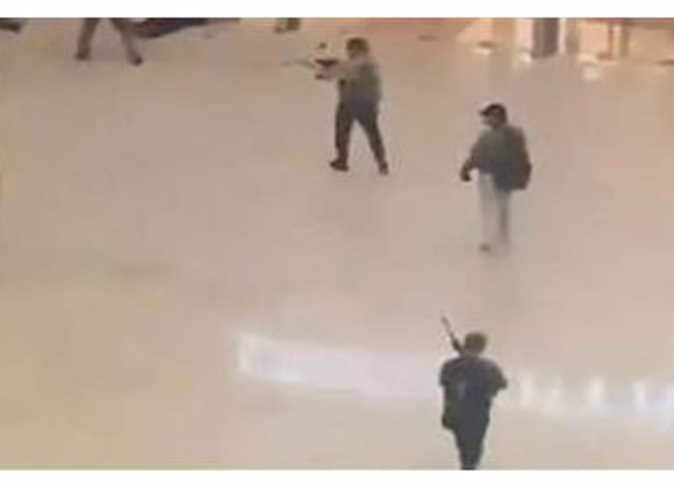
On March 22, 2024, armed gunmen attacked the Crocus City Hall concert complex in the Moscow suburbs, killing more than 140 people and triggering a massive fire, in what one analysis described as “Moscow’s deadliest attack in more than a decade.” Russian authorities arrested at least 11 people connected to the attack, including four who were said to be directly involved, and the Russian Investigative Committee said on Sunday that 137 bodies had been recovered from the charred building, including three children, with 62 victims identified so far and DNA testing ongoing. The Kremlin said the head of the FSB informed President Vladimir Putin of the arrest of 11 people in connection with the Crocus City Hall assault near Moscow, on Friday, which left casualties and injuries.
“The attack on the Crocus City Hall concert complex in the Moscow suburbs claimed the lives of more than 140 people, the deadliest terrorist attack the Russian capital region has seen in more than a decade.”
Russian investigators said the attackers set the building on fire using explosives and flammable liquids, causing chaos as people fled, and the fire quickly spread to more than a third of the building with smoke filling the area and parts of the ceiling collapsing. Law enforcement said the victims died of gunshot wounds and smoke inhalation, while the Russian emergency service posted video and photos showing charred seats and firefighters removing debris. The attack unfolded shortly before the scheduled start of a sold-out rock concert, and the Russian emergency service reported it was largely out by around 5 a.m.
Early Saturday, the head of the Federal Security Service (FSB) announced the arrest of 11 people connected to the attack, including all four militants directly involved, and Tass quoted security officials saying the criminals intended to cross the Russian-Ukrainian border. ISIS claimed responsibility for the assault, while American officials attributed it to ISIS-Khorasan, and Ukraine denied any involvement.
Numbers, suspects, and claims
The reported death toll and injury counts varied across outlets, with one account saying the attack claimed the lives of “more than 140 people,” while another said at least 115 dead and 121 injured, and CNN reported “at least 137 people dead and more than 100 injured.” PBS described the suburban Moscow concert hall assault as killing “more than 130 people,” calling it the deadliest attack inside Russia in 20 years, and CNN said Russian authorities accused four men from Tajikistan of being behind the attack. CNN reported that the suspects, charged with committing a terrorist act, were remanded into pre-trial detention through May 22 after appearing in court in Moscow on Sunday.
PBS said four men accused of carrying out the March 22 concert hall attack faced terror charges in a Moscow courtroom on Sunday, and it added that all four were identified by the Russian government as being from the Central Asian country of Tajikistan. The Moscow attack was also described as involving attackers who tried to flee, with one analysis noting that the exact number of attackers involved, according to Russian security sources, ranges between three and five. The same analysis said Russian security agencies disclosed that the suspects had had “contacts” in Ukraine, without directly indicting Kyiv authorities, and it quoted the Federal Security Service citing TASS that “After carrying out the terrorist attack, the criminals intended to cross the Russian–Ukrainian border.”
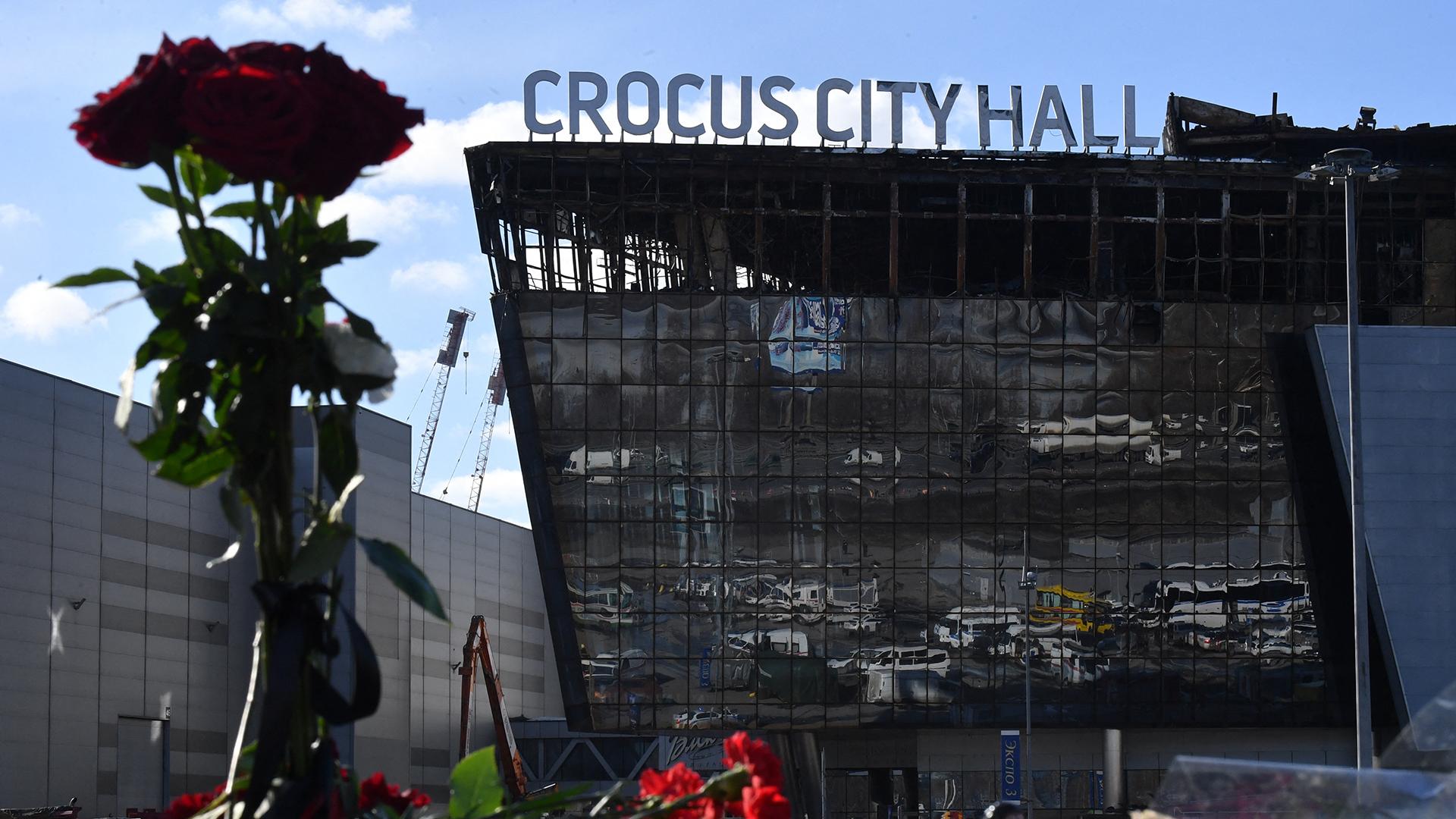
Russian state media and investigators described the attackers as setting the building on fire using explosives and flammable liquids, and the emergency service posted images after the blaze showing charred seats and firefighters removing debris. ISIS claimed responsibility, while American officials attributed it to ISIS-K, and Putin described the attack as carried out by “radical Islamists” while also claiming without proof that a “window” had been prepared for the attackers to escape to Ukraine, which Kyiv denied.
ISIS-K leadership and links
Multiple reports tied the Crocus City Hall attack to ISIS-Khorasan and focused on the group’s leadership and operational reach. The Middle East outlet identified Ashraf Thana-Allah Ghafari (29) as the leader of ISIS-Khorasan Province and said ISIS claimed responsibility for a mass shooting near Moscow that killed at least 139 people, while the United States said intelligence indicated ISIS-Khorasan was responsible. That report said Washington warned Russia earlier this month and that the U.S. derived this from spying on a chat among ISIS-Khorasan fighters, while the Russian Foreign Ministry questioned the group’s responsibility.
“ISIS-Khorasan seeks to outdo rival jihadists by carrying out bolder attacks that make it more distinctive and to gain resources from potential supporters.”
It also described the discovery of Tajik passports with militants arrested by Russian authorities as pointing to a possible link to Ghafari’s group, which recruits heavily from Tajikistan, and it said Ghafari reportedly fled wounded across the border into Pakistan. Reuters sources cited by the same report said initial reports indicated Ghafari was killed in Afghanistan in June of the previous year, but he escaped wounded across the border into Pakistan and is believed to be living in the border province of Balochistan where law enforcement is weak. The report said Ghafari was named emir of ISIS-Khorasan in 2020 and that the group drew global attention with a suicide bombing in 2021 at Kabul International Airport during the U.S. withdrawal that killed 13 American service members and dozens of civilians.
It further said ISIS-Khorasan claimed responsibility in September 2022 for a suicide attack on the Russian embassy in Kabul, killing several people, and it described a January double suicide bombing in Iran that killed about 100 people during the funeral for IRGC commander Qassem Soleimani near his tomb. A separate outlet said the group seeks to outperform rival jihadists by carrying out bolder attacks and quoted a security expert saying, “ISIS-Khorasan seeks to outdo rival jihadists by carrying out bolder attacks that make it more distinctive and to gain resources from potential supporters.”
Warnings, court, and Putin’s line
The lead-up to the Moscow attack included U.S. warnings and Russian responses, with officials and analysts describing how intelligence and attribution played out publicly. PBS said earlier in March the U.S. told American citizens to avoid concert venues in the Russian capital and that U.S. officials said they warned Russian officials about threats by extremists targeting large gatherings. CNN similarly said that since November the U.S. had received a stream of intelligence that ISIS-K was determined to mount an attack in Russia and passed those warnings on to Moscow.
CNN reported that Russian President Vladimir Putin said on Monday that “radical Islamists” carried out the assault, while also claiming without proof that a “window” had been prepared for the attackers to escape to Ukraine, and it said Kyiv has denied the allegations. In the same CNN account, US Vice President Kamala Harris said Sunday that “what we know to be the case is that ISIS-K is actually, by all accounts responsible for what happened.” PBS added that Putin vowed to “identify and punish” those responsible after describing the March 22 attack as “barbaric.”
In court, CNN said the suspects were remanded into pre-trial detention through May 22 after appearing in court in Moscow on Sunday, and PBS said four men accused of carrying out the March 22 concert hall attack faced terror charges in a Moscow courtroom on Sunday. The Russian Foreign Ministry questioned ISIS-Khorasan’s responsibility in the Middle East report, while security experts pointed to Tajik passports found with militants arrested by Russian authorities as a possible link to Ghafari’s group.
Competing narratives and next steps
The sources also diverged in how they framed the attack’s attribution and the broader political implications, while still describing overlapping investigative actions.
“This is ISIS-K showing through force that, in fact, it’s virtually impossible for a group like the Taliban — without the kinds of assets that the United States and the international community have — to keep them from using Afghanistan in the future as a safe haven, a sanctuary to conduct transnational terrorist attacks.”
The East Asian report said ISIS claimed responsibility for the assault while Russian officials and state media largely ignored ISIS’s claim, instead pointing to Ukraine as behind the violence, and it said Ukraine denied any involvement and American officials said there is no evidence linking Kyiv to the attack.
It also described Russian authorities arresting at least 11 people and said the FSB said the attack had been carefully planned and that the terrorists tried to flee toward Ukraine, while the Kremlin said the FSB head informed Putin of the arrest of 11 people.
In contrast, PBS emphasized the U.S. belief that ISIS-Khorasan was responsible and described the group’s history, including a quote from former U.S. naval intelligence officer M. Lyla Kohistany that “This is ISIS-K showing through force that, in fact, it’s virtually impossible for a group like the Taliban — without the kinds of assets that the United States and the international community have — to keep them from using Afghanistan in the future as a safe haven, a sanctuary to conduct transnational terrorist attacks.”
The Middle East report described Washington’s warning as derived from spying on a chat among ISIS-Khorasan fighters and said the Russian Foreign Ministry questioned the group’s responsibility, while it also noted that attackers tried to flee and were apprehended about 300 kilometers west of Moscow, raising questions in Russia about whether they were truly extremists.
The CNN account added that Russian authorities have accused four men from Tajikistan and that the suspects face possible life imprisonment, with pre-trial detention through May 22.
The analysis from the Middle East outlet said the attack occurred a few days after Vladimir Putin’s re-election to a new presidential term and argued that the assault could undermine the “strong man” image by reaching “the heart of the country” and causing a large number of casualties.
It also said the U.S. Embassy in Moscow warned on March 7 of an imminent attack by extremists targeting large gatherings in Moscow, including concerts, and advised citizens to avoid large crowds, quoting Adrien Watson that “Earlier this month, the U.S. government received information about a planned terrorist attack in Moscow that could target large gatherings, including concerts,”.