Syria22 February, 20262 min read
Islamic State Declares 'New Phase,' Claims Killing Syrian Army Members in Deir Ezzor and Raqqa
This article is an automated aggregation of coverage from news outlets. Our editorials offer in-depth analysis curated by the NewsCord team.
Islamic State claimed responsibility for two attacks in Mayadin (Deir Ezzor) and Raqqa. Islamic State declared the incidents the start of a 'new phase' of operations in Syria.

9 outlets told this the same way.
Outlets did split on Asad Al-Shaibani Meets Saddam Haftar in Benghazi Over Syrian Consulate And Missing Syrians →
ISIS claims attacks in Syria
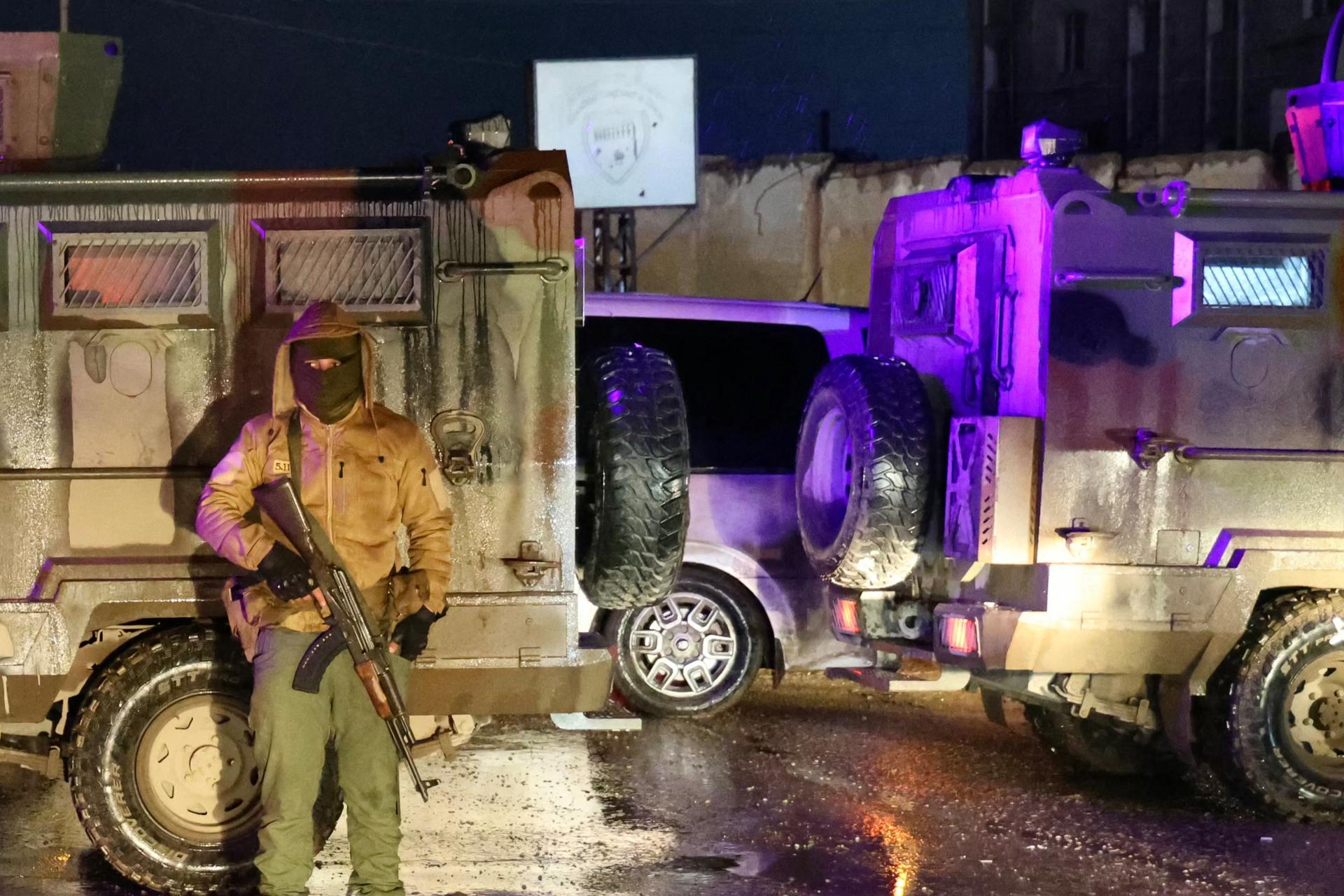
The Islamic State (ISIS) announced what it called a 'new phase' of operations in Syria. The group claimed responsibility for attacks on Syrian government personnel in Deir Ezzor (Al-Mayadin) and Raqqa. It said fighters shot and killed a regime-affiliated individual in Mayadin and opened fire on army personnel in Raqqa.
“The Islamic State (ISIS) announced it has entered a 'new phase' of operations in Syria and claimed responsibility for multiple attacks on Syrian army personnel.”
Multiple outlets reported the group's claims via its Dabiq outlet and Syrian officials confirmed fatalities on the ground, though details vary between accounts. The core claim of recent ISIS attacks in eastern Syria is consistent across reports.

Syria attack reporting
Syria’s Ministry of Defense publicly confirmed that a ministry member, reported as a soldier, and a civilian were killed by "unknown assailants". Ministry statements quoted in the press stopped short of explicitly attributing the attacks to ISIS, leaving investigators to examine the incidents. Several outlets cite a Reuters source identifying the soldier as from the 42nd Division, which appears in reporting but is not framed as a ministry attribution.
ISIS renewed campaign messaging
ISIS’s own messaging frames the incidents as the opening of a renewed campaign, with outlets reporting the group declared a 'new phase' and published statements via Dabiq and other channels, and with some pieces including audio or recorded messages denouncing Syria’s leadership and threatening further action.
“The Islamic State (ISIS) announced it has entered a 'new phase' of operations in Syria and claimed responsibility for multiple attacks on Syrian army personnel.”
One outlet highlights an Amaq tally of numerous attacks in 2025 as part of broader operations across the region, underscoring the group’s effort to portray sustained activity.
Eastern Syria security context
Several reports describe continuing sleeper-cell activity, hit-and-run attacks and assassination-style operations across Deir Ezzor, Raqqa and al-Hasakah. Analysts and outlets place the incidents in a broader security context, arguing the sparse, overlapping control in eastern deserts enables such strikes despite ISIS’s loss of territorial control. Other coverage stresses government counter-operations and recent territorial gains as part of a contested security environment.
Outlet framing differences
Coverage differences reveal how outlet type shapes emphasis. Regional/Asian outlets (i24NEWS, Daily Times, Hasht‑e Subh) present the claims and ministry confirmations in a largely factual, immediate style. Enab Baladi (Other) situates the attacks in continued sleeper‑cell activity with Amaq figures.
“The Islamic State (ISIS) announced it has entered a 'new phase' of operations in Syria and claimed responsibility for multiple attacks on Syrian army personnel.”
thenationalnews (Western Alternative) foregrounds ISIS’s ideological denunciation of President Ahmad Al Shara and frames the events as an explicit declaration of war. One named source (Khaama Press) does not provide article text in the material supplied, an omission worth noting. These differences matter for readers parsing what was claimed by ISIS, what officials confirmed, and how each outlet interprets motive and scale.