Full Analysis Summary
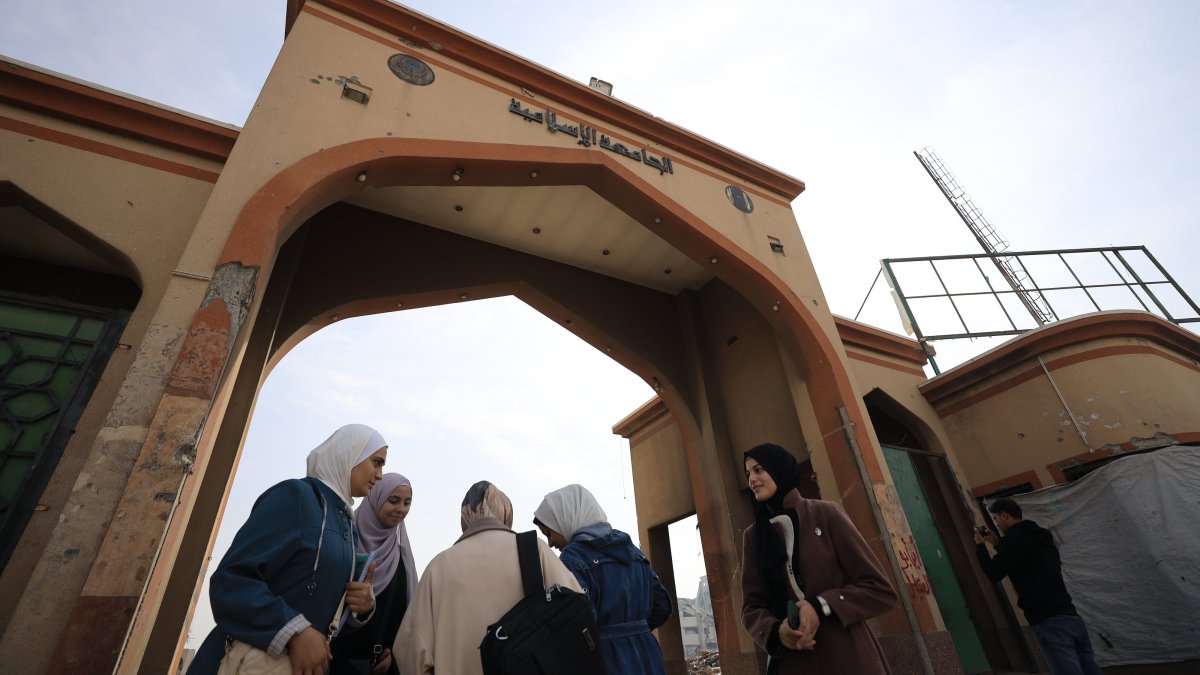
Gaza university reopens after attacks
Islamic University of Gaza has resumed in-person classes after two years under intense Israeli military assault that sources described as having genocidal effects.
Daily Sabah reports student Sama Radi called it the 'first day of face-to-face lectures' and quoted her describing the bombings as 'genocide'.
Daily Sabah also reported that, since October 2023, the Israeli military campaign has killed nearly 70,000 people in Gaza—reportedly mostly women and children—and injured more than 170,900 during the more-than-two-year war that left much of the enclave in ruins.
Al Jazeera likewise reports that after two years of war and widespread destruction, students have resumed in-person classes at Gaza's Islamic University, placing the resumption in the context of widespread damage caused by Israeli attacks.
Together, these sources depict a campus reopening amid catastrophic loss of life and destruction attributed to Israeli military actions.
Coverage Differences
Tone and emphasis
Daily Sabah emphasizes casualty figures and uses the term "genocide" (including quoting a student), framing the Israeli campaign explicitly as causing mass deaths; Al Jazeera emphasizes the practical realities of resuming education and the damaged campus serving as shelter, focusing on resilience rather than enumerating casualty figures or using the word "genocide" itself. Daily Sabah reports both a student quote and large casualty totals, whereas Al Jazeera reports the resumption and damage without the same casualty framing.
Campus damage and displacement
Both reports describe a campus physically devastated by Israeli attacks that now doubles as shelter for displaced families.
The destruction has forced education to resume amid makeshift and damaged facilities.
Al Jazeera reports the campus was heavily damaged by Israeli attacks and also serves as shelter for forcibly displaced families, underlining the humanitarian consequences of the bombardment on civilian infrastructure.
Daily Sabah similarly reports widespread destruction across the enclave and links the damage to a high death toll and numerous injuries among Palestinians.
Coverage Differences
Narrative focus
Al Jazeera foregrounds the human and infrastructural impacts — campus damage and sheltering displaced families — highlighting how educational spaces have become part of the humanitarian response. Daily Sabah foregrounds political and moral judgment and casualty statistics, reporting higher death tolls and quoting a student who calls the bombings "genocide," thereby emphasizing a narrative of deliberate, large-scale killing. Al Jazeera reports the campus role as shelter and damage; Daily Sabah reports casualty numbers and uses the term "genocide."
Students resume classes after attacks
Students and faculty are portrayed as determined to continue education despite a lethal campaign attributed to Israel, with sources capturing both personal testimony and the practical stakes of reopening.
Daily Sabah quotes student Sama Radi expressing happiness at returning and praising resilience, calling it the first day of face-to-face lectures and saying the university has risen stronger than before even as she described the bombings as genocide.
Al Jazeera reports similarly that students are determined to continue their education, signaling perseverance amid the aftermath of attacks that reduced campus infrastructure to rubble and turned it into shelter.
Coverage Differences
Source voice vs quoted testimony
Daily Sabah explicitly quotes a student using the word "genocide," which attributes the strong term directly to an individual and to the publication’s reporting; Al Jazeera reports the students' determination and describes campus damage without quoting that specific characterization of the assault as "genocide." Thus Daily Sabah both reports a personal testimony and frames the broader campaign with casualty figures, while Al Jazeera centers resilience and the practical implications of campus damage.
Campus reopening in Gaza
Taken together, the sources show a campus reopening that cannot be separated from the broader Gaza genocide reported by some outlets, with infrastructure shattered, tens of thousands reported killed by Israeli military operations, and education persisting amid sheltering displaced families.
Daily Sabah reports a high death toll and frames the bombings as "genocide", directly attributing mass civilian deaths to the Israeli military campaign.
Al Jazeera documents the damage by Israeli attacks and the university's doubled role as a shelter and a site of civic resilience.
The two sources converge on the facts of destruction and reopening while differing in emphasis - casualty counts and moral language in Daily Sabah versus infrastructural and humanitarian detail in Al Jazeera - but both attribute the devastation to Israel's military campaign.
Coverage Differences
Convergence with differing emphasis
Both Daily Sabah (West Asian) and Al Jazeera (West Asian) attribute the destruction and campus damage to Israeli military action, but Daily Sabah emphasizes casualty totals and uses the term "genocide" (including a quoted student), while Al Jazeera emphasizes the campus' physical damage and humanitarian role without foregrounding the same casualty figures or the word "genocide." This demonstrates convergence on attribution to Israel but divergence in narrative framing and emphasis.