Full Analysis Summary
Armed groups in Gaza
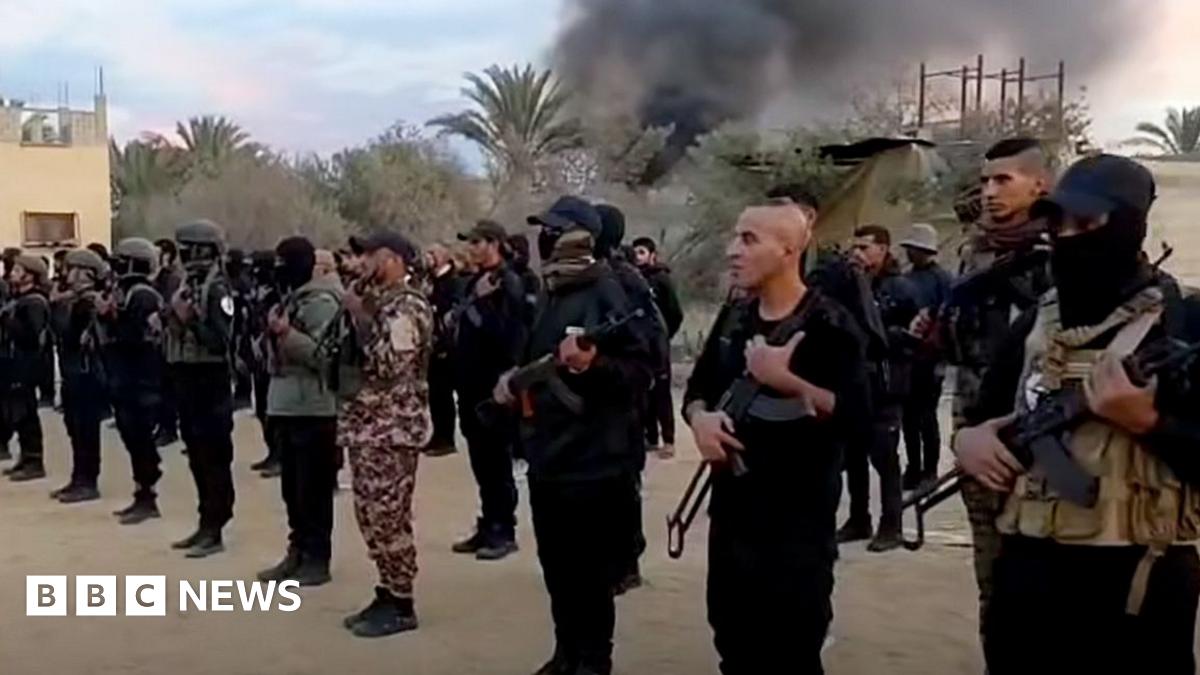
Israel has acknowledged that a patchwork of armed groups - including family clans, criminal gangs and newly formed militias - have arisen in Gaza to fight Hamas, and that some of these groups have been backed by Israel, according to the BBC.
The BBC reports these groups operate locally inside roughly 53% of Gaza now under Israeli control, raising urgent questions about who will govern and secure those areas going forward.
The article names some of the largest militias, including Yasser Abu Shabab's Popular Forces near Rafah and Hossam al-Astal's Counter-Terrorism Strike Force near Khan Younis.
Coverage Differences
Insufficient comparative sources
Only the BBC source is available in the supplied material, so I cannot compare how other outlet types (e.g., West Asian, Western Alternative) report or frame these facts. Therefore no cross-source contradiction, tone difference, or omission can be identified beyond what BBC reports. The BBC itself reports that "some of which Israel’s prime minister has acknowledged are being backed by Israel" and lists named militias and their locations, but no other source is present to confirm or contrast these claims.
Militia backing in Gaza
The BBC reports that Israeli political and military actors have acknowledged backing some local militias in Gaza.
Israel’s prime minister has acknowledged backing certain groups.
The Palestinian Authority is also believed to be covertly supplying support to some militias, indicating multiple external backers shaping the armed landscape inside Gaza.
This raises concerns about accountability and whether these groups will be integrated into any future security arrangements.
Coverage Differences
Insufficient comparative sources
With only BBC available, I cannot identify differing portrayals or omissions from other source types. The BBC reports both Israeli acknowledgment and alleged Palestinian Authority covert support, and without other sources I cannot verify contrasts or alternative framings.
Dispute over Gaza security
The BBC highlights that these militias have not been formally included in US President Trump's peace plan.
The plan envisions an International Stabilisation Force and a newly trained Palestinian police—a Board of Peace to help run Gaza.
One militia leader, Hossam al-Astal, said US representatives told him his group would have a role in Gaza's future police.
A US official told the BBC they had no announcement on that claim, demonstrating conflicting statements about who will be recognized or empowered in Gaza's security architecture.
Coverage Differences
Conflicting claims reported
The BBC reports a direct claim by militia leader Hossam al-Astal that US representatives told him his group would have a role, but also reports a US official disputing that there was any announcement — showing the BBC is reporting both the claim and the US denial rather than endorsing either. Without other sources, broader confirmation or contradiction cannot be established.
Local militias in Gaza
The emergence and acknowledged backing of local militias by Israel complicates post-conflict governance and risks empowering armed groups whose loyalties and methods may vary widely, the BBC warns.
Localised armed actors—family clans, criminal gangs and new militias—could entrench fragmentation and undermine efforts to establish a unified, accountable police force in Gaza.
This risk is heightened as large militias such as the Popular Forces and the Counter-Terrorism Strike Force assert their presence in Rafah and Khan Younis.
Coverage Differences
Insufficient comparative sources
Because only BBC reporting is available, I cannot contrast this warning with other outlets' emphasis or downplaying of fragmentation. The BBC itself frames the situation as raising 'urgent questions' about these groups and their place in Gaza's future security landscape.
Single-source reporting limitations
Limitations: the supplied material consists of a single BBC report.
I cannot make definitive cross-source comparisons or assert narratives such as the term 'genocide' unless such language is explicitly used in the supplied sources.
The BBC's reporting documents Israeli acknowledgement of backing some Gaza militias.
It also reports alleged Palestinian Authority covert support, but without additional sources I cannot further corroborate, challenge, or expand on these claims.
Readers should be aware of this limitation and seek multiple reporting sources for a fuller, cross-verified picture.
Source: BBC.
Coverage Differences
Missing source perspectives
Only BBC is provided, so perspectives from West Asian, Western Alternative, or other international outlets are absent, preventing the identification of contrasting frames, varying tones, or alternative facts.