Full Analysis Summary
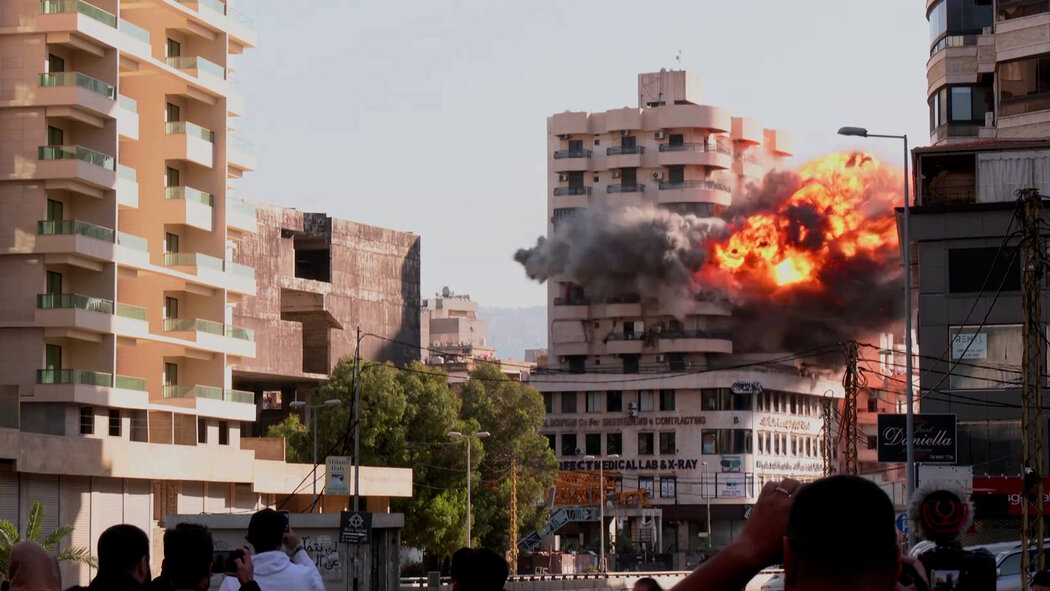
Froun airstrike aftermath
An Israeli airstrike struck a car in the Shia-majority village of Froun in southern Lebanon, killing one man.
Reports said the man's body was found in pieces.
Israel later described the dead man as a "Hezbollah terrorist."
Rescue workers and residents were at the scene.
The BBC correspondent arrived about an hour after the strike and saw locals cleaning up body parts from the street and trees.
Uzalendo News reported residents like Mohamad Mokdad cleaning debris and saying the year-old ceasefire "has not brought peace," and asking, "Who is going to help us?"
Coverage Differences
Tone and focus
Both sources report the same core facts — an Israeli airstrike hit a car in Froun and Israel described the victim as a 'Hezbollah terrorist' — but they differ in emphasis. BBC (Western Mainstream) foregrounds immediate grisly detail observed by its correspondent and frames the incident within broader reporting conventions, while Uzalendo News (Other) stresses local voices and the symbolic meaning of the strike for residents’ sense of security.
Ceasefire context and impact
Both sources place the strike against the background of a ceasefire that nominally ended a 13-month war in November.
The BBC supplies wider context, noting a US- and French-brokered truce, reporting that about 4,000 Lebanese and 120 Israelis were killed in the war, and citing UNIFIL and the Lebanese health ministry that there have been thousands of ceasefire violations and several hundred deaths since the truce.
Uzalendo News highlights residents' perception that the ceasefire has not delivered peace on the ground and restates local frustration.
Coverage Differences
Narrative and detail
BBC (Western Mainstream) provides a broader international and institutional context — naming the US and France as brokers, giving casualty figures for the 13-month war, and citing UNIFIL and the Lebanese health ministry on ongoing violations — whereas Uzalendo News (Other) centers local testimony about the persistence of insecurity and the human impact of the strike, without the wider numerical or institutional detail.
Local reactions to attacks
Local reactions recorded by the two outlets converge on shock and exhaustion but differ in nuance.
The BBC describes residents as 'shocked' and cleaning up 'body parts from the street and trees,' and reports that some locals, worn down by repeated attacks, are beginning to question Hezbollah's role and even call for the group to disarm so life can resume.
Uzalendo focuses on the visceral aftermath and a local resident's plea - 'Who is going to help us?' - to underscore a sense of abandonment.
Coverage Differences
Tone and emphasis
BBC (Western Mainstream) includes reporting of a range of local views, including some quiet criticism of Hezbollah and appeals for Lebanese army protection; Uzalendo News (Other) emphasizes the immediate human toll and personal pleas, using a quoted resident to convey a tone of desperation and abandonment.
Reporting on responsibility and evidence
On the question of responsibility and evidence, the BBC gives more detail on the wider strategic and political claims.
It reports Israel's stated targeting rationale - that it is hitting Hezbollah recovery efforts and weapons smuggling.
The BBC notes that Israel "has not publicly produced the evidence it cites" while also briefing journalists on possible future escalation.
It also reports that Israel recently killed Hezbollah's chief of staff in a strike near Beirut.
Uzalendo records Israel's description of the dead man as a "Hezbollah terrorist" but does not include the wider claims, counterclaims, or notes about public evidence.
Coverage Differences
Missed information / detail
BBC (Western Mainstream) conveys Israel’s broader stated rationale, international-level implications and the absence of public evidence, while Uzalendo News (Other) focuses on the immediate incident and local reactions, omitting mention of Israel’s wider justifications or reporting about recent high-profile killings of Hezbollah figures.
Impact on border communities
The wider consequence for border communities is clear in both accounts: villages remain devastated, many people displaced, and life constrained by warnings and restrictions.
The BBC gives granular examples, such as Beit Lif where populations are plummeting, and says Lebanese army units have been reluctant to inspect private homes for fear of being seen as cooperating with Israel.
Uzalendo's reporting centers local despair and asks who will provide protection and assistance.
Coverage Differences
Narrative scope and local focus
BBC (Western Mainstream) frames the strike within a pattern of depopulation, institutional responses, and international monitoring (UNIFIL), offering named examples and institutional behavior; Uzalendo News (Other) retains a local, ground-level perspective, foregrounding resident quotes that emphasize despair and unmet needs.