Syria28 February, 20262 min read
Israel and Iran Exchange Strikes; Missile Explosion Kills Four in Sweida
An Iranian missile struck a building in Suwayda, southern Syria, killing four people Several others were wounded in the explosion

15 outlets told this the same way.
Outlets did split on France Suspends Police Stun Grenades at High School Protests After 15-Year-Old Loses Hand →
US and Israel strike Iran
Israel and the United States announced an early-Saturday joint operation targeting Iran. Officials framed the strike as a response to threats from the Iranian regime. The action occurred as indirect U.S.-Iran talks on Tehran’s nuclear program, mediated by Oman, had just completed a new round in Geneva on Thursday.
“Israel and the United States announced an early-Saturday joint operation targeting Iran, saying it was in response to threats from the Iranian regime.”
Conflicting casualty reports in Iran
The strikes have been reported to cause civilian casualties inside Iran, but outlet figures vary. Azərtac reported "at least 40 killed in an Israeli strike on a girls’ school in southern Iran."
Philenews said Tehran condemned a separate US‑Israel strike on a girls’ school that reportedly killed 53 people, illustrating competing casualty counts amid rapid reporting. Azərtac also placed the events in a broader context of recent and prior military actions between the parties.

As-Suwayda strike reports
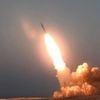
Philenews reported that an Iranian missile hit a building in the southern Syrian city of Sweida, killing four and wounding several. Al-Jazeera Net relayed SANA reporting that a rocket exploded in the industrial area of As-Suwayda city in southern Syria, killing four civilians and wounding others.
“On Saturday 28 Feb 2026, an Iranian missile hit a building in the southern Syrian city of Sweida, killing four and wounding several, and witnesses and resident-shot videos shared with Reuters showed missile debris falling in Quneitra and the Yarmouk Basin in Daraa province.”
Opinion Nigeria noted that SANA did not identify the missile’s origin, although earlier accounts suggested it may have been launched from Iran. Witnesses and resident-shot videos were reported to show debris falling in Quneitra and the Yarmouk Basin in Daraa province.
Regional reactions and precautions
Azərtac reported that Türkiye called for an immediate ceasefire, the EU and UN warned of perilous developments and urged protection of civilians and respect for international law, and the UK said it did not participate in the strikes and did not want further escalation. Gulf News described domestic civil-protection measures, including a mobile alert warning of possible missile threats and school and university moves to distance learning from March 2–4. Anadolu Ajansı linked the military action to ongoing diplomatic engagements in Geneva.
Conflicting reports on strikes
Available reporting contains clear contradictions and unresolved questions. The Washington Post recorded a claim that "Donald Trump said Iran’s supreme leader was killed." Philenews said "its foreign minister dismissed reports that Supreme Leader Ayatollah Khamenei had been killed."
“A Washington Post live-updates item (updated Feb. 28, 2026) reports that Donald Trump said Iran’s supreme leader was killed in a U.S.-Israeli attack.”
Opinion Nigeria emphasized that SANA "did not identify the missile’s origin," leaving responsibility for some strikes contested. Azərtac and other outlets described a "fresh escalation," underscoring the risk of wider regional contagion even as casualty figures and attribution remain inconsistent across the sources.