Israel and Syria Form US-Supervised Intelligence-Sharing and Military De-Escalation Mechanism After Paris Talks

Israel and Syria Form US-Supervised Intelligence-Sharing and Military De-Escalation Mechanism After Paris Talks

07 January, 202610 sources compared
Syria

Key Points from 10 News Sources

  1. 1

    Israel and Syria will form a US-supervised joint mechanism to share intelligence and coordinate security

  2. 2

    Mechanism will pursue military de‑escalation along the Israel–Syria border with immediate ongoing contact

  3. 3

    United States mediated Paris talks that resumed rare direct Israeli–Syrian diplomatic engagement

Full Analysis Summary

US-supervised Syria-Israel mechanism

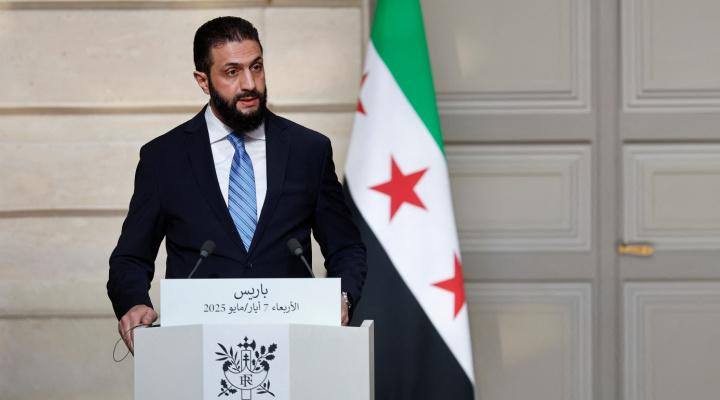
After US-mediated talks in Paris, Israel, Syria and the United States agreed to establish a US-supervised "fusion" or contact mechanism.

The mechanism is a trilateral communications cell designed to share intelligence and coordinate military de-escalation, diplomatic engagement and commercial opportunities.

The State Department framed the arrangement as a practical channel to resolve disputes quickly and prevent misunderstandings.

Coverage consistently describes the mechanism as US-overseen, with France 24 reporting it as a dedicated communications cell for intelligence and de-escalation.

The New Arab repeated the State Department language about coordinating intelligence sharing and de-escalation, and thenationalnews described it as a trilateral "fusion" cell overseen by the US.

Local reporting and accounts also noted that the parties did not present the arrangement as an immediate cessation of strikes.
Coverage Differences

Tone and emphasis

Western mainstream and many international outlets emphasize the practical mechanics of the US‑supervised mechanism and its immediate aims (intelligence sharing, de‑escalation, diplomacy, commerce), while some West Asian outlets and regional commentators foreground Syrian distrust and accuse Israel of expansionist behaviour. This reflects differing editorial priorities: France 24 (Western Mainstream) focuses on the mechanism's purpose and notes limits to what the statement commits to; The New Arab (West Asian) reports the US description but also relays Syrian officials accusing Israel of stalling; Tehran Times (West Asian) frames the talks in the broader context of alleged Israeli territorial strategy and unbalanced negotiations. These differences shape whether coverage reads as pragmatic diplomacy or as uneven, contested bargaining over sovereignty.

Clarity on immediate military suspension

Some sources stress the mechanism without saying Israel will stop strikes; others report Syrian claims that the talks produced an initiative to suspend Israeli military activity but note Israel had not confirmed such a suspension. France 24 explicitly said the statement "did not say Israel would halt strikes," while الحرة and thenationalnews reported Syrian officials saying the talks produced an initiative to suspend Israeli military activity but that Israel had not immediately confirmed it.

Coordination mechanism proposals

Reports describe several concrete aims and proposals tied to the mechanism, including rapid dispute resolution, continuous intelligence exchanges, coordination on military movements to reduce miscalculation, and potential commercial and economic cooperation.

The US pledge to support implementation was highlighted in thenationalnews.

Al-Hurra and Axios (as reported in Al-Hurra) outlined a proposed joint coordination cell to be based in Amman and sketched an economic zone featuring wind farms, agriculture and tourism.

China Daily Asia added that Syria sought restoration of the UN-monitored buffer zone from the 1974 Disengagement Agreement and an Israeli pullback to pre-December 2024 positions, demands the joint statement did not explicitly endorse.

These details suggest the mechanism is intended to be more than a hotline and could be linked to wider political and economic steps, though sources disagree on what was actually agreed.
Coverage Differences

Scope and ambitions

Some outlets (thenationalnews, الحرة/Axios) report the US and parties discussed linking the cell to broader economic projects and a physical host location (Amman), while other outlets (France 24, The New Arab) concentrate on the security and diplomatic functions without detailed economic proposals. chinadailyasia notes Syrian demands to restore the 1974 buffer zone that the joint statement omitted, reflecting divergence between what participants sought and what the public statement acknowledged.

Reporting on Syrian demands

West Asian outlets highlight Syrian calls for concrete Israeli withdrawals and protection of minority communities (chinadailyasia mentions the Druze), whereas Western mainstream reports focus more narrowly on the creation and functions of the fusion mechanism. This leads to different narratives about whether talks were substantive steps toward restoring territory or primarily confidence‑building measures.

Syria–Israel negotiations

Major unresolved issues remain, and sources portray the bargaining differently.

thenationalnews lists core sticking points: Syria demands a binding timeline for Israeli withdrawal from territory taken last year and a "just peace" preserving Syrian sovereignty, while Israel seeks a demilitarised zone toward Damascus and continued forces in a Golan buffer occupied since December 2024.

Tehran Times frames Israel's actions more sharply, accusing it of using security pretexts to create footholds in southern Syria, annulling the 1974 disengagement agreement and pursuing a longer-term strategy to normalise annexation.

Multiple outlets also emphasize that Syria and Israel lack formal diplomatic relations.

Reporting is mixed on whether Israeli strikes have been suspended, with several sources noting Syria's claim of an initiative to suspend activity but adding that Israel had not confirmed such a move.

Coverage Differences

Contradiction and narrative framing

thenationalnews (Western Alternative) presents the negotiation positions as reciprocal but unresolved demands, while Tehran Times (West Asian) frames Israeli actions as an incremental strategy to annex territory and erode Syrian sovereignty. The New Arab reports Syrian accusations of stalling, and France 24 highlights that public statements did not commit Israel to halting strikes, so readers encounter both procedural descriptions and strong normative claims about intent.

Uncertainty vs. assertive claims

Some reports stick closely to confirmed statements and note uncertainty (France 24, thenationalnews, الحرة), while others assert a broader interpretation of motive and practice (Tehran Times). This produces conflicting impressions: a cautious diplomatic step in mainstream outlets versus a portrayal of asymmetric pressure and territorial ambition in some regional outlets.

Diplomatic talks amid Syrian change

The talks sit within a volatile political backdrop and carry uncertain prospects.

Several sources note leadership change in Damascus and elevated tensions since late 2024.

France 24 and Tehran Times report that Bashar al‑Assad was ousted in December 2024 and Ahmad al‑Sharaa (also spelled Ahmad/Ahmed al‑Sharaa) rose thereafter.

China Daily Asia lists interim government figures as leading the Syrian delegation.

France hosted the talks and the EU discussed economic support as part of wider efforts, according to The National.

Al‑Hurra and The National also reported proposals for hosting and economic cooperation.

Across reporting there is a clear split in emphasis: mainstream outlets foreground the mechanism and cautious, process‑oriented diplomacy, while regional outlets stress Syrian sovereignty, alleged Israeli escalation and possible annexation dynamics.

Crucial facts remain contested, especially whether Israeli military activity will be suspended, which Israel has not confirmed in public statements.

Coverage Differences

Contextual framing

Mainstream Western sources (France 24, thenationalnews) frame the talks as diplomacy within a fragile post‑Assad transition and possible EU economic engagement, while West Asian outlets (Tehran Times, The New Arab) emphasize long‑standing sovereignty grievances and portray Israel as exploiting instability. This shapes readers’ sense of whether the mechanism is stabilizing technical diplomacy or a response to an aggressive territorial strategy.

Unresolved facts and public confirmation

Multiple outlets signal uncertainty about outcomes that matter practically — notably whether strikes are suspended — with Syrian officials asserting a suspension initiative and Israeli sources not confirming any halt. Reporters therefore present both the Syrian claim (as reported by الحرة and thenationalnews) and the absence of Israeli confirmation (as noted by France 24 and others), leaving the status ambiguous.

All 10 Sources Compared

Algemeiner

Israel, Syria to Set Up Communication Mechanism After US-Mediated Talks

Read Original

chinadailyasia

Israel, Syria agree to de-escalation mechanism after security talks in Paris

Read Original

Devdiscourse

Israel and Syria: Communicating for Peace?

Read Original

France 24

Israel, Syria agree to share intelligence, seek military de-escalation after Paris talks

Read Original

Haaretz

Israeli and Syrian Officials Hold Security Talks in Paris With Witkoff and Kushner

Read Original

Tehran Times

Israel’s expansionist agenda: Aggression in Syria amid Paris talks

Read Original

The New Arab

Israel, Syria to set up communication mechanism after US-mediated talks

Read Original

thenationalnews

Israel and Syria to share intelligence and explore commercial ties after Paris deal

Read Original

wwbl

Israel and Syria resume diplomatic dialogue after months of silence under US mediation

Read Original

الحرة

A Demilitarized Zone and a Resort: Inside the Syria–Israel Talks

Read Original